
Frozen in the Andes: The Haunting Survival Story of Flight 571
For 72 days, the world believed they were dead—but high in the frozen mountains, a small group of survivors fought against hunger, cold, and despair in one of the most unbelievable survival stories in history.

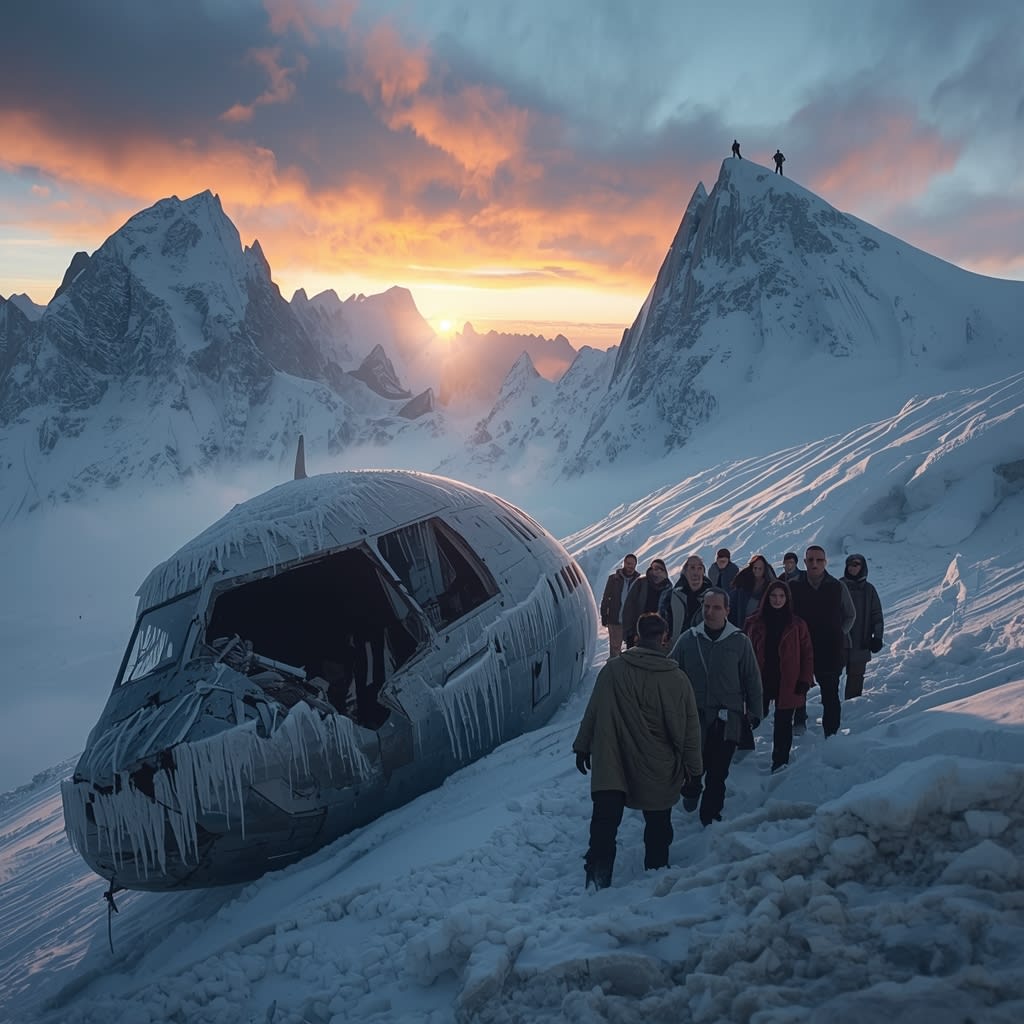
On October 13, 1972, a small aircraft carrying a group of young rugby players, their friends, and family members took off from Montevideo, Uruguay, heading toward Santiago, Chile. The journey was meant to be a simple trip across the Andes Mountains for a friendly rugby match. Spirits were high inside the plane. Laughter, excitement, and youthful energy filled the cabin.
But within hours, that joyful journey turned into one of the most haunting survival stories in history.
The aircraft, later known worldwide as Uruguayan Air Force Flight 571 Crash, encountered severe weather while flying over the towering Andes Mountains. Thick clouds, violent winds, and dangerous turbulence forced the pilots to rely heavily on their instruments. Unfortunately, a fatal navigation mistake led them directly into the mountains.
Suddenly, the aircraft struck the icy slopes.
The impact was devastating. The tail of the plane tore off, several passengers were thrown from the cabin, and the aircraft’s fuselage slid down a snowy valley before coming to a violent stop. Silence followed the chaos—broken only by the wind howling across the frozen mountains.
Many passengers died instantly.
Those who survived were left injured, terrified, and stranded in one of the most unforgiving environments on Earth.
The Andes Mountains are not just high—they are brutally cold, isolated, and unpredictable. Temperatures dropped far below freezing, and snowstorms frequently swept through the mountains. The survivors had almost no food, no proper clothing for the cold, and no way to communicate with the outside world.
At first, hope remained strong.
The survivors believed rescue teams would find them quickly. They gathered the small amount of food they had—mostly chocolate bars, wine, and a few snacks—and carefully rationed it. Days passed slowly as they waited for the sound of helicopters or search planes.
But rescue never came.
After several days, the survivors managed to repair a small radio inside the aircraft. With great anticipation, they turned it on, hoping to hear news about the search efforts.
Instead, they heard something heartbreaking.
The search for the plane had been called off.
Authorities believed there was no chance anyone could have survived the crash in such a remote and hostile region. To the outside world, everyone on the plane was already presumed dead.
The survivors were truly alone.
The days turned into weeks. Hunger grew unbearable, and the freezing cold constantly threatened their lives. Snow reflected the harsh sunlight during the day and trapped the bitter cold at night. Some survivors died from injuries, exposure, or avalanches that buried parts of the wreckage.
Yet even in such darkness, the human spirit refused to disappear.
The survivors worked together to build makeshift shelter inside the broken fuselage. They used pieces of luggage as insulation and melted snow for drinking water. Friendships deepened as they supported one another through grief and fear.
But survival in the mountains required impossible decisions.
With food completely gone and no rescue in sight, the group faced a reality no one should ever have to confront. In order to stay alive, they made a desperate and controversial choice that would later shock the entire world.
It was a decision born not from cruelty—but from the instinct to survive.
Weeks later, two of the survivors realized waiting for rescue was no longer an option. If they stayed in the mountains, they would all eventually die. So they decided to attempt the impossible: cross the Andes on foot in search of help.
Armed with homemade sleeping bags and almost no equipment, they began a brutal journey across some of the highest mountains in the world.
For ten exhausting days, they climbed icy peaks, crossed deep valleys, and fought against freezing winds. Every step could have meant death, but turning back was no longer possible.
Finally, after days of struggle, they spotted something incredible in the distance—signs of civilization.
A Chilean shepherd eventually discovered them and alerted authorities.
Rescue teams quickly returned to the crash site and saved the remaining survivors.
After 72 days trapped in the Andes, sixteen people were finally brought home alive.
Their story became one of the most extraordinary survival tales ever recorded. It revealed not only the terrifying power of nature but also the incredible strength of human determination, friendship, and hope.
Even today, more than fifty years later, the story of Uruguayan Air Force Flight 571 Crash continues to inspire people around the world.
Because in the cold silence of the Andes, when all hope seemed lost, the will to live proved stronger than the mountains themselves.
About the Creator
Keep reading
More stories from imtiazalam and writers in Criminal and other communities.
Forgotten Humanity
Throughout history, there have been individuals whose lives have left an indelible mark on humanity, not through wealth or power, but through the depth of their compassion, the strength of their justice, and the purity of their care for others. Among these extraordinary figures, Hazrat Muhammad (PBUH) stands out as a shining example of true humanity. Born in the city of Mecca in the 6th century, he faced immense challenges and hardships throughout his life. Yet, despite persecution, exile, and betrayal, he consistently embodied mercy, humility, and respect for all people. His teachings were not just words; they were a way of life, emphasizing kindness to the poor, fairness toward everyone, and compassion even for those who wished him harm. For millions across the world, his life continues to serve as a guide for living with dignity, patience, and humanity in the truest sense.
By imtiazalamabout 17 hours ago in Humans
How To Deal With LEOs And Not Catch A Bullet
Darn it! The newest shooting to enrage people has occurred and again, you’re faced with that werid question, why? Why would guys with families at home, men and women with lives, be using deadly force on American citizens? It’s a puzzler, isn’t it?
By Jason Ray Morton 5 days ago in Criminal
The Ken Childs Controversy: Inside a Private Investigator Scandal Involving Surveillance, Cybercrime Allegations
Los Angeles is a city built on stories. Some are scripted in movie studios. Others unfold quietly in courtrooms, investigative offices, and digital networks far from the spotlight.
By Shane Smithabout 19 hours ago in Criminal


Comments
There are no comments for this story
Be the first to respond and start the conversation.