
It’s too warm': Greenland’s fishermen are under threat from climate change
Greenland’s fishing communities face unpredictable seas, shifting fish populations, and economic pressures as climate change warms the Arctic faster than anywhere else.

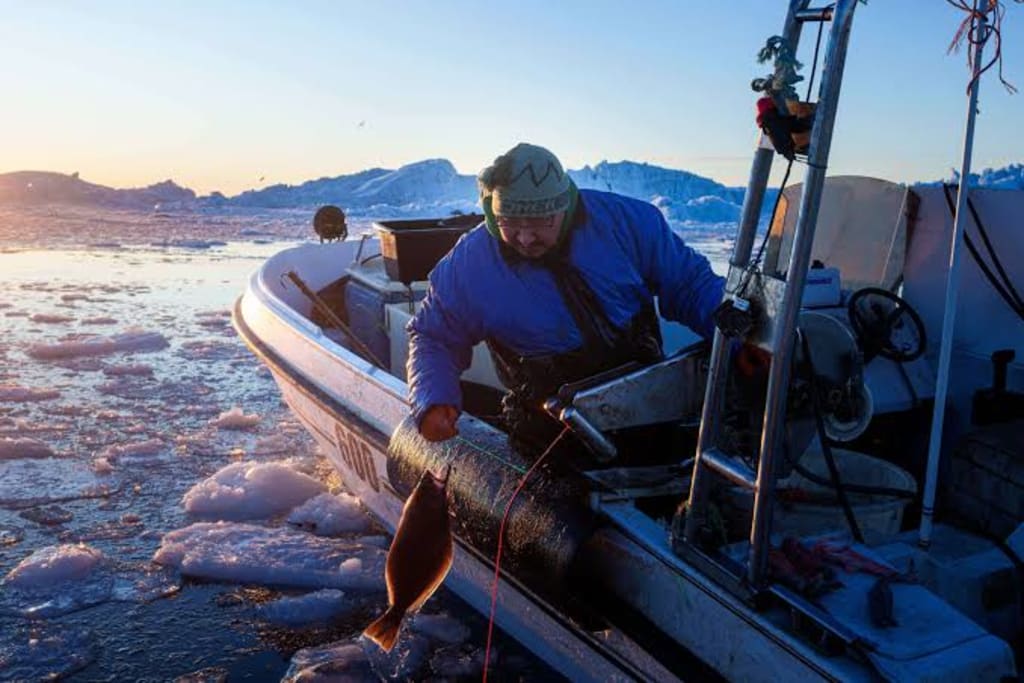
Greenland’s traditional fishing communities are facing an uncertain future as the Arctic warms faster than any other region on Earth, dramatically reshaping the landscapes and livelihoods of the semiautonomous Danish territory. Local fishermen, whose lives have long been tied to sea ice and predictable seasonal patterns, are now confronting unpredictable weather, shifting fish populations, and economic pressures that threaten both their culture and the local economy.
A Changing Arctic Reality
In the small coastal town of Ilulissat, veteran fisherman Helgi Áargil described how climate change has upended his routines. Where once he relied on stable sea ice and consistent fishing grounds, he now finds warmer waters, rainier conditions, and fish moving to deeper, cooler waters. Last year his boat became trapped in ice that calved from a nearby glacier; this year, instead of strengthening ice, it has been unusually wet — making conditions less predictable and incomes more volatile.
Fishing accounts for up to 95 percent of Greenland’s exports, with key markets including China, the United States, Japan and Europe. This heavy economic reliance amplifies the impact of climate effects on fish patterns and harvests.
Disappearing Ice, Changing Practices
Traditional ice fishing — once conducted on sea ice more than a metre thick — has declined sharply. Older generations recall times when they could easily drill holes in stable ice to fish for cod, halibut, shrimp and snow crab. Today, sea ice is retreating earlier and forming later, forcing many fishermen to rely on boats even in the coldest months. While boats allow access to broader waters, they come with higher fuel costs and greater exposure to the elements, challenging sustainability.
Karl Sandgreen, head of the Icefjord Center in Ilulissat, noted that ice thick enough to support traditional fishing began disappearing roughly three decades ago. The shift has not only changed how fishers operate but also increased competition and pressure on stocks closer to shore.
Ecological and Economic Pressures
Warmer conditions are also affecting fish behavior. Many species are moving deeper or into new areas as they seek cooler waters, complicating efforts to maintain stable catches. A warming ocean can temporarily boost plankton growth — potentially increasing some fish stocks — but it also alters ecosystems in unpredictable ways. Experts warn that fish may not behave as they once did, complicating traditional fishing forecasts and practices.
The head of Royal Greenland, the territory’s largest employer, has expressed concern about a future with significantly diminished sea ice, which could push more traditional fishers toward larger, commercial fishing operations. However, this transition is not without risks. Increased fishing pressure near shorelines already shows early signs of overfishing; halibut are getting smaller, a classic indicator of stock stress noted by experts.
Cultural Identity at Risk
Fishing in Greenland is more than an economic activity; it is a cultural bedrock. In towns and villages across the island, harbours where daily catches are unloaded and sold remain central to community life. Many Greenlanders associate fishing with identity and tradition, and climate change is directly threatening these cultural ties as environmental conditions change faster than adaptation measures can keep pace.
“You can have too much ice to sail and yet too little to qualify for safe ice fishing,” noted Toke Binzer, describing the paradoxical challenges fishermen now face. The unpredictability makes planning difficult and income erratic — one trip might bring significant earnings, while the next yields little or nothing.
Limited Alternatives and Future Paths
Beyond fishing, economic alternatives in Greenland remain limited. Tourism is growing but not at a pace that could offset losses in the fishing sector. With a total population barely over 50,000, opportunities outside harvesting marine resources are comparatively sparse. As dog sledding and other ice‑based traditions also diminish due to changing conditions, entire ways of life are under threat.
Efforts to support traditional fishers include loans for boats and business assistance, but long‑term resilience will likely require broader strategies. These could involve sustainable fishing quotas, diversification into aquaculture, and investments in climate adaptation infrastructure. Yet many local observers emphasize that meaningful change must also address the root causes of warming — a challenge far beyond Greenland’s shores.
A Climate Warning Sign
Greenland’s fishermen are becoming a human indicator of rapid Arctic change. The region is warming faster than the global average, reshaping ecosystems and economies alike. As these communities adapt or struggle, their challenges shed light on the broader global consequences of climate change — illustrating how environmental shifts ripple through cultures, industries and livelihoods thousands of kilometres from major industrial centres.
About the Creator
Fiaz Ahmed
I am Fiaz Ahmed. I am a passionate writer. I love covering trending topics and breaking news. With a sharp eye for what’s happening around the world, and crafts timely and engaging stories that keep readers informed and updated.
Keep reading
More stories from Fiaz Ahmed and writers in Earth and other communities.
Winter Olympics Must Tackle Environmental Impact Before the Snow Runs Out
The future of the Winter Olympics is increasingly threatened by the very climate conditions that once defined it. Rising global temperatures, shrinking glaciers, and unreliable snowfall are forcing organizers to confront an uncomfortable truth: without urgent environmental reform, the Games may soon struggle to find suitable natural winter settings. Recent editions of the Winter Olympics have relied heavily on artificial snow and extensive infrastructure projects to compensate for warming conditions. While technology has allowed competitions to proceed, it has come at a significant environmental cost. Artificial snowmaking requires vast quantities of water and energy, placing additional strain on fragile alpine ecosystems already stressed by climate change. Climate Change and Vanishing Snow Scientists warn that many traditional Winter Olympics host regions may no longer be viable within decades. Areas in the Alps, once considered snow-secure, now experience shorter winters and more frequent rain instead of snow. According to climate research groups, average winter temperatures in mountainous regions have risen by nearly two degrees Celsius over the past century, drastically reducing dependable snow cover. This trend is forcing Olympic planners to consider fewer and fewer potential host cities. By mid-century, only a small number of high-altitude or northern locations may be able to provide natural snow conditions for outdoor events such as skiing, snowboarding, and biathlon. The Environmental Cost of Hosting Beyond snowmaking, the construction of Olympic venues has long raised environmental concerns. New roads, hotels, and ski facilities often require deforestation and large-scale land reshaping. After the Games end, many venues are underused or abandoned, leaving behind what critics call “white elephants” in sensitive landscapes. Transport is another major contributor to the carbon footprint. Tens of thousands of athletes, officials, media personnel, and spectators travel internationally to attend the Games, producing millions of tons of carbon emissions. For an event that celebrates human endurance and natural beauty, this contradiction has become increasingly difficult to ignore. Calls for Reform Environmental groups and athletes alike are urging the International Olympic Committee (IOC) to adopt stricter sustainability standards. Some propose limiting host cities to a fixed rotation of climate-resilient venues rather than building new sites every four years. This would reduce construction emissions and allow organizers to invest in long-term green infrastructure. Others suggest shifting more events indoors or redesigning sports formats to reduce reliance on perfect snow conditions. Innovations in energy use, such as fully renewable-powered venues and electric transport systems, are also gaining support. The IOC has already pledged to make future Games climate-positive, promising to cut emissions and offset remaining carbon output. However, critics argue that offsets alone are not enough and that fundamental changes in how the Games are planned and hosted are required. Athletes Speak Out Many athletes who train in mountain environments are among the most vocal advocates for change. They witness disappearing glaciers and unpredictable seasons firsthand. Several Olympic champions have joined climate campaigns, warning that winter sports themselves are at risk of becoming inaccessible to future generations. “You can’t celebrate snow sports if there’s no snow left,” one former skier remarked. “Protecting the climate is protecting our sport.” Their message resonates with younger audiences, who increasingly expect major global events to demonstrate environmental responsibility. A Race Against Time The challenge now facing the Winter Olympics is not only logistical but moral. As one of the world’s most visible sporting spectacles, the Games carry symbolic weight. They can either continue to adapt in ways that worsen environmental damage or become a model for sustainable international events. If current warming trends continue, experts warn that future Winter Olympics could be confined to a handful of locations with artificial conditions resembling theme parks rather than natural winter landscapes. Such a shift would undermine the spirit of the Games, which has always been rooted in ice, snow, and mountains. Conclusion The Winter Olympics stand at a crossroads. Climate change has transformed snow from a guarantee into a luxury, and the environmental cost of maintaining the Games is rising sharply. To survive, the Olympics must evolve—by cutting emissions, rethinking host locations, and embracing genuine sustainability rather than temporary fixes. Without decisive action, the world’s greatest winter sporting event may find itself running out of snow—and time.
By Fiaz Ahmed 17 days ago in Earth


Comments
There are no comments for this story
Be the first to respond and start the conversation.