
Five Famous Destinations That Are Tired of Too Many Tourists
From historic European cities to fragile natural wonders, several iconic travel destinations are struggling with the pressure of overtourism.


Travel has become easier than ever before. Affordable flights, social media inspiration, and the rise of global tourism have encouraged millions of people to explore the world every year. While tourism brings economic benefits, it also creates serious challenges for some of the world’s most popular destinations. In recent years, several cities and natural sites have begun pushing back against the overwhelming number of visitors.
Here are five famous destinations that have become so crowded that local authorities and residents are actively trying to control tourism.
⸻
1. Venice, Italy
Few cities in the world are as beautiful and unique as Venice. Built on more than 100 small islands connected by canals and bridges, Venice has long been one of the most romantic destinations in the world. However, its popularity has become a major problem.
Every year, around 20–30 million visitors arrive in the city, while the permanent population has dropped to fewer than 50,000 residents in the historic center. Large cruise ships, packed streets, and rising housing prices have made daily life difficult for locals.
To manage the problem, Venice has introduced new rules such as entry fees for day-trippers and limits on cruise ships entering the lagoon. Officials hope these measures will protect the fragile historic city while still allowing visitors to experience its beauty.
⸻
2. Barcelona, Spain
The vibrant Spanish city of Barcelona has become one of Europe’s most visited destinations. Attractions such as La Rambla and the famous basilica Sagrada Família attract millions of tourists each year.
While tourism supports the local economy, many residents believe the number of visitors has become overwhelming. Rising rents, noise, and crowded public spaces have triggered protests from locals who feel their neighborhoods are turning into tourist zones.
In response, city officials have restricted new hotel construction and regulated short-term rentals such as those offered through Airbnb. These steps aim to balance tourism with the quality of life for residents.
⸻
3. Machu Picchu, Peru
High in the Andes Mountains lies the legendary Inca citadel of Machu Picchu. Built in the 15th century by the Inca Empire, the site remained hidden from the outside world until its international recognition in 1911.
Today, Machu Picchu is one of South America’s most famous archaeological sites. However, the growing number of visitors has raised concerns about damage to the ancient stone structures and surrounding ecosystem.
To protect the site, the Peruvian government now limits the number of daily visitors and requires tourists to follow specific routes through the ruins. These measures help preserve the historical site for future generations.
⸻
4. Mount Everest, Nepal
The world’s highest mountain, Mount Everest, has become an ultimate dream for climbers. Standing at 8,848 meters above sea level, Everest represents the greatest challenge in mountaineering.
But in recent years, the mountain has faced an unexpected problem—too many climbers. During peak climbing seasons, long lines of mountaineers can be seen waiting near the summit. This overcrowding increases risks such as altitude sickness, exhaustion, and even fatal accidents.
Additionally, environmental concerns have grown due to the large amount of waste left on the mountain. Authorities in Nepal have started requiring climbers to bring back their trash and have considered stricter permit rules.
⸻
5. Santorini, Greece
The Greek island of Santorini is famous for its white houses, blue domes, and breathtaking sunsets. The village of Oia is particularly popular among visitors seeking the perfect photograph.
However, during peak tourist season, the island can receive tens of thousands of visitors in a single day—many arriving from cruise ships. Narrow streets become extremely crowded, and local infrastructure struggles to handle the pressure.
To reduce the strain, Greek authorities have placed limits on the number of cruise passengers allowed to visit the island each day.
⸻
Conclusion
Tourism is an important part of the global economy, but these examples show that too much tourism can create serious challenges. Cities and natural sites must balance welcoming visitors with protecting local communities, culture, and the environment.
The concept of sustainable tourism is becoming increasingly important. By respecting local rules, traveling during off-peak seasons, and supporting responsible tourism practices, travelers can help ensure that the world’s most beautiful destinations remain preserved for future generations.
About the Creator
Irshad Abbasi
Ali ibn Abi Talib (RA) said 📚
“Knowledge is better than wealth, because knowledge protects you, while you have to protect wealth.
Keep reading
More stories from Irshad Abbasi and writers in Filthy and other communities.
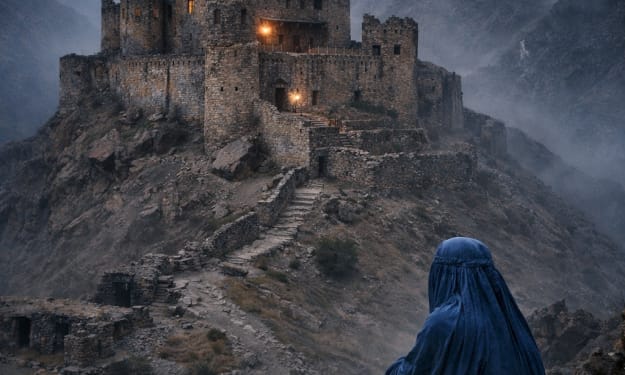
The Fortress of Forgotten Women: Afghanistan’s Mysterious Castle of the “Unclaimed”
Across Afghanistan’s rugged landscape, ancient ruins and forgotten structures stand as silent witnesses to centuries of history. Among them is a mysterious fortress often referred to by locals as the “Fortress of Forgotten Women.” Though little documented in formal historical records, stories surrounding this secluded structure have been passed down through oral traditions for generations. According to local accounts, the fortress once served as a refuge—or perhaps a place of exile—for women who had been abandoned by their families or communities.
By Irshad Abbasi 6 days ago in Filthy
The Silk Code: A Ghost Dance Over the Oil Fields
The world no longer breathes through its borders; it breathes through its cables. As I sit in the quiet hum of my study tonight, the blue light of the monitor reflecting a reality that feels increasingly fragile, I realize that a line of code is being born in the shadows. This code is not just data; it is a silent architect, capable of shifting the price of a gallon of fuel at a station thousands of miles away before the sun even rises. Looking at the global radar in March 2026, I don’t see the rigid, colored maps we were forced to memorize in school. I don’t see the static, dusty lines of the United States, the golden sands of Saudi Arabia, or the rugged, ancient highlands of Iran. Instead, I see a glowing, pulsing web of information—a "Silk Code" that has begun to connect the muzzles of cannons to the valves of oil pipelines. We are not witnessing a traditional conflict of infantry and tanks; we are watching a tectonic shift where the heavy lead of the 20th century meets the weightless silicon of the future.
By Alex Sterling 3 days ago in Filthy
Sam’s Stories
Sam texted Lila, asking if he could call. Of course he could—Lila always took Sam’s calls. He asked about her writing, which had become lucrative since last time they fell apart. Sam’s divorce wasn’t even final yet, he already had a new girlfriend, and he was reaching out to Lila. Could be a recipe for disaster.
By Harper Lewis6 days ago in Filthy
Why Didn't Anyone Tell Us
Men, move along. This is not for you. This is for the women. I was forty-five when I began menopause. It is pretty young for that to be going on in a woman’s life, but I had undiagnosed PCOS, my entire life. Thank you to all the gynecologists I had seen my entire life. That in itself should encourage women to keep seeking second opinions, especially when you are not getting correct answers or any at all.
By Alexandra Grant2 days ago in Humans


Comments
There are no comments for this story
Be the first to respond and start the conversation.