
Creator Economy Market to hit USD 1,072.8 Billion By 2034, Social Media Platforms Dominance
Rising demand for digital content, brand collaborations, and direct audience monetization fuels market expansion.


Creator Economy Market Overview
The global Creator Economy Market is projected to reach approximately USD 1,072.8 Billion by 2034, increasing from nearly USD 149.4 Billion in 2024. This reflects a robust CAGR of 21.8% during the forecast period from 2025 to 2034. Growth in this market is largely attributed to the rapid expansion of digital platforms that enable individuals to monetize content, build personal brands, and engage directly with audiences. Social media platforms, streaming services, and digital content marketplaces are providing creators with tools to generate revenue through advertising, sponsorships, subscriptions, and digital product sales.
In 2024, North America held a leading position with more than 37.4% share of the global market. Within the region, the United States recorded a significant market value of approximately USD 50.9 Billion, reflecting strong platform adoption and a mature digital creator ecosystem. The region benefits from advanced digital infrastructure, high internet penetration, and widespread adoption of creator monetization platforms. These factors continue to strengthen the development of creator driven digital businesses.
How the Creator Economy is Transforming Digital Media and Entrepreneurship?
The creator economy has significantly reshaped how digital content is produced, distributed, and monetized. Individuals are increasingly building independent digital businesses by producing videos, podcasts, newsletters, online courses, and digital communities. Content creators are leveraging social platforms to reach global audiences while maintaining direct relationships with their followers. This shift has reduced reliance on traditional media institutions and created new opportunities for independent entrepreneurship.
Another important transformation is the rise of platform based monetization models that allow creators to generate sustainable income streams. Subscription platforms, membership communities, and direct audience support models have become widely adopted. Creators can now receive financial support through subscriptions, digital product sales, and brand collaborations. These developments have contributed to the rapid expansion of the creator economy and have enabled a new generation of digital entrepreneurs.
Scope and Research Methodology
The assessment of the creator economy market focuses on analyzing digital platform adoption, content monetization models, and the expansion of independent digital businesses. Research typically incorporates data from social media platform reports, digital advertising statistics, creator monetization platforms, and online content distribution networks. These sources provide insights into the evolving ecosystem of digital creators and audience engagement trends.
Market analysis also includes evaluation of internet penetration rates, social media user growth, and digital advertising expenditures. These indicators help determine the scale of audience participation and the revenue opportunities available for content creators. By examining these factors, analysts are able to estimate the long term growth trajectory of the creator economy across different regions and digital platforms.
Key Forces Driving Market Expansion
One of the strongest forces driving market expansion is the rapid growth of social media platforms and digital content consumption. Billions of users worldwide actively engage with video content, live streaming, and social media communities. This high level of engagement creates substantial monetization opportunities for creators through advertising revenue, sponsored content, and affiliate marketing programs.
Another major factor supporting market growth is the increasing availability of creator support tools and platforms. Technology companies are developing integrated ecosystems that provide creators with analytics tools, payment systems, and audience management capabilities. These tools simplify the process of building digital businesses and allow creators to focus on producing high quality content while managing their audience relationships effectively.
Emerging Trends Analysis
One significant trend in the creator economy is the rise of niche content communities. Instead of targeting broad audiences, many creators are focusing on specialized topics such as finance education, gaming, technology reviews, or professional development. Niche communities often generate stronger engagement levels because audiences share specific interests and values.
Another emerging trend is the growth of creator owned digital products. Many creators are expanding beyond advertising revenue and developing their own courses, merchandise, and digital subscription services. This shift allows creators to build diversified income streams and maintain greater control over their revenue sources.
Driver Analysis
A major driver supporting the growth of the creator economy is the increasing accessibility of content creation tools. Modern smartphones, video editing software, and cloud based publishing platforms allow individuals to produce professional quality content without significant investment. These technologies have lowered entry barriers and enabled millions of individuals to participate in digital content creation.
Another key driver is the strong growth of digital advertising spending. Brands increasingly collaborate with creators to reach targeted audiences through influencer marketing and branded content campaigns. These collaborations provide creators with monetization opportunities while allowing brands to connect with engaged online communities.
Restraint Analysis
Despite strong growth prospects, the creator economy faces certain structural limitations. One key restraint is income instability among creators, particularly those who depend heavily on platform algorithms or advertising revenue. Changes in platform policies or audience engagement patterns can significantly affect creator income.
Another limitation involves the high level of competition within digital content platforms. As the number of creators continues to increase, gaining audience attention becomes more challenging. Many creators must invest significant time and effort in audience building before achieving sustainable revenue.
Opportunity Analysis
Significant opportunities exist in the development of creator focused financial services and monetization tools. Platforms offering creator banking, revenue analytics, and automated payment solutions are gaining attention. These services help creators manage earnings from multiple revenue streams and support long term financial sustainability.
Another opportunity lies in the expansion of creator education platforms. Many aspiring creators seek guidance on audience growth, content strategy, and monetization techniques. Educational platforms offering creator training programs and professional development resources are expected to experience increasing demand.
Challenge Analysis
One major challenge within the creator economy involves maintaining sustainable audience engagement. Digital platforms are highly competitive environments where audience preferences change rapidly. Creators must continuously adapt their content strategies to maintain relevance and audience loyalty.
Another challenge relates to intellectual property protection and content ownership. As digital content spreads across multiple platforms, ensuring proper attribution and protection of original work becomes more complex. Creators and platforms must develop stronger mechanisms for managing copyright protection and preventing unauthorized content distribution.
Top Use Cases of the Creator Economy
One major application of the creator economy is digital education and knowledge sharing. Many creators produce educational content such as online courses, tutorials, and professional training programs. These resources allow audiences to acquire new skills and knowledge through accessible digital platforms.
Another important use case involves influencer driven marketing and brand partnerships. Businesses collaborate with creators to promote products and services through authentic content and community engagement. These collaborations have become an effective marketing strategy for reaching targeted audiences and building brand trust.
Conclusion
The global Creator Economy Market is experiencing substantial growth as digital platforms empower individuals to build independent content driven businesses. With the market projected to reach USD 1,072.8 Billion by 2034, the increasing popularity of social media platforms, digital entrepreneurship, and audience monetization tools continues to expand the industry. North America currently leads the market with more than 37.4% share, while the United States accounts for approximately USD 50.9 Billion in market value.
As digital content consumption continues to grow globally, the creator economy is expected to become a major component of the digital media landscape. Advances in monetization tools, audience analytics, and platform infrastructure will further support creator driven businesses. Individuals who effectively leverage these digital tools will continue to shape the future of online media, entrepreneurship, and community driven digital ecosystems.
About the Creator
Roberto Crum
I am blogger, digital marketing pro since 4.5 years and writes for Market.us. Computer Engineer by profession. I love to find new ideas that improve websites' SEO. He enjoys sharing knowledge and information about many topics.
Keep reading
More stories from Roberto Crum and writers in Futurism and other communities.
Agentic AI For Financial Services Market USD 80.9 Billion By 2034
Agentic AI for Financial Services Market Overview The global Agentic AI for Financial Services Market is projected to reach approximately USD 80.9 Billion by 2034, rising from nearly USD 2.1 Billion in 2024. This reflects a remarkable CAGR of 43.8% during the forecast period from 2025 to 2034. Market expansion is strongly supported by the increasing integration of autonomous artificial intelligence systems within financial institutions. Banks, insurance companies, and fintech firms are deploying agentic AI models capable of independently executing tasks such as risk assessment, customer interaction, fraud detection, and financial decision support.
By Roberto Crum4 days ago in Futurism
Stanislav Kondrashov Oligarch Series: Oligarchy and the Rise of Intercontinental Electricity Networks
Electricity networks are evolving beyond the borders that once defined them. For much of modern history, electrical grids were designed to serve individual regions or nations, expanding gradually as cities grew and industries developed. Today, however, a new concept is gaining attention: intercontinental electricity networks capable of connecting distant regions into a single, coordinated system.
By Stanislav Kondrashov7 days ago in Futurism
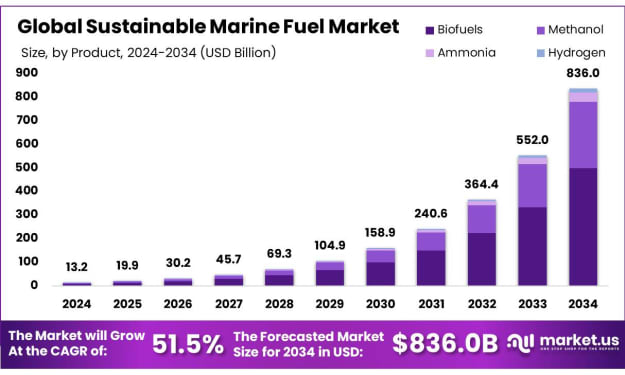
Sustainable Marine Fuel Market To Reach USD 836.0 Billion by 2034 at 51.5% CAGR
The global Sustainable Marine Fuel Market is projected to grow rapidly, increasing from USD 13.1 billion in 2024 to around USD 836.0 billion by 2034, representing a compound annual growth rate (CAGR) of 51.5% between 2025 and 2034. In 2024, Europe led the market with more than 51.0% of the global share, generating approximately USD 6.7 billion in revenue. This expansion is largely driven by the maritime sector’s urgent need to reduce emissions, as shipping currently accounts for about 2.5% of global greenhouse gas (GHG) emissions, a figure that could rise to nearly 17% by 2050 without effective mitigation measures.
By Hayden Kulas2 days ago in Futurism



Comments
There are no comments for this story
Be the first to respond and start the conversation.