
Mobile Banking Application Development: Understanding the Technology Behind Digital Banking
Exploring the technologies, features, security frameworks, and development processes that power modern digital banking experiences.

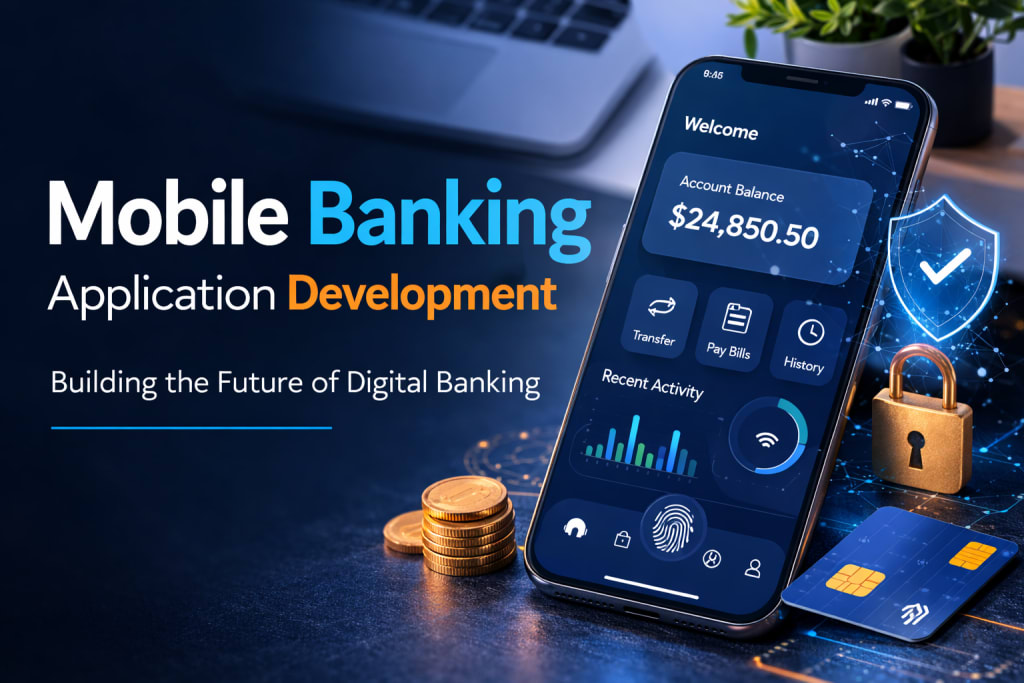
The way people interact with financial institutions has changed dramatically in the past decade. Instead of visiting physical branches or relying on desktop-based internet banking, many consumers now manage their finances directly from smartphones. From checking account balances to transferring funds or paying bills, mobile banking has become an essential part of everyday financial activity.
This transformation has encouraged banks and financial institutions to invest heavily in mobile banking application development. As digital banking technology continues to evolve, mobile apps are increasingly becoming the primary channel through which customers access financial services.
Mobile banking applications are not just convenient tools; they represent a broader shift in the financial ecosystem driven by fintech innovation, improved connectivity, and changing user expectations. Understanding how these applications are designed and built provides valuable insight into the future of digital finance.
What is Mobile Banking Application Development?
Mobile Banking Application Development refers to the process of designing, building, testing, and deploying mobile applications that allow users to access banking services through smartphones or tablets.
These applications connect users to banking infrastructure through secure digital interfaces. By integrating financial systems, databases, and digital authentication mechanisms, mobile banking apps allow customers to perform a wide range of financial tasks without needing to visit a bank branch.
In the broader fintech ecosystem, mobile banking apps serve as a bridge between traditional financial institutions and modern digital experiences. They combine banking operations with mobile interface design, cybersecurity, and cloud-based infrastructure to deliver reliable and secure financial services.
Mobile banking development has also played a major role in expanding access to financial services worldwide. In regions where physical banking infrastructure is limited, mobile platforms have helped millions of users participate in the financial system.
Core Features of Modern Mobile Banking Apps
The effectiveness of any mobile banking platform depends on the features it offers. Modern banking app features focus on security, usability, and real-time access to financial information.
- Secure Login and Authentication
Security is the foundation of secure mobile banking. Most banking applications implement strong authentication systems to ensure that only authorized users can access financial data.
Common login methods include:
- Password or PIN authentication
- One-time passwords (OTP) sent through SMS or email
- Biometric verification such as fingerprint or facial recognition
These methods help protect sensitive financial information while maintaining user convenience.
2. Account Management
Account management tools allow users to monitor and control their financial activity. Through the application interface, customers can:
- View account balances
- Access savings and checking accounts
- Manage linked financial accounts
This centralized access makes it easier for individuals to track their finances in real time.
3. Transfers and Payments
One of the most widely used banking app features is the ability to transfer funds or make payments directly from a smartphone.
Common payment capabilities include:
- Peer-to-peer transfers
- Interbank transfers
- Utility bill payments
- Merchant payments through QR codes or digital wallets
These features simplify financial transactions and reduce the need for physical cash or checks.
4. Transaction History
Mobile banking apps typically provide detailed transaction records, allowing users to review their spending patterns.
Transaction history sections often include:
- Date and time of transactions
- Merchant information
- Payment categories
- Balance updates after each transaction
This level of transparency helps users maintain better financial awareness.
5. Notifications and Alerts
Real-time notifications are an important component of digital banking technology. Mobile apps can send alerts related to account activity, including:
- Transaction confirmations
- Suspicious activity warnings
- Low balance alerts
- Payment reminders
These notifications enhance security while keeping users informed about their financial activity.
6. Budget Tracking and Financial Insights
Some fintech apps include budgeting tools that help users analyze spending behavior.
These tools may provide:
- Monthly spending summaries
- Category-based expense breakdowns
- Savings goals and tracking
By integrating financial analytics, mobile banking applications encourage more responsible financial management.
Key Technologies Behind Mobile Banking Applications
Building a secure and efficient banking application requires multiple technologies working together. Modern mobile banking development relies heavily on advanced digital infrastructure.
1. Artificial Intelligence and Machine Learning
Artificial intelligence has become an important part of fintech innovation. In mobile banking apps, AI is used for tasks such as:
- Fraud detection
- Personalized financial recommendations
- Chat-based customer support
- Transaction pattern analysis
Machine learning algorithms can analyze large datasets to identify unusual account activity, helping financial institutions detect potential fraud.
2. Cloud Infrastructure
Cloud computing plays a major role in modern digital banking technology. Instead of relying entirely on on-premise systems, many financial platforms use cloud infrastructure to manage data storage and application scalability.
Cloud-based systems allow banking apps to:
- Handle large numbers of transactions simultaneously
- Maintain system availability during peak usage
- Store encrypted financial data securely
This infrastructure supports the reliability required for continuous mobile banking services.
3. API Integrations
Application Programming Interfaces (APIs) allow mobile banking apps to communicate with external systems and financial services.
APIs support integrations with:
- Payment gateways
- credit scoring services
- identity verification platforms
- financial data providers
These integrations enable mobile apps to offer a wider range of financial services without requiring separate platforms.
4. Biometric Authentication
Biometric technology has become increasingly common in secure mobile banking environments.
Instead of relying solely on passwords, users can access accounts through:
- fingerprint recognition
- facial recognition
- voice authentication
Biometric authentication provides both convenience and an additional layer of security for financial applications.
Security and Compliance Considerations
Financial applications handle highly sensitive data, which makes security one of the most critical aspects of mobile banking application development.
1. Data Encryption
Encryption protects financial information during transmission and storage. Mobile banking apps typically use advanced encryption standards to secure:
- login credentials
- account numbers
- transaction data
Encrypted communication channels ensure that information cannot be intercepted by unauthorized parties.
2. Multi-Factor Authentication
Multi-factor authentication (MFA) requires users to verify their identity through multiple steps. For example, logging in might require:
- A password
- A one-time code sent to the user’s phone
- Biometric verification
This layered approach significantly reduces the risk of unauthorized account access.
3. Regulatory Compliance
Financial institutions must follow strict regulatory frameworks when building fintech apps.
Compliance standards often address:
- data privacy protection
- identity verification requirements
- anti-money laundering regulations
- secure transaction monitoring
These regulations ensure that digital banking platforms operate within legal and security guidelines.
Steps Involved in Mobile Banking Application Development
Creating a secure and reliable banking application requires a structured development process. Each stage focuses on different aspects of design, technology, and security.
1. Planning and Requirement Analysis
The development process begins with defining the application’s goals and features. Financial institutions analyze:
- user requirements
- regulatory obligations
- technology infrastructure
- security needs
Clear planning ensures that the application aligns with both user expectations and compliance standards.
2. UI and UX Design
User interface (UI) and user experience (UX) design play an essential role in fintech apps. Since financial transactions require clarity and accuracy, the interface must be intuitive and easy to navigate.
Design considerations typically include:
- simple navigation menus
- clear transaction confirmation screens
- accessible account information
Well-designed interfaces reduce user errors and improve overall engagement.
3. Application Development
During the development stage, engineers build the app’s core functionality. This includes integrating backend systems, implementing security protocols, and creating the user interface.
Developers often work with multiple technologies, including:
- mobile development frameworks
- secure database systems
- payment processing systems
The goal is to create a stable and responsive application capable of handling financial transactions.
4. Testing and Security Validation
Testing is a critical stage in mobile banking application development. Applications undergo extensive testing to identify potential issues before launch.
Common testing procedures include:
- functional testing
- performance testing
- security vulnerability assessments
- user experience testing
Security audits are especially important to ensure that financial data remains protected.
5. Deployment and Maintenance
Once testing is complete, the application is released to users through mobile platforms. However, deployment is only the beginning of the lifecycle.
Ongoing maintenance involves:
- software updates
- security patches
- feature enhancements
Continuous improvement helps maintain reliability and adapt to evolving digital banking technology.
Future Trends in Digital Banking
Mobile banking applications will continue evolving as financial technology advances. Several trends are expected to shape the future of fintech apps.
1. AI-Powered Banking Assistants
Artificial intelligence is expected to play a larger role in financial services. AI-powered assistants may help users manage accounts, answer banking questions, and provide financial insights through conversational interfaces.
2. Open Banking Ecosystems
Open banking initiatives allow financial institutions to share data securely with third-party applications through APIs. This approach encourages innovation by enabling new fintech services that interact with traditional banking platforms.
3. Personalized Financial Services
Data analytics will allow banking applications to deliver highly personalized experiences. Apps may analyze spending behavior and offer customized recommendations related to budgeting, savings, or investment strategies.
These innovations highlight the growing role of fintech innovation in shaping the future of financial services.
Conclusion
Mobile banking applications have become a central component of modern financial systems. Through mobile banking application development, financial institutions are able to deliver convenient, secure, and accessible services directly to users’ smartphones.
From secure login systems and transaction management to advanced technologies such as artificial intelligence and cloud computing, mobile banking platforms combine multiple innovations to support digital financial interactions.
As fintech apps continue to evolve, mobile banking will likely expand beyond traditional transactions to include intelligent financial assistance, personalized insights, and integrated digital ecosystems. With the rapid advancement of digital banking technology, mobile applications are expected to remain a key driver of innovation in the financial industry for years to come.
About the Creator
Davin Convay
Hey there! I’m Davin, a passionate content writer and digital storyteller who loves turning ideas into engaging words that connect and inspire. I write about tech, digital marketing, AI innovations and everyday insights.
Keep reading
More stories from Davin Convay and writers in Futurism and other communities.
IT Solutions Powering Modern Manufacturing Operations
Manufacturing has always been shaped by technology, from mechanized looms to assembly lines. Today, the transformation is less about physical machinery alone and more about the digital systems that connect, monitor, and optimize every step of production. Information Technology (IT) solutions now sit at the center of modern manufacturing operations, quietly enabling factories to work faster, smarter, and with greater resilience.
By Davin Convay11 days ago in Futurism
Rivian R2: A New Chapter in Electric Adventure Vehicles
Electric vehicles are no longer rare sights on the road, yet some announcements still capture public imagination in a powerful way. The Rivian R2 is one of those moments. When people first heard about this upcoming SUV, curiosity spread quickly. Drivers who love outdoor travel, quiet roads, and modern technology started wondering what Rivian might create next. The company already built a reputation for electric trucks and SUVs designed for exploration. Now the Rivian R2 promises something different: a vehicle that could bring that spirit to a wider audience. It represents more than a new model. For many people watching the electric vehicle market, the Rivian R2 signals a shift toward practical adventure, everyday usability, and a future where electric driving feels natural.
By Muqadas khana day ago in Futurism
A Transparent Look at Vocal Challenges and Top Stories
Almost three years ago, we shared a resource article that served as a place for people to suggest new challenge prompts. We thought it would be a good idea to refresh that thread, and take the opportunity to answer a few common questions about top stories, how challenges are judged and how submissions are reviewed.
By Vocal Curation Teama day ago in Resources


Comments
There are no comments for this story
Be the first to respond and start the conversation.