body modifications
A form of transhumanism, body modifications are made to enhance the human form.
When a Neuroscientist Turns Brain Signals Into Music
For decades, the idea that music could be created directly from the human brain has lived comfortably in the territory of science fiction — the kind of futuristic concept more commonly found in cyberpunk novels or speculative technology films. In those stories, humans connect directly to machines, thoughts become data, and creativity merges with technology in ways that feel both thrilling and unsettling.
By Navigating the World2 days ago in Futurism
The Mind of the Machine: Inside the World of Generative AI
There is a moment, familiar to anyone who has spent time with a modern AI system, that is difficult to fully rationalize. You type a question, a prompt, a request — and what comes back is not the mechanical, stilted output of the computers of popular imagination. It is fluent. It is contextually aware. It is, in some cases, genuinely surprising. It answers not just the question you asked but the question you meant to ask. It writes prose that flows, generates images of startling beauty, composes music that moves, and engages in conversation with a naturalness that, for a moment at least, makes you forget entirely that there is no one on the other side.
By noor ul amin13 days ago in Futurism
According to neuroscientists, this typical nightly ritual significantly enhances sleep.
It has been demonstrated that reading a book in bed improves sleep quality more than immediately turning out the lights. That straightforward practice simultaneously activates the systems of memory, language, and emotion, and that consistent concentration can facilitate the transition to sleep.
By Francis Dami19 days ago in Futurism
Alzheimer’s Disease, the Renin-Angiotensin System, and COVID-19
I. Alzheimer’s Disease: More Than Amyloid Alzheimer's disease has long been framed as a proteinopathy defined by extracellular β-amyloid plaques and intracellular tau tangles. While these remain central pathological hallmarks, the explanatory model of the disease has expanded considerably over the past two decades.
By Alain SUPPINI21 days ago in Futurism
The enigma of why a star went dark for months is solved by astronomers.
Typically, stars don't simply disappear. For millions or possibly billions of years, they emit a constant glow. At the end of 2024, scientists took notice when a star 3,200 light-years away from Earth abruptly faded.
By Francis Dami24 days ago in Futurism
AI as a Reflective Surface
Much of the confusion surrounding artificial intelligence comes from treating it as an agent rather than a surface. When people speak about AI “doing the thinking,” “creating the ideas,” or “speaking for someone,” they are often projecting agency onto a system that does not possess intention, belief, or understanding. This projection obscures what is actually happening in many real-world uses. In those cases, AI is not acting as a source of meaning, but as a surface that reflects, redirects, and reshapes what is already present.
By Peter Thwing - Host of the FST Podcast29 days ago in Futurism
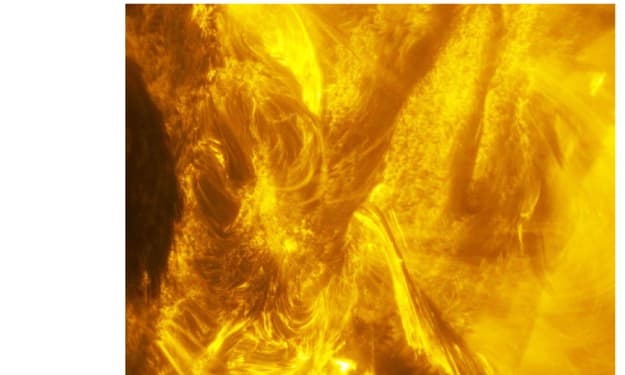
ESA's Solar Orbiter has made new measurements that illustrate the chaotic origins of solar flares.
There is no big bang at the start of a solar flare. They begin modestly. In actuality, the early warning indicators were hardly noticeable to scientists until recently.
By Francis Damiabout a month ago in Futurism
Exploring the Vast Universe of Perry Rhodan
I first stumbled upon Perry Rhodan on a rainy Saturday afternoon in a tiny secondhand bookstore in Berlin. I wasn’t looking for it—I was just hiding from the cold—but the neon orange spines on the shelf called to me like a secret. I picked up the first issue and found myself staring at a cover depicting gleaming spaceships, alien landscapes, and a man who somehow looked both heroic and terrified.
By John Smith2 months ago in Futurism