
The Quiet Fear: An Asteroid Approaching Earth
The night sky has always been a place of wonder. For centuries, people have looked up at the stars with curiosity, hope, and sometimes fear.

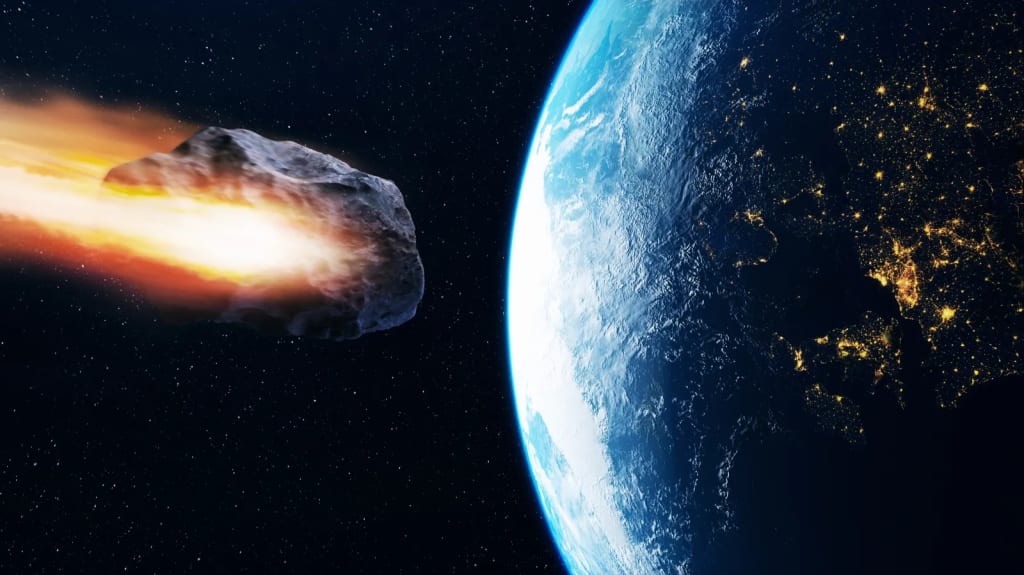
The night sky has always been a place of wonder. For centuries, people have looked up at the stars with curiosity, hope, and sometimes fear. Among the many objects moving silently through space, asteroids hold a special kind of mystery. Most pass by Earth without anyone noticing, but every so often the phrase “asteroid approaching Earth” appears in news headlines and quickly captures public attention.The idea can feel unsettling. A giant rock traveling through space toward our planet sounds like something from a disaster movie. Yet the reality is more complex and far less dramatic than most people imagine. Scientists track thousands of objects every day, studying their paths and calculating the chances of any possible impact. Understanding how this process works can replace fear with knowledge and calm.
What Does “Asteroid Approaching Earth” Actually Mean?
When people hear about an asteroid approaching Earth, many imagine a direct collision. In reality, the phrase often simply means that an asteroid will pass relatively close to our planet in space terms.Space is incredibly vast. An object passing within a few million kilometers of Earth is still considered “close” by astronomical standards. Yet that distance is far beyond the orbit of the Moon.Astronomers classify objects that pass near Earth as Near-Earth Objects, often called NEOs. These include both asteroids and comets whose orbits bring them into the neighborhood of our planet.Many of these objects travel around the Sun in predictable paths. Scientists monitor them regularly and update their calculations whenever new data appears.
Where Asteroids Come From
Asteroids are ancient pieces of rock and metal left over from the formation of the solar system more than four billion years ago. They are like scattered fragments from the early building blocks of planets.Most asteroids live in the asteroid belt between Mars and Jupiter. This region contains millions of rocky bodies, ranging from tiny dust particles to objects hundreds of kilometers wide.Occasionally, gravitational forces disturb one of these asteroids. The pull of planets, especially Jupiter, can change an asteroid’s orbit and send it drifting into a new path through the solar system.Over time, some of these wandering objects move closer to the inner planets, including Earth. When that happens, scientists begin tracking them closely.
How Scientists Detect Asteroids
Finding asteroids in space is not easy. Many are small and dark, reflecting very little sunlight. Some are discovered only when they pass relatively close to Earth.Astronomers use powerful telescopes that scan the sky night after night. These telescopes take multiple images of the same region of space.When scientists compare those images, they look for objects that move slightly against the background of distant stars. Even a small movement can reveal an asteroid traveling through space.Computer systems then analyze the data and calculate the object's orbit. Once an asteroid is identified, astronomers continue observing it to refine their measurements.Each new observation helps them determine whether the asteroid approaching Earth poses any risk.
Why Headlines About Asteroids Appear So Often
News about asteroids approaching Earth often spreads quickly online. The subject naturally attracts attention because it combines science, mystery, and a hint of danger.
However, many headlines can sound more dramatic than the actual situation.
An asteroid passing safely millions of kilometers away may still be described as “close” because, in cosmic terms, it is closer than usual.
Media reports sometimes focus on the size of the asteroid, which can make the event sound more alarming. Yet size alone does not determine danger. Distance and trajectory are far more important.
Scientists carefully calculate whether an asteroid’s path could intersect with Earth’s orbit. In most cases, they quickly confirm that the object will pass by safely.
Understanding this helps people view asteroid news with calm curiosity instead of fear.
The Largest Asteroids That Passed Near Earth
Throughout history, several large asteroids have passed near our planet without causing harm.
Many of these objects were detected years in advance, giving scientists plenty of time to study their movement.
When a large asteroid approaches Earth, it often becomes a valuable research opportunity. Scientists gather information about its composition, rotation, and surface features.
These observations help researchers understand the early solar system. Asteroids are like ancient time capsules, preserving materials that formed long before Earth developed its oceans and atmosphere.
Each close pass provides another chance to learn more about the origins of our cosmic neighborhood.
What Would Happen If an Asteroid Hit Earth?
The idea of an asteroid impact naturally raises concern. History shows that large impacts have shaped the planet in dramatic ways.About 66 million years ago, a massive asteroid struck Earth and contributed to the extinction of the dinosaurs. The impact released enormous energy and changed the global climate.However, events of that scale are extremely rare. Large impacts occur on timescales of millions of years.Smaller asteroids hit Earth much more often, but they usually burn up in the atmosphere before reaching the ground. These events appear as bright meteors or fireballs in the sky.Occasionally, small fragments survive and land on Earth as meteorites. Most fall harmlessly into oceans or remote areas.The chance of a large asteroid impact during a human lifetime is extremely low.
How Space Agencies Protect Earth
Scientists and space agencies around the world take asteroid monitoring seriously. Several international programs focus on identifying and tracking objects that could potentially come near Earth.These programs combine telescope observations, advanced computer modeling, and global cooperation.Researchers constantly update asteroid databases and share information with observatories worldwide. This collaboration allows scientists to calculate potential risks years or even decades in advance.In recent years, space missions have also tested methods for changing an asteroid’s path.One experiment involved sending a spacecraft to collide with a small asteroid. The goal was to see whether the impact could slightly alter its orbit.The results showed that even a small push can shift an asteroid’s path over time. This kind of strategy could someday help prevent a dangerous object from reaching Earth.
Why Tracking Asteroids Matters
Tracking an asteroid approaching Earth is not about predicting disaster. It is about preparation and knowledge.
Early detection gives scientists time to study an object carefully and calculate its future position. The more time researchers have, the more options exist if action ever becomes necessary.
Even when there is no threat, studying asteroids teaches us valuable lessons about the solar system.
These rocky bodies contain clues about how planets formed and how materials moved through space billions of years ago.
Some asteroids also contain metals and minerals that could one day become important resources for space exploration.
By studying them today, scientists prepare for a future where humans may travel deeper into the solar system.
The Role of Technology in Asteroid Detection
Modern technology has dramatically improved the ability to detect and track asteroids.
Advanced telescopes can scan large sections of the sky in a single night. High-speed computers process huge amounts of data and identify moving objects within minutes.
Artificial intelligence systems now assist astronomers by recognizing patterns that human observers might miss.
New observatories are also being built with the specific goal of identifying near-Earth objects.
These systems will help detect smaller asteroids earlier than ever before.
Earlier detection means more accurate predictions and greater confidence in understanding asteroid movements.
The Psychological Impact of Asteroid News
The phrase asteroid approaching Earth often triggers strong emotional reactions. People naturally imagine worst-case scenarios.
Movies and television have played a role in shaping these fears. Dramatic stories about global destruction can make real scientific reports sound more alarming than they are.
In reality, asteroid monitoring is one of the most carefully managed areas of modern astronomy.
Scientists approach the subject with patience and precise calculations rather than panic.
Understanding how these systems work can help people replace fear with curiosity.
Looking at the night sky becomes less about worrying and more about appreciating the vast and complex universe around us.
What the Future Holds
The study of asteroids is still evolving. New missions and telescopes are expanding what scientists can observe and measure.
Some space agencies are exploring the possibility of sending robotic missions to study asteroids up close.
These missions could reveal more about their structure, composition, and behavior in space.
At the same time, global monitoring networks continue to improve. The number of known near-Earth objects grows every year as technology becomes more powerful.
With each discovery, scientists gain a clearer picture of the environment surrounding our planet.
The phrase asteroid approaching Earth will likely appear in news headlines many times in the future. Yet each report also reflects the remarkable ability of humans to observe, analyze, and understand the universe.
A Different Way to Look at the Sky
For most of human history, people had no way to detect objects moving through space. An asteroid could approach Earth without anyone knowing until it was already visible in the sky.
Today the situation is very different.
Astronomers around the world watch the heavens constantly. Powerful telescopes scan the darkness night after night, searching for faint moving objects.
Each discovery adds another piece to our understanding of the solar system.
Instead of viewing asteroid reports with fear, they can be seen as reminders of human curiosity and scientific progress.
Every asteroid approaching Earth that scientists track successfully is proof that knowledge can turn uncertainty into understanding.
About the Creator
Muqadas khan
Hi! Welcome to my Vocal page. I’ll be sharing fresh articles every day covering stories, ideas, and a bit of inspiration to brighten your feed. Thanks for reading and supporting daily writing! 📖💫
Keep reading
More stories from Muqadas khan and writers in FYI and other communities.
Oil Prices and the Hidden Struggles Behind Global Energy
Oil prices influence daily life in ways many people rarely notice. From the cost of gasoline at the pump to the price of food in grocery stores, shifts in oil prices ripple through the global economy. A sudden rise can strain family budgets, while a sharp drop can shake entire industries. Behind these changes are complex forces such as political tension, supply shortages, economic growth, and environmental concerns. Yet for many people, oil prices remain a distant headline rather than a personal story. The truth is far more connected to everyday life. Understanding how oil prices move, why they change, and who feels the impact most can reveal a deeper picture of the modern world and the fragile balance that keeps global energy flowing.
By Muqadas khan4 days ago in FYI



Comments
There are no comments for this story
Be the first to respond and start the conversation.