
A Gun Control Debate. But in China. 2,000 Years Ago
A short story from history
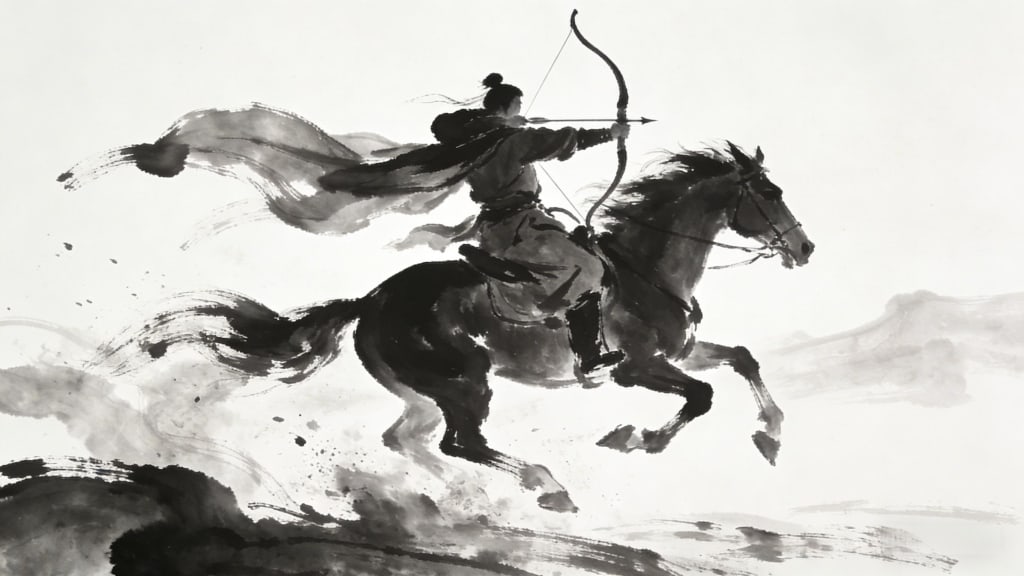
Let’s go back more than 2,000 years to China, during the Han Dynasty.
At that time, the Prime Minister of China proposed to the emperor that bows and crossbows should be banned. These weapons were extremely lethal, he argued, and allowing ordinary people to own them would pose a major threat to public security.
The Prime Minister who put forward this proposal was Gongsun Hong. Born a commoner, he was the first Prime Minister in Chinese history who was not from the royal family or the nobility. Before him, most Prime Ministers of the empire were either royal family members or nobles.
Gongsun Hong had a unique life story.
He once worked as a jailer in the countryside but lost his job due to breaking the law, leaving him with no choice but to make a living by raising pigs. He taught himself some classic books of the time and gained a reputation in his commandery, which earned him a small official position.
Later, when Emperor Wu, the young and ambitious emperor of the Han Dynasty, ascended the throne, he issued imperial edicts to local officials many times, ordering them to recommend virtuous and talented people.
Emperor Wu then gave these recommended scholars imperial inquiries, questions posed by ancient Chinese emperors for ministers to write articles on, expressing their views and suggestions.
Gongsun Hong’s response so impressed Emperor Wu that he was promoted. He later rose through the ranks and eventually became Prime Minister.
Why did he want to ban ordinary people from owning bows and crossbows?
This is what Gongsun Hong told the emperor:
"Ten thieves armed with crossbows, and a hundred officials dare not approach them. Criminals cannot be captured and punished right away; too many escape. When thieves use bows and crossbows, the harm they cause is small, but what they gain is great. This is why banditry keeps growing.
If we forbid people to carry bows and crossbows, then thieves will be forced to use only short weapons. When fighting with short weapons, the side with more people wins. If we send many officials to catch a few thieves, they will surely succeed. When criminals see that there is only harm and no gain in breaking the law, they will stop. This is the way to make punishments unnecessary. I believe that forbidding people to carry bows and crossbows is beneficial."
The emperor then sent this proposal to his ministers for discussion.
The Man Who Said No
Gongsun Hong's arguments seemed reasonable. But a minister named Wuqiu Shouwang submitted a response opposing the ban.
Wuqiu Shouwang had his own history with public security.
The emperor had once sent him to serve as the top police official in a commandery. During his term, the commandery was overrun with bandits. The emperor was angry and questioned him: "When you served by my side, you seemed so capable. How could you let things get so bad once you went out to govern?"
Wuqiu Shouwang replied that the government had repeatedly conscripted and dispatched troops to the area, and harvests had been poor for several years—that was why so many bandits had appeared.
One might think that Wuqiu Shouwang, given his experience, would have supported the chancellor's proposal. But, he did not.
The Arguments Against the Ban
Wuqiu Shouwang gave three reasons why bows should not be banned.
First, he said that in ancient times, people made weapons like bows and arrows not to harm each other, but to stop violence and punish evil.
In peaceful times, people used them to protect against wild animals and prepare for emergencies. In times of war, they used them to defend their homes and fight enemies.
That is why the ancient ritual text The Book of Rites says that when a son is born, his family performs a ceremony with a bow of mulberry wood and arrows of reed. This was to show that he would one day have duties to protect his family and his country.
Even a thousand years ago, when the Zhou dynasty declined and there was no wise ruler on the throne, the feudal lords fought each other with force. The strong bullied the weak, the many oppressed the few. The world fell into disorder. It was not the weapons that changed; it was the world that had gone bad.
Second, he pointed to the example of the First Emperor of Qin. After unifying China, the Qin Emperor collected all the weapons from across the land and melted them down. He thought this would secure his dynasty forever. Yet his kingdom was overthrown anyway.
Why? Because he created harsh laws and abandoned kindness and mercy. Bandits appeared everywhere. In the end, people rose up with nothing but sticks and farm tools, and they brought down his empire.
Even without real weapons, if a ruler does not govern with benevolence, people will use whatever they have—even farming tools—to fight back and overthrow the kingdom.
Third, Wuqiu Shouwang reminded the emperor that the wise rulers of ancient times never relied on bans and strict controls. Instead, they focused on moral education.
They not only allowed bows and arrows but actively promoted archery through rituals and ceremonies. They encouraged people to learn archery and improve their skills.
"Your Majesty rules with benevolence," he said, "yet bandits still appear. That is the fault of the local governors and princes who fail to govern well, not the fault of people carrying bows."
The Heart of the Matter
Finally, Wuqiu Shouwang addressed the Prime Minister's concern directly:
"We want to ban bows to stop robbers. But the punishment for robbery is death. If the death penalty cannot stop them, why would a ban on weapons? The truly wicked do not fear harsh punishment; that is what makes them wicked."
He then explained what would happen if the ban were put in place:
"I fear that evil people will still find ways to carry bows, and officials will not be able to stop them. But good people, who want to defend themselves, will break the law by carrying bows for protection. This would only strengthen the power of criminals and take away the people's means of self-defense."
After hearing this, the emperor gave Wuqiu Shouwang’s memorial to Prime Minister Gongsun Hong. Gongsun Hong conceded and never mentioned the ban on bows and crossbows again.
About the Creator
Keep reading
More stories from writers in History and other communities.
The Year 1957 in Review: Fun Facts, Trivia, and Historic Highlights
This quick read is a collection of fun facts, trivia, and historical events from the year 1957. Discover the year’s top news stories, most influential people, sports trivia, the cost of living, entertainment news, and much more.
By Gregory DeVictor4 days ago in History
Why Didn't Anyone Tell Us
Men, move along. This is not for you. This is for the women. I was forty-five when I began menopause. It is pretty young for that to be going on in a woman’s life, but I had undiagnosed PCOS, my entire life. Thank you to all the gynecologists I had seen my entire life. That in itself should encourage women to keep seeking second opinions, especially when you are not getting correct answers or any at all.
By Alexandra Grant3 days ago in Humans



Comments
There are no comments for this story
Be the first to respond and start the conversation.