
Could Israel Ever Collapse? Understanding the Realities of Modern Geopolitics
Military Strength, Regional Tensions, and the Factors That Shape the Future of Israel

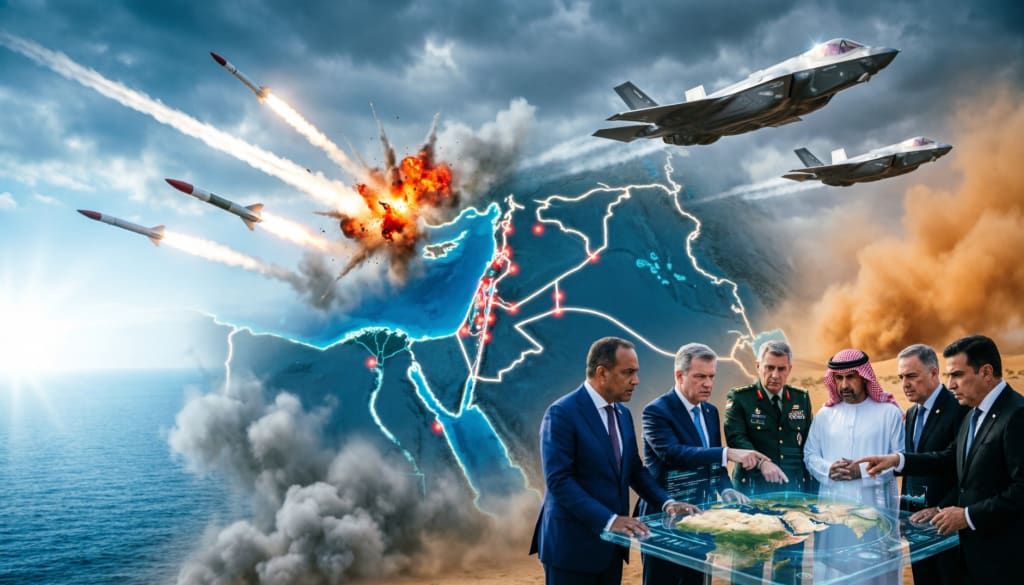
Could Israel Ever Collapse? Understanding the Realities of Modern Geopolitics
In discussions about the Middle East, some people ask dramatic questions such as whether Israel could ever face collapse or “the end.” These questions often appear during periods of intense conflict in the region. However, understanding this issue requires looking carefully at political realities, military power, international alliances, and regional dynamics rather than focusing only on emotional reactions during crises.
Israel is one of the most technologically advanced and militarily capable countries in the Middle East. Since its establishment in 1948, the country has faced multiple wars and conflicts with neighboring states and non-state groups. Over the decades, Israel built a highly sophisticated defense system, including advanced air power, missile defense technologies, cyber capabilities, and intelligence networks.
One of the key elements of Israel’s defense is its strong partnership with the United States. The United States provides significant military aid, intelligence cooperation, and diplomatic support to Israel. This relationship has been a central pillar of Israel’s national security strategy for many years. Because of this alliance, Israel has access to advanced military equipment and strong political backing in international institutions.
Israel also maintains powerful defensive systems such as the Iron Dome, which intercepts rockets and short-range missiles. Other systems such as David's Sling and Arrow missile defense system are designed to intercept longer-range missiles. These layered defense technologies significantly strengthen Israel’s ability to defend against many types of attacks.
Another factor shaping Israel’s security is its regional environment. Israel faces tensions with several groups and governments, including organizations operating in Gaza Strip and Lebanon, as well as political rivalry with Iran. These tensions sometimes lead to military confrontations, which attract global attention and concern.
However, Israel also has diplomatic relationships with a number of countries in the region. In recent years, agreements such as the Abraham Accords improved relations between Israel and several Arab states. These agreements showed that political dynamics in the Middle East can change over time.
When analysts evaluate the possibility of any country collapsing, they usually examine several major factors: military strength, economic stability, political unity, alliances, and social cohesion. In Israel’s case, the country has a strong economy, advanced technology sectors, and significant global connections.
At the same time, Israel also faces serious internal debates and political divisions, just like many other democracies. Issues related to security policy, the Palestinian question, and domestic politics sometimes create strong disagreements within Israeli society. Internal political challenges can influence national stability, but they are common in many countries around the world.
Another important factor is the humanitarian and political situation involving Palestinians. The long-running conflict between Israelis and Palestinians remains one of the most complex issues in international politics. Many global leaders believe that a sustainable peace agreement between Israelis and Palestinians would be one of the most important steps toward long-term regional stability.
International organizations such as the United Nations and numerous diplomatic initiatives have attempted to encourage negotiations between the two sides. Although progress has often been slow, many experts believe that diplomacy remains the only long-term solution.
It is also important to remember that predictions about the “end” of any country are often exaggerated during periods of crisis. Modern states rarely disappear suddenly. Political systems may change, governments may rise and fall, and borders may shift through diplomacy or conflict, but complete national collapse is extremely rare, especially for countries with strong institutions and international support.
The future of Israel, like the future of the entire Middle East, will likely depend on several key developments: regional diplomacy, security arrangements, economic cooperation, and efforts to resolve long-standing conflicts. If tensions continue to escalate, the region could face further instability. If diplomacy succeeds, however, there is also potential for cooperation and long-term peace.
In conclusion, discussions about the “end of Israel” often reflect frustration and anger during times of conflict, but geopolitical reality is far more complex. Israel remains a powerful state with strong allies, advanced technology, and significant military capability. The real challenge for the region is not the collapse of one country, but finding ways to reduce violence, address humanitarian concerns, and create a more stable future for all people living in the Middle East.
About the Creator
Wings of Time
I'm Wings of Time—a storyteller from Swat, Pakistan. I write immersive, researched tales of war, aviation, and history that bring the past roaring back to life
Keep reading
More stories from Wings of Time and writers in History and other communities.
GDP After War: How Conflicts Reshape National Economies
GDP After War: How Conflicts Reshape National Economies War is not only fought on battlefields; it also leaves deep scars on a country's economy. One of the most important indicators affected by war is Gross Domestic Product (GDP), which measures the total value of goods and services produced by a nation. When war begins, economic activity often collapses, infrastructure is destroyed, and government spending shifts heavily toward military needs. But the economic story does not end when the war stops. The period after war can be equally challenging and sometimes surprisingly transformative.
By Wings of Time 3 days ago in History
The Year 1905 in Review: Fun Facts, Trivia, and Historic Highlights
This quick read is a collection of fun facts, trivia, and historic events from the year 1905. Learn about the year’s top news stories and most influential people, notable inventions and sports facts, entertainment trivia and grocery prices, and much more.
By Gregory DeVictor2 days ago in History




Comments
There are no comments for this story
Be the first to respond and start the conversation.