
India: Rajasthan Government Accused of Trying to Rewrite History Curriculum
Opposition leaders and historians warn that proposed changes to school textbooks may reshape how students understand India’s past.

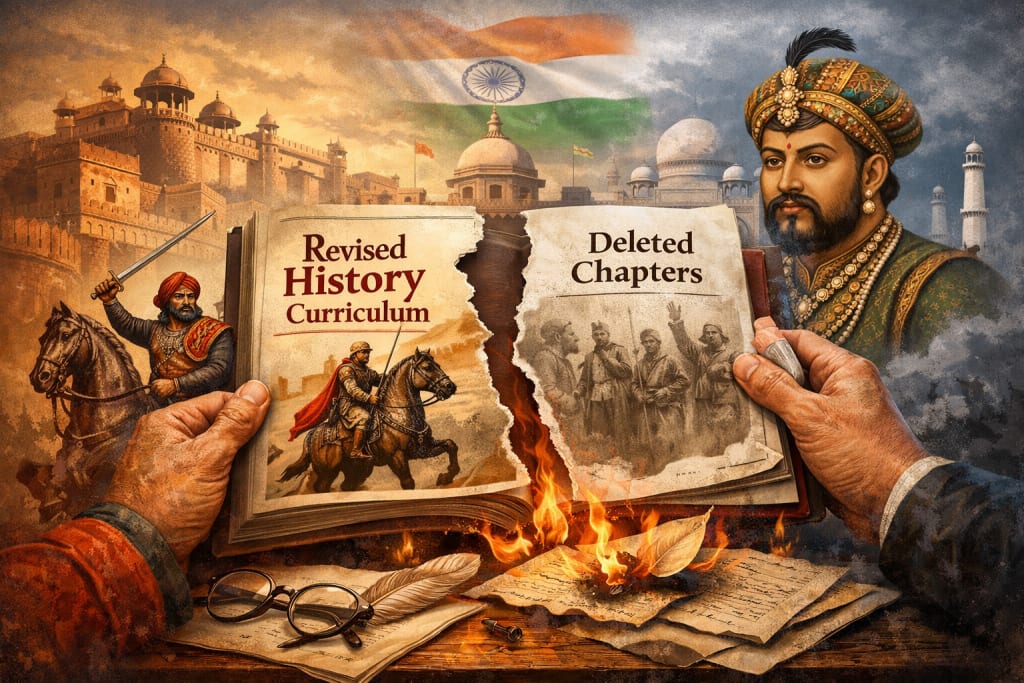
A fresh controversy has emerged in India after allegations that the government of the state of Rajasthan is attempting to alter school history curricula. Critics claim the proposed revisions could significantly change how historical events and figures are presented to students, raising concerns about political influence in education and the rewriting of history.
The debate centers on changes being introduced to textbooks used in schools across Rajasthan. According to reports and political reactions, several chapters and historical narratives are being revised or removed, sparking accusations from opposition leaders, academics, and civil society groups that the government is trying to reshape historical interpretation to align with a particular ideological viewpoint.
One of the major points of criticism involves the removal or modification of certain historical topics, including references to tribal resistance movements and other important cultural contributions. Former Rajasthan Chief Minister Ashok Gehlot publicly criticized the move, alleging that the government was attempting to erase the role of tribal communities from official history. He pointed specifically to the removal of content related to Mangarh Dham, a historic site associated with tribal resistance against colonial rule. Gehlot described the omission as a deliberate attempt to erase an important chapter of India’s social and political history. 
Supporters of the changes, however, argue that curriculum revisions are a normal part of educational reform. Government representatives say that the updates aim to make textbooks more relevant, reduce academic burden, and highlight local heroes and regional history that may have been overlooked in the past.
The controversy is not entirely new in Rajasthan. Over the past decade, school textbooks in the state have undergone several revisions depending on which political party was in power. In earlier changes, textbooks were altered to portray the 16th-century Battle of Haldighati differently, stating that the Rajput ruler Maharana Pratap defeated the Mughal emperor Akbar. Previously, many historians had described the battle as inconclusive. 
Such changes have fueled a broader national debate about how history should be taught in schools. Critics argue that altering historical narratives risks distorting academic understanding and could undermine the credibility of the education system. Historians emphasize that history should be based on evidence and scholarly research rather than political priorities.
In recent years, textbook revisions across India have sparked similar debates. Educational authorities have revised or removed certain historical chapters in order to “rationalize” the curriculum and reduce the academic workload for students after the COVID-19 pandemic. However, some scholars believe these changes go beyond simplification and may reflect ideological priorities. 
For example, controversies have also arisen over changes in national-level textbooks that reduced or removed discussions of the Mughal period in some classes. Critics say this could create gaps in students’ understanding of India’s medieval history, which played a major role in shaping the country’s culture, architecture, and political development. 
Education experts warn that school textbooks play a powerful role in shaping the historical consciousness of young people. The narratives students encounter during their education often become the foundation of their understanding of national identity and historical memory.
Some historians argue that the solution lies in presenting multiple perspectives rather than removing or rewriting entire chapters. They say that history is complex and often contested, and textbooks should reflect this complexity instead of promoting a single interpretation.
Meanwhile, political tensions around the issue continue to grow. Opposition leaders have demanded greater transparency in the process of revising textbooks and have called for independent academic committees to oversee curriculum changes. They argue that any revisions should involve historians, educators, and researchers to ensure accuracy and balance.
Supporters of the government insist that emphasizing regional heroes and cultural heritage is a legitimate educational goal. They say that many regional histories have long been overshadowed by dominant national narratives and that revising textbooks can help correct this imbalance.
The ongoing debate in Rajasthan reflects a larger global issue: how societies remember and teach their past. Around the world, governments and educators frequently face the challenge of balancing national identity, academic integrity, and political pressures in shaping school curricula.
As the controversy unfolds, many observers believe the outcome will influence not only the future of education in Rajasthan but also the broader conversation about how history should be taught in India’s schools. Whether the revisions are ultimately accepted or revised again, the debate highlights the enduring power of history—and the importance of how it is told to the next generation.
About the Creator
Irshad Abbasi
Ali ibn Abi Talib (RA) said 📚
“Knowledge is better than wealth, because knowledge protects you, while you have to protect wealth.
Keep reading
More stories from Irshad Abbasi and writers in History and other communities.
Mughal History Removed from Indian School Curriculum
In recent years, the decision to remove significant portions of Mughal history from school textbooks in India has sparked a heated debate among historians, educators, politicians, and the general public. The move, introduced as part of broader curriculum revisions, has raised questions about how history should be taught and whether political ideologies are influencing the way the past is presented to future generations.
By Irshad Abbasi about 5 hours ago in History


Comments
There are no comments for this story
Be the first to respond and start the conversation.