
Mykhailo Yurov on KyivPride, Demiromantic Identity, and LGBTQI+ Advocacy in Wartime Ukrai
What does Mykhailo Yurov reveal about LGBTQI+ visibility in Ukrainian society?

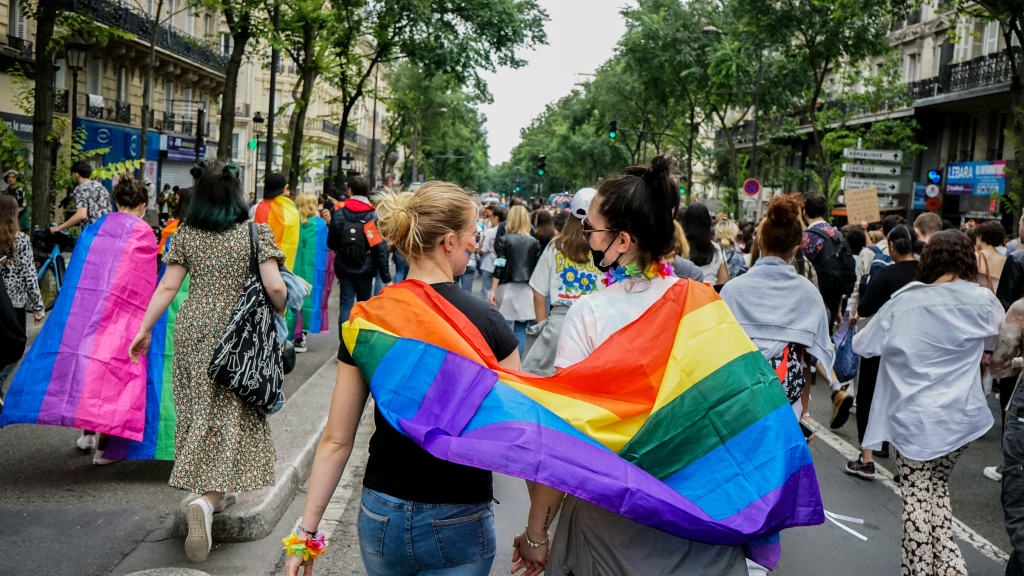
Mykhailo Yurov is a Ukrainian LGBTQI+ advocate and project manager at KyivPride, the organization behind one of Ukraine’s most prominent Pride initiatives. KyivPride’s official team page lists him as Project Manager, and the group describes its work as year-round advocacy, education, community support, and human rights protection. Based on this interview, Yurov has worked with KyivPride since January 2024, helping manage budgets, documents, donor communication, and major public events, including the KyivPride Festival and March. His public-facing work sits at the intersection of queer visibility, civic organizing, and wartime resilience in a society still negotiating equality, safety, and democratic inclusion.
In this interview, Scott Douglas Jacobsen speaks with Mykhailo Yurov about queer life, visibility, and LGBTQI+ organizing in wartime Ukraine. Yurov explains that he identifies as demiromantic, works as a project manager for KyivPride, and sees bisexual or pansexual identities as sometimes less socially visible than openly gay or transgender identities. He discusses KyivPride’s reliance on international funding, the absence of dedicated Ukrainian state support, organized far-right hostility, online threats, and the pressure placed on KyivPride to answer for unrelated public controversies. The conversation maps the collision of identity, activism, security, and social perception in contemporary Ukraine under wartime conditions.
Scott Douglas Jacobsen: What has been your experience as a member of the LGBTI+ community in Ukraine? How do you self-identify? How are people from different backgrounds treated in society—for example, in high school versus adulthood? We can start with smaller questions.
Mykhailo Yurov: I identify as demiromantic. In Ukraine, it is generally easier to identify that way than to be openly lesbian, gay, or especially transgender. Bisexual or pansexual identities can sometimes be less visible socially, particularly if someone is in a relationship that appears heterosexual. For example, our program manager is pansexual and is currently dating a man, so she has not had to come out to her family. My family is very accepting and knows that I work for KyivPride. I did not come out to them, although it does not have a major impact on my personal life because I am not planning to marry a man or pursue relationships in that way. For me, the identity is less central than it may be for people who identify as gay or lesbian and whose relationships are more visible in everyday life.
I am a project manager for KyivPride and have been working there since January 2024.
Jacobsen: What does the role of project manager involve, and how did you come to this position?
Yurov: In 2024, KyivPride reorganized its team and began hiring new staff. The organization posted an open job announcement, and I applied because I was already familiar with KyivPride. I had participated in the KyivPride March in 2019. I applied, was selected, and have been working there since the beginning of 2024.
My work mainly involves administrative and organizational tasks, including spreadsheets, documents, and budget management. I am also involved in organizing events. I helped develop the KyivPride Festival, an educational program held before the KyivPride March. I am also involved in organizing the KyivPride March and have coordinated with local authorities, including the government and the police, to ensure the event can take place safely and with proper support. I also communicate with donors and partner organizations.
In many European and American contexts, Pride organizations primarily organize Pride events, and much of the work is volunteer-based, with people holding other jobs. KyivPride operates year-round. Our most visible projects are the KyivPride March and the KyivPride Festival during Pride Month in June, but throughout the year, we also run informational campaigns, advocacy initiatives, and programs to improve the legal and social conditions for LGBTQI people in Ukraine.
Jacobsen: What is the level of state funding and donations?
Yurov: The Ukrainian state does not provide dedicated funding to LGBTQI organizations. KyivPride and similar organizations mainly rely on grants from international donors, private foundations, and partner organizations, as well as other forms of external support.
Jacobsen: Has there ever been any funding apart from the state?
Yurov: Most funding comes from international donors and partner institutions rather than the Ukrainian government. I am partly responsible for fundraising at KyivPride, and I am not aware of any Ukrainian state programs specifically designed to fund LGBTQI initiatives. Organizations may sometimes apply for broader civic or accessibility grants, such as funding to improve accessibility for community spaces, but there are no consistent government programs specifically aimed at supporting LGBTQI organizations. The funding is used to pay for staff positions and to support activities such as the Sunny Bunny and the Pride Festival itself.
Jacobsen: Are these primarily funded through donations?
Yurov: Yes, primarily through international funding/donor organisations, we do not really gather individual donations. Most of it comes from Europe, particularly the European Union. The United Kingdom has also supported us. In general, the support comes from progressive Western countries. There are also international funds and organizations, such as international lesbian and gay associations and other groups that support queer organizations. These groups fund various projects.
We previously received U.S. funding for a period, but we currently do not have any specific U.S. funding.
We are not collecting donations for ourselves at the moment. When we organize events such as the KyivPride Festival and collect donations through charity auctions or voluntary donations at the entrance, all proceeds are distributed to charitable foundations supporting Ukraine during the war.
Jacobsen: There is an inverse situation in some parts of the world. Evangelical Protestant groups, and sometimes Catholic groups in the United States, fund anti-LGBT efforts in Ghana and other African countries, sometimes successfully. In Ukraine, are there international sources funding anti-LGBT efforts, either from Europe or elsewhere?
Yurov: We have not seen evidence of international funding for anti-LGBTQ protesters. However, we have observed that the same organizations often organize these protests. They are usually extremely right-wing groups. I would argue that some of them have neo-Nazi characteristics.
You may have seen photos from the KyivPride March in 2025, when counter-protesters marched down Khreshchatyk and performed the Roman salute.
Jacobsen: Roman salute in the sense associated with fascist symbolism?
Yurov: Yes. They also covered their faces. We do not know whether they receive international funding because they do not publish that information.
Jacobsen: Could it simply be grassroots hostility, in the same way that there are grassroots solidarity movements?
Yurov: I do not think so, because the groups appear to be organized. We know that some participants are paid to join anti-LGBT protests. They bring large printed flags with the names of their organizations, often referring to some “brotherhood.” They also bring people from other cities to expand the protests in Kyiv. Because of that level of organization, it does not seem like a purely grassroots movement made up of volunteers.
Jacobsen: You are fairly open about who you are. As a demiromantic person in Ukrainian society, is this something people focus on? Do people ask about it, or do they make assumptions based on how you present yourself?
Yurov: In my case, I am usually not targeted as a queer person because my presentation is somewhat masculine. Because of that, people do not always assume that I am part of the LGBTQ community.
Usually, if I experience discrimination, it is because people assume I am gay because I work at KyivPride.
Jacobsen: Is the idea that demiromantic identity is not even recognized as a category by many people?
Yurov: Yes. Many people do not know that demiromantic identities exist. If someone is far-right or a neo-Nazi, they usually only think about gay people. They don’t know demi’s, aro’s, or asexuals exist. They generally do not recognize other identities at all., e.g., gay, lesbian, transgender, and bisexual.
Every year in June, I feel some safety concerns. We often travel by car or taxi, so we are not easily tracked while working from the office. Sometimes I feel anxious because I read messages online saying things like, “We will fight you,” or “We will beat you up if you come to the KyivPride March.”
Jacobsen: Are those specific threats, or general threats posted online about LGBTQ people?
Yurov: It depends. The threats tend to come in waves. It is not something that happens throughout the entire year. Sometimes there are none, and at other times there may be many at once. Certain groups have Telegram channels where they publish the names and contact information of volunteers who work with KyivPride.
Jacobsen: What do they say in those channels about the people they identify?
Yurov: Before the war, there was something they called a “safari.” People would film participants with their phones, identify them through social media, and then send messages such as “You are going to die,” “We know where you live,” or “We will beat you.” It involved verbal harassment and threats.
I have received some messages like that myself, although they tend to appear in bursts. Recently, I have not received any for about a year.
Jacobsen: The most recent message I received said, “Your writing is terrible, and I hope you die soon.”
Yurov: It also depends on how public a person is. I am not a public figure; I work for KyivPride. I do not create content about being queer on platforms such as TikTok. However, our board chair, Anna Sharyhina, receives these comments regularly because she maintains a public blog.
At KyivPride, almost every post receives hostile comments such as “You will burn in hell” or other insults.
Jacobsen: So some of the hostility is theological—hate expressed through religious language.
Yurov: Yes. About 40 percent of the comments are religious in nature. Another 30 to 40 percent are framed in military terms. People ask why we are not serving on the front lines or why we organize KyivPride instead of donating money to weapons or military support. That is often a form of manipulation.
Some comments are simply personal hostility. People say they hate KyivPride or claim that someone associated with KyivPride said something years ago, even without proof, and then hold the entire organization responsible.
Because KyivPride is such a visible organization, people sometimes treat us as though we represent every queer person in Ukraine. For example, there is a popular Ukrainian singer who came out as bisexual. Whenever he posts something controversial or expresses strong opinions, people expect KyivPride to comment, as if he represents the entire community.
Jacobsen: Do people apply the same standard when heterosexual public figures say something controversial?
Yurov: No. Responsibility is usually assigned only to LGBTQI people. For example, there has been criticism of MELØVIN for not currently serving in the military. He was previously drafted and performed as a singer in a military band, but later left. People ask why he is not serving, even though the situation is complicated and not everyone remains in the military.
We also receive comments asking us to respond to unrelated political issues. For instance, if someone proposes renaming a street, they ask KyivPride for its opinion. If the United States carries out military actions abroad, some people ask us what we think about those events.
Jacobsen: Individual members may have their own opinions, but those issues are not part of your organization’s mandate. Thank you very much for the opportunity and your time, Mykhailo.
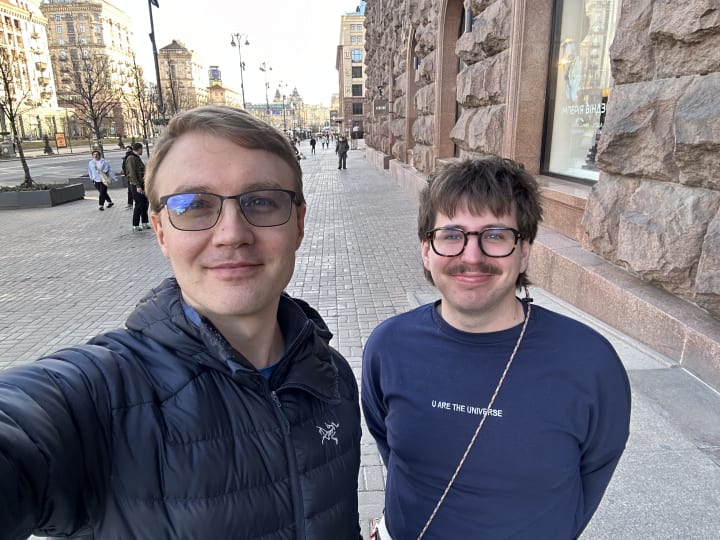
Scott Douglas Jacobsen is a blogger on Vocal with over 130 posts on the platform. He is the Founder and Publisher of In-Sight Publishing (ISBN: 978–1–0692343; 978–1–0673505) and Editor-in-Chief of In-Sight: Interviews (ISSN: 2369–6885). He writes for International Policy Digest (ISSN: 2332–9416), The Humanist (Print: ISSN, 0018–7399; Online: ISSN, 2163–3576), Basic Income Earth Network (UK Registered Charity 1177066), Humanist Perspectives (ISSN: 1719–6337), A Further Inquiry (SubStack), Vocal, Medium, The Good Men Project, The New Enlightenment Project, The Washington Outsider, rabble.ca, and other media. His bibliography index can be found via the Jacobsen Bankat In-Sight Publishing. He has served in national and international leadership roles within humanist and media organizations, held several academic fellowships, and currently serves on several boards. He is a member in good standing in numerous media organizations, including the Canadian Association of Journalists, PEN Canada (CRA: 88916 2541 RR0001), Reporters Without Borders (SIREN: 343 684 221/SIRET: 343 684 221 00041/EIN: 20–0708028), and others.
Image Credit: Scott Douglas Jacobsen.
About the Creator
Scott Douglas Jacobsen
Scott Douglas Jacobsen is the publisher of In-Sight Publishing (ISBN: 978-1-0692343) and Editor-in-Chief of In-Sight: Interviews (ISSN: 2369-6885). He is a member in good standing of numerous media organizations.
Keep reading
More stories from Scott Douglas Jacobsen and writers in Humans and other communities.
Bianca Bulgaru, Reporting From Kyiv Under Fire: Civilian Life, Drones, and Propaganda
Bianca Bulgaru is a Romanian journalist and Kyiv-based correspondent for Beta News Romania. Reporting from cities including Kyiv, Kharkiv, and Sumy, she focuses on how civilians adapt to air raids, infrastructure strikes, and the long psychological aftershocks of living under threat. She also tracks the parallel war over narrative: propaganda that inflates fringe extremists into state-defining myths, and the language politics that can turn a reporting choice into an accusation. Scott Douglas Jacobsen spoke with Bulgaru about habituation to danger, the ethics of witnessing, and why transparency matters for sustaining Romanian support for Ukraine.
By Scott Douglas Jacobsen13 days ago in Humans
Why Didn't Anyone Tell Us
Men, move along. This is not for you. This is for the women. I was forty-five when I began menopause. It is pretty young for that to be going on in a woman’s life, but I had undiagnosed PCOS, my entire life. Thank you to all the gynecologists I had seen my entire life. That in itself should encourage women to keep seeking second opinions, especially when you are not getting correct answers or any at all.
By Alexandra Grant2 days ago in Humans
Worth the Wait: Puerto Viejo, Costa Rica
Beach bumming in a small Caribbean beach town sounded like a perfect way to end our 6-month trip through Mexico and Central America. Or so we thought. The foul, fishy stench of rotten seaweed hit our nostrils as we stepped from the cramped bus and looked out at a rather depressing, empty, and underwhelming black sand beach. It was pouring with rain, and we had to quickly fish out our ponchos. We thought, this couldn’t be it, could it?
By Sh*t Happens - Lost Girl Travel6 days ago in Wander



Comments
There are no comments for this story
Be the first to respond and start the conversation.