
Libya’s Migrant Trap: Sexual Violence, Detention and the Politics of Return
How systemic abuse, trafficking networks, and flawed migration policy have turned Libya into a deadly bottleneck for migrants from Africa to South Asia.

By Tuhin Sarwar | Investigative Journalist । 13 March 2026 ।
A Journey That Turned into a Prison
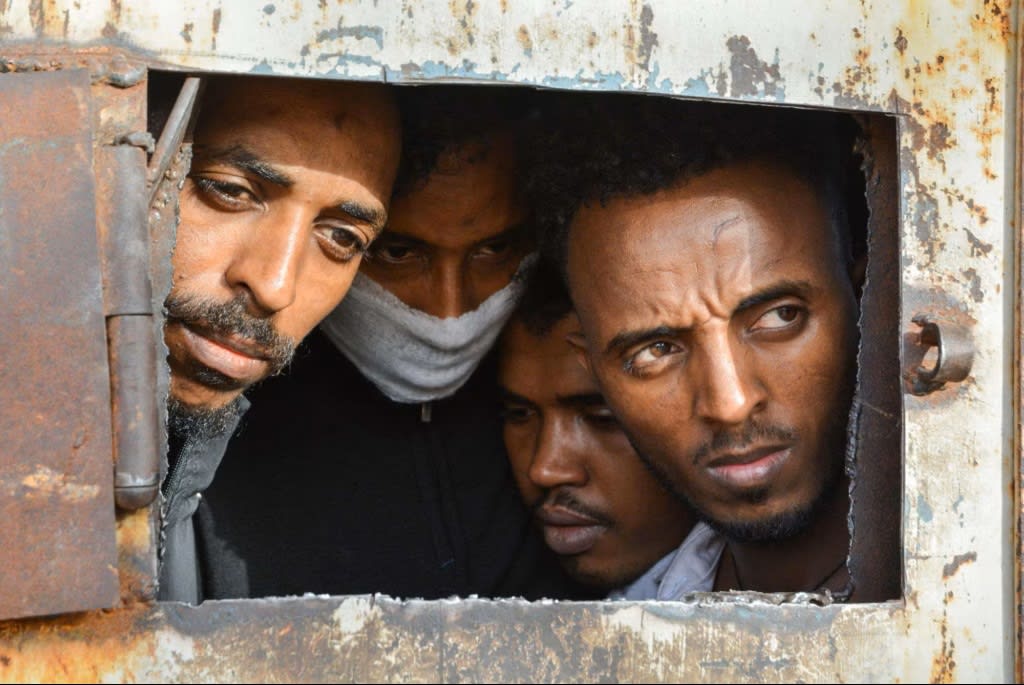
Marie, a mother from Cameroon, embarked on her journey to Europe with hope and determination. She believed the Sahara Desert would be her greatest challenge. Yet, upon reaching Libya, she encountered a far more harrowing reality: systemic detention, sexual violence, and ransom extortion. Multiple arrests in centres near Tripoli and Zawiya exposed her and her daughter to armed guards and nightly abductions. (Tuhin Sarwar Journalist)
They tried to rape me, Marie told investigators. My daughter was crying and screaming at them to stop. Her story is just one among dozens documented by the United Nations Support Mission in Libya (UNSMIL) and the Office of the United Nations High Commissioner for Human Rights (OHCHR). Their joint 2026 investigation concluded that violence, torture, and sexual exploitation against migrants in Libya are systematic and widespread UN OHCHR/UNSMIL 2026. For many migrants transiting North Africa toward Europe, Libya is no longer just a passage it has become a trap
Libya: From Migration Corridor to Detention Economy
Libya has historically served as a major transit country for migrants from Africa and parts of Asia seeking Europe. After the 2011 civil war and the collapse of central authority, armed groups and trafficking networks expanded control over migration routes. Today, detention of migrants forms part of a shadow economy where exploitation is monetized.
The International Organization for Migration (IOM) estimated that over 928,800 migrants were living in Libya as of October 2025, representing more than 40 countries ACAPS Libya 2026. Routes from Niger, Sudan, and Chad remain the primary corridors into Libya. While some migrants aim for work within Libya, others attempt Mediterranean crossings to Italy. However, interception by traffickers, militias, and sometimes official authorities frequently prevents this, funneling migrants into a network of abusive detention facilities.
Repatriation and Return Operations: A Cycle of Interception
Migrants attempting Mediterranean crossings are often intercepted and returned to Libya. The Libyan Coast Guard, trained and supported by the European Union, carries out these operations. While they prevent deaths at sea, they also push migrants back into abusive detention systems.
Data from IOM shows that thousands are intercepted annually, many ending up in centres where abuse is common IOM DTM Libya, 2025 For instance, an Eritrean survivor reported returning to the very site of torture after being intercepted at sea, later facing sexual exploitation in detention.
Bangladeshis, too, face this cycle. During October November 2025, 309 Bangladeshi migrants were repatriated amid reports of trafficking, abuse, and ransom Observer BD; BSS. Such patterns reveal a vicious cycle of interception, detention, and exploitation.
Detention and Humanitarian Crisis in Libya
Conditions in Libyan detention facilities such as Tajoura, Abu Salim, Zawiya, and al-Kufra are widely condemned: overcrowding, insufficient food, minimal medical care, and regular exposure to violence. Women and girls face acute risks.
Sexual violence: Daily rape of girls aged 14–17 documented UN OHCHR/UNSMIL 2026 Ransom extortion: Families often forced to pay $500–$10,000 for release
Forced prostitution and sexual slavery: Women coerced to provide sex to guards or outsiders
Medical neglect: Pregnancies resulting from rape lead to miscarriages, stillbirths, or maternal death
Médecins Sans Frontières (MSF) supported 160 torture survivors in Palermo between 2023–2025; 80% of female patients reported sexual or gender-based violence during their journey MSF 2025
Such conditions reveal that detention is not just punitive but profit-driven, with systemic sexual exploitation embedded in operations
Data Analysis: Migration Flows and Interceptions
Migration statistics underline Libya’s role as a central departure point to Europe:
Frontex 2025 data: Central Mediterranean route (Libya/Tunisia Italy) among Europe’s busiest (Frontex 2025).
Italian authorities report tens of thousands of arrivals by sea, many originating from Libya.
Interception operations at sea increased despite arrival declines.
While some interceptions save lives, NGOs and human rights advocates warn that returning migrants to Libya exposes them to abuse, potentially violating the principle of non-refoulement. (The Guardian, Nov 2025)
Bangladesh Institutional Response
Bangladeshi migrants are also caught in Libya’s migration crisis:
- Many travel through informal recruitment networks
- Government repatriation operations are intermittent; reintegration remains difficult
- Migrants often return with debt, injuries, or trauma
- Migration experts emphasize the need for oversight of recruitment networks, pre-departure education, and bilateral cooperation to prevent exploitation (BSS, Oct 2025).
Psychological Trauma and Reintegration Challenges
Survivors’ trauma persists after repatriation:
- Mental health: PTSD, anxiety, depression
- Stigma: Especially for women who survived sexual violence
- Economic precarity: Debt burdens, joblessness, risk of re-migration
Humanitarian organisations stress integrated psychosocial and financial support to prevent further exploitation and re-trafficking IOM Libya DTM 2025).
International Responsibility and Calls for Reform
Human rights organisations advocate coordinated global action:
- Independent monitoring of Libyan detention centres
- Criminal investigation of trafficking networks
- Expanded protection mechanisms for migrants and asylum seekers
- Safe and legal migration pathways
Migration policies that prioritize border enforcement over protection risk perpetuating abuses UN OHCHR/UNSMIL 2026
Conclusion: Breaking the Cycle
For migrants like Marie, the journey to Europe becomes a cycle of detention, exploitation, and repeated escape attempts. UN investigations, survivor testimonies, and NGO data collectively show that Libya’s migration system is a profit-driven trap intersecting trafficking networks, detention, and international migration policy.
Unless the international community implements robust accountability, protection mechanisms, and safe migration channels, thousands will continue facing extreme danger. Sustainable solutions require legal reform, psychosocial support, and economic reintegration, not just statistics. For survivors, the scars of Libya’s detention system will persist long after the migration route fades from view.
Sourch By : Tuhin Sarwar Journalist & Author
Sourch : Article Insight
About the Creator
Tuhin Sarwar
Tuhin Sarwar is a Bangladesh-based investigative journalist reporting on human rights, child labor, and the Rohingya refugee crisis through field-based research. Explore his verified portfolio at https://tuhinsarwar.com/
Keep reading
More stories from Tuhin Sarwar and writers in Journal and other communities.
Yunus: The International Power Behind Bangladesh’s 2026 Election
By: Tuhin Sarwar। Dhaka । February 18, 2026 । Eight months after Bangladesh’s caretaker government assumed power following the collapse of the previous administration in August 2024, the nation experienced one of its most closely watched democratic transitions in recent memory. On 12 February 2026, the country concluded a general election that delivered a two-thirds parliamentary majority to the Bangladesh Nationalist Party (BNP), enabling Tarique Rahman to take office as Prime Minister. Yet an analysis by India Today reflected across global media outlets frames the story differently: the true strategic victor of Bangladesh’s 18‑month political transition was Muhammad Yunus, the Nobel laureate economist whose international stature and tactical maneuvering shaped the nation’s political landscape in ways no conventional politician has before.
By Tuhin Sarwar22 days ago in Journal
Geoff Cash Explains How Strong Sales Leadership Improves Team Productivity
Sales teams often focus on targets, deals, and revenue. But real productivity in sales does not come only from pressure or strict goals. It comes from strong leadership that gives direction, support, and clear guidance. According to Geoff Cash, good sales leadership helps teams stay organized, motivated, and focused on the right activities.
By Mark Walker7 days ago in Journal
Phuket for first-timers
If you have never been to Phuket, Thailand’s largest island, then there is always the first time. All the information that you seek is right here for you to soak in and let your stay run smoothly. From the best time to visit to how to arrange your activities and what to eat, we have got you covered on all sides during your Phuket stay. Read on find out the stuff to make it happen!
By Jeewanthi Armstrong4 days ago in Journal




Comments
There are no comments for this story
Be the first to respond and start the conversation.