
The Silent Rise of Deadly Fungal Infections
Why global health experts are watching the rapidly expanding Anti-Fungal Drugs Market
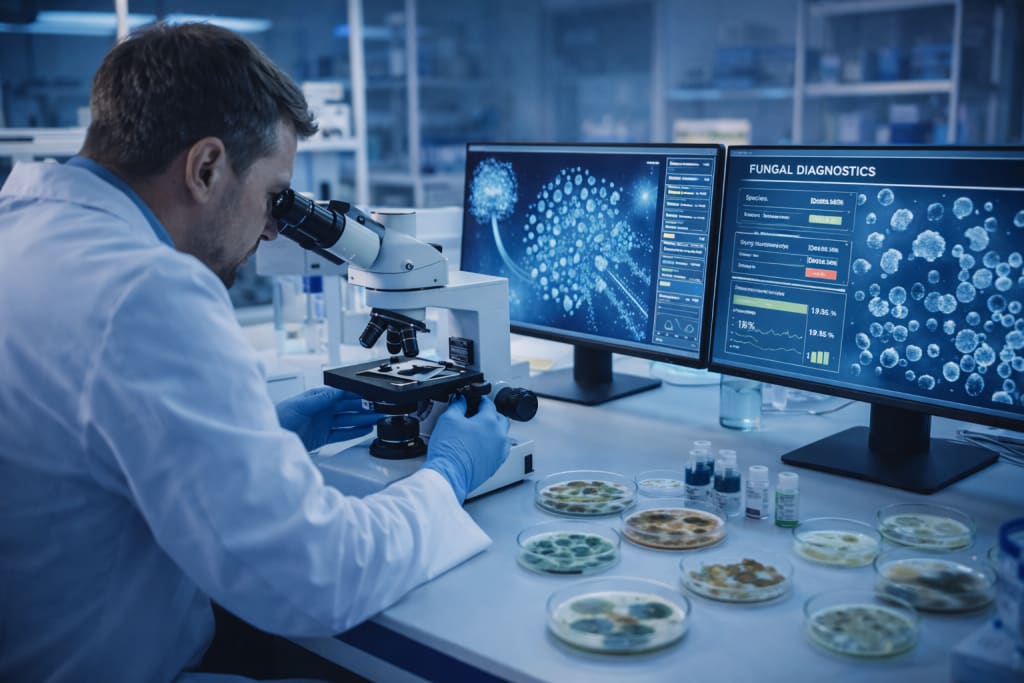
It begins quietly.
A cough that lingers longer than expected. A rash that refuses to heal. A persistent fever that doesn’t respond to standard treatments.
For many patients around the world, these symptoms may signal something rarely discussed but increasingly dangerous—fungal infections.
Unlike bacteria or viruses, fungal pathogens often operate in the shadows of modern medicine. They spread slowly, resist detection, and in some cases become life-threatening, particularly for people with weakened immune systems.
Yet the medical world is paying closer attention than ever before.
From hospitals and research labs to global health organizations, experts are warning that fungal diseases are emerging as a significant healthcare challenge. At the same time, pharmaceutical innovation and clinical research are expanding treatment options.
This convergence of medical urgency and scientific innovation is fueling rapid growth in the Anti-Fungal Drugs Market. According to Mordor Intelligence, the market is projected to grow at a compound annual growth rate (CAGR) of 3.88% during the forecast period (2026–2031).
But behind those numbers lies a deeper story—one about evolving pathogens, vulnerable patients, and the race to stay ahead of infections that were once underestimated.
The Hidden Threat of Fungal Infections
Most people associate infections with viruses or bacteria. Fungal diseases rarely make headlines.
Yet globally, millions of people are affected by fungal infections every year. Some remain mild—such as athlete’s foot or superficial skin infections—but others can become severe, particularly when they invade the lungs, bloodstream, or internal organs.
Certain groups face higher risks, including:
- Cancer patients undergoing chemotherapy
- Organ transplant recipients
- Individuals living with HIV/AIDS
- Patients in intensive care units
- People receiving long-term antibiotic therapy
In these cases, the immune system is often compromised, giving fungal pathogens an opportunity to spread.
Some fungal infections, such as aspergillosis, candidiasis, and cryptococcosis, can become life-threatening without timely treatment.
One of the challenges in treating these infections is that fungi are biologically complex organisms. Unlike bacteria, they share many cellular similarities with human cells, making it more difficult to develop treatments that kill the fungus without harming the patient.
This complexity has historically limited treatment options.
However, advances in pharmaceutical research are beginning to change that.
Why Demand for Anti-Fungal Drugs Is Rising
Several global trends are driving increased demand for antifungal therapies.
1. Growing Immunocompromised Populations
Modern medicine has significantly improved survival rates for patients with serious conditions such as cancer and organ failure. But treatments like chemotherapy, immunosuppressive drugs, and transplantation procedures can weaken the immune system, increasing susceptibility to fungal infections.
2. Rising Hospital-Acquired Infections
Hospitals save lives—but they can also expose patients to opportunistic pathogens. Fungal infections acquired in healthcare settings are becoming a growing concern, particularly in intensive care units.
3. Expanding Diagnostic Capabilities
Improved laboratory diagnostics are helping doctors detect fungal infections earlier and more accurately. As detection improves, the need for effective treatments grows.
These factors are contributing to expansion in the Anti-Fungal Drugs Market, which Mordor Intelligence reports is expected to grow at a CAGR of 3.88% between 2026 and 2031.
But the medical community knows that growth alone is not enough.
The real challenge lies in keeping pace with evolving fungal pathogens.
The Challenge of Antifungal Resistance
Just as bacteria can develop resistance to antibiotics, fungi can evolve resistance to antifungal medications.
This phenomenon is becoming increasingly concerning.
Some fungal strains are adapting in ways that make them harder to treat with existing drugs. These resistant infections can spread in healthcare environments and create significant treatment challenges.
One example that has drawn global attention is drug-resistant Candida species, which have been detected in hospitals across multiple countries.
The rise of antifungal resistance is pushing researchers to accelerate the development of new therapies.
Scientists are exploring several innovative strategies:
- Next-generation antifungal drug classes
- Targeted therapies that disrupt fungal cell membranes
- Combination treatments that enhance drug effectiveness
- Advanced diagnostic tools to detect resistant strains quickly
These research efforts are crucial for maintaining progress in infectious disease treatment.
Without continuous innovation, fungal pathogens could become an even greater threat to global health.
How Research and Innovation Are Changing Treatment
Despite the challenges, there is reason for optimism.
Pharmaceutical companies and research institutions are investing heavily in antifungal drug development. New compounds are being tested in clinical trials, and novel mechanisms of action are being explored.
Some emerging approaches include:
Targeted antifungal therapies
These drugs are designed to specifically disrupt fungal cell processes without harming human cells.
Improved drug delivery systems
Innovative formulations allow antifungal medications to reach infected tissues more effectively.
Personalized treatment strategies
Advances in diagnostics enable doctors to identify the specific fungal species causing infection and select the most effective therapy.
These innovations are helping improve treatment outcomes and expand the range of available therapies.
They are also supporting continued expansion of the Anti-Fungal Drugs Market, which Mordor Intelligence indicates is set to grow steadily in the coming years.
But innovation alone cannot solve the entire problem.
Awareness is equally important.
The Global Effort to Raise Awareness
For many years, fungal infections remained underrecognized in public health discussions.
That is slowly changing.
Healthcare organizations, infectious disease experts, and researchers are working to raise awareness about the risks posed by fungal pathogens.
Efforts include:
- Educational campaigns for healthcare professionals
- Increased funding for fungal disease research
- Improved hospital infection control measures
- Global surveillance systems tracking fungal outbreaks
These initiatives are helping ensure that fungal infections receive the attention they deserve.
The goal is not only to treat infections more effectively but also to prevent them whenever possible.
As awareness spreads, the healthcare community is beginning to view fungal pathogens as a critical component of infectious disease preparedness.
And that shift could shape the future of medical research.
The Future of the Fight Against Fungal Diseases
In many ways, the battle against fungal infections mirrors the broader fight against infectious diseases.
- Pathogens evolve.
- Science adapts.
- Innovation moves forward.
With continued research, improved diagnostics, and growing awareness, healthcare systems are becoming better equipped to detect and treat fungal infections before they escalate.
This momentum is expected to sustain the growth of the Anti-Fungal Drugs Market, projected by Mordor Intelligence to expand at a CAGR of 3.88% from 2026 to 2031.
But beyond market projections, the ultimate goal remains simple:
Protecting patients.
Ensuring that vulnerable individuals—especially those already battling serious illnesses—have access to treatments capable of stopping fungal infections before they become life-threatening.
Because sometimes the most dangerous threats are the ones we rarely see coming.
Fungal infections may operate quietly, but the global response to them is growing louder every year.
About the Creator
How Many Words?
Nine months ago I published my first Vocal story “Coincidentally ... Ken Nordine” which I had lifted from my blog Seven Days In. It has had 40 reads logged against it, that is an average of one read per week. My least read piece has four reads partially because I never shared it on Social Media because it was such a downer piece but I need to get it out of my system and it sits there now as a warning of how not to be.
By Mike Singleton 💜 Mikeydred 6 days ago in Journal
Silken Chains
Silhouettes of the female form were given flesh and bone. Silken skin glistened under the spotlight. Dry ice rose around our Icons as they danced atop their podiums in the Square. Heralded for their beauty, their movements were slight, powerful, and sensual.
By Paul Stewart7 days ago in Fiction


Comments
There are no comments for this story
Be the first to respond and start the conversation.