
Ethiopia Renewable Energy Market 2026: Clean Power Expansion, Hydropower Leadership & Sustainable Investments
How hydropower projects, solar and wind investments and energy access initiatives are transforming Ethiopia’s renewable energy landscape

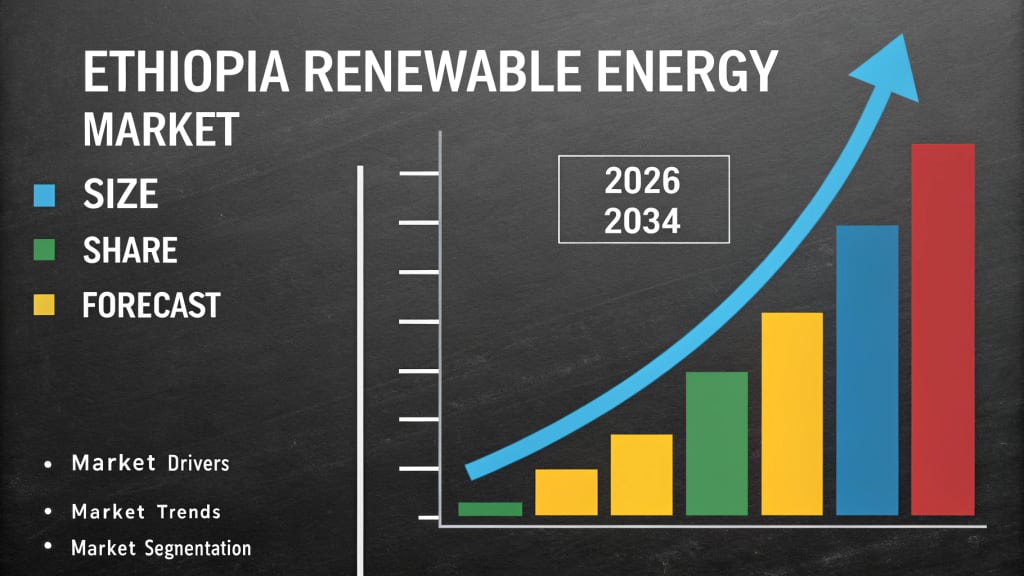
The Ethiopia renewable energy market is expanding rapidly as the country accelerates efforts to build a sustainable and reliable energy system. Renewable energy plays a central role in Ethiopia’s national development strategy, supporting economic growth, electrification programs and climate-friendly energy policies.
According to market estimates, the Ethiopia renewable energy market size reached USD 960.90 Million in 2025 and is projected to reach USD 2,256.09 Million by 2034, exhibiting a CAGR of 8.91% during 2026–2034. The market’s growth is driven by increasing electricity demand, government investments in clean energy infrastructure and international funding for sustainable energy projects.
Renewable energy sources such as hydropower, wind, solar and geothermal power form the backbone of Ethiopia’s electricity sector. The country is widely recognised as one of Africa’s most promising renewable energy markets due to its vast natural resources and strong policy support for clean energy development.
What’s Driving Market Growth?
Increasing Need for Electricity
Ethiopia's population surpasses 120 million individuals, and the demand for electricity is rising as urbanization, industrialization, and digitalization progress. Increasing access to electricity is crucial for economic growth, especially in manufacturing, agriculture, and service sectors.
Even with notable advancements in recent years, numerous rural areas still do not have dependable access to electricity. Consequently, the government is making substantial investments in new energy generation capabilities and transmission infrastructure to accommodate future demand increase.
Growth of Hydropower and Large-Scale Projects
Hydropower presently leads Ethiopia's renewable energy portfolio, comprising around 90% of the nation's electricity production.
A major advancement in the industry is the Grand Ethiopian Renaissance Dam (GERD), which is the biggest hydroelectric project in Africa. The dam can generate 5,150 megawatts, ranking it among the largest hydropower plants globally and a key element of Ethiopia's energy plan.
Major hydropower initiatives such as GERD and Koysha are anticipated to significantly boost electricity availability, facilitate industrial growth, and allow Ethiopia to sell electricity to adjacent nations.
Diversification into Solar, Wind and Geothermal Energy
Although hydropower dominates the energy mix, Ethiopia is actively diversifying its renewable energy portfolio to reduce dependence on rainfall-dependent hydroelectric generation.
The country has strong potential for solar and wind energy due to its geographic conditions. Wind farms such as the Ashegoda and Adama projects already contribute significant capacity to the national grid, while new solar power projects are being developed to support rural electrification.
Geothermal energy is also emerging as an important renewable resource. Projects in regions such as Oromia aim to harness underground heat to generate electricity, providing a reliable power source that is not affected by seasonal weather variations.
Government Energy Policy and Electrification Programs
Government policies are playing a crucial role in supporting renewable energy expansion. Ethiopia has launched several national programs aimed at improving electricity access and increasing generation capacity.
These initiatives focus on expanding renewable energy projects, strengthening transmission networks and encouraging private sector participation in energy development. Long-term plans aim to significantly increase installed power capacity while promoting sustainable energy sources.
Market Segmentation & Key Insights
By Energy Source
The Ethiopia renewable energy market includes several major technologies:
• Hydropower
• Wind power
• Solar energy
• Geothermal energy
• Biomass and bioenergy
Hydropower remains the largest segment due to the country’s abundant river systems and existing infrastructure. However, solar and wind energy are expected to grow rapidly as costs decline and technology adoption increases.
By Application
Renewable energy is used across multiple sectors, including:
• Residential electricity supply
• Industrial energy consumption
• Commercial power demand
• Rural electrification projects
Industrial and commercial sectors are becoming increasingly important consumers of renewable electricity as Ethiopia expands manufacturing and infrastructure development.
By Deployment Model
Renewable energy systems in Ethiopia are deployed through various models:
• Utility-scale power plants
• Independent power producer (IPP) projects
• Off-grid solar systems
• Mini-grid rural electrification solutions
Off-grid renewable energy solutions are particularly important for remote communities that are not yet connected to the national electricity grid.
By Region
Renewable energy projects are distributed across several regions of Ethiopia, including the Blue Nile Basin for hydropower, high-wind regions for wind farms and high-solar-radiation zones suitable for photovoltaic power generation.
What the Opportunities Are?
Electricity Export Opportunities
As renewable energy capacity increases, Ethiopia aims to become a regional electricity exporter. The country already supplies electricity to neighboring countries such as Djibouti and Sudan, and additional transmission projects are expected to expand cross-border electricity trade.
Exporting renewable electricity can generate foreign revenue while strengthening regional energy cooperation.
Growth of Solar Energy Solutions
Solar power offers significant opportunities in Ethiopia, particularly for off-grid communities. Solar home systems and mini-grid installations can provide electricity to rural households, schools and healthcare facilities that are not connected to the national grid.
The falling cost of solar technology is making these solutions more accessible and economically viable.
Private Sector Investment
Renewable energy development requires large infrastructure investments, creating opportunities for international investors, engineering firms and technology providers.
Public-private partnerships and independent power producer projects are increasingly being used to attract investment and accelerate project development.
Energy Infrastructure and Grid Expansion
Expanding electricity transmission and distribution networks is essential to fully utilise renewable energy generation capacity. Infrastructure investments in grid expansion, energy storage and smart grid technologies will support the long-term growth of Ethiopia’s renewable energy sector.
Recent News and Developments in Ethiopia Renewable Energy Market
Sep 2025: Ethiopia inaugurated the Grand Ethiopian Renaissance Dam, Africa’s largest hydroelectric project with a capacity of 5,150 MW, marking a major milestone in the country’s renewable energy expansion.
Feb 2026: International investors signed $400 million agreements to develop electricity transmission infrastructure supporting renewable energy integration and grid expansion.
2025: African leaders highlighted Ethiopia’s renewable energy potential during climate investment discussions, emphasizing the need for increased funding to expand clean energy projects across the region.
Why Should You Know About Ethiopia Renewable Energy Market?
The Ethiopia renewable energy market represents one of the most promising clean energy opportunities in Africa. With abundant natural resources, strong government support and increasing international investment, the sector is positioned for sustained growth.
For investors, renewable energy projects in Ethiopia offer opportunities in power generation, infrastructure development and regional electricity trading. The projected 8.91% CAGR through 2034 highlights the sector’s strong long-term growth potential.
For policymakers and energy planners, expanding renewable energy capacity is essential for achieving national electrification goals, reducing reliance on fossil fuels and supporting sustainable economic development.
Ultimately, the Ethiopia renewable energy market demonstrates how clean energy technologies can drive economic transformation. By harnessing hydropower, solar, wind and geothermal resources, Ethiopia is building a modern energy system capable of powering industries, communities and future economic growth.
About the Creator
Thomas
Market Research Analyst | Industry Trends & Forecasting | Turning market data into clear, actionable business insights across global sectors.
Stock Market Trends 2026: Why Investors Are Watching Global Markets More Closely Than Ever
The stock market has always been a fascinating mirror of the global economy. In 2026, investors, analysts, and everyday traders are watching the market more closely than ever before. From artificial intelligence investments to geopolitical tensions and interest-rate policies, several powerful forces are shaping the direction of global stock markets.
By The Insight Ledger 3 days ago in Trader
Vodafone Idea Share Price – Trends, Analysis, and Market Outlook
Vodafone Idea Limited, one of India’s prominent telecom operators, has been under investor scrutiny due to its financial performance, competitive pressures, and debt obligations. The Vodafone Idea share price is an important indicator for investors seeking exposure to the Indian telecom sector.
By Hammad Nawaz7 days ago in Trader
Bomb Scare
It was 2027, and the world never thought it would happen. A missle hit the United States, but it wasn't where they had anticipated. A little town in the northeast was hit by a missile strike, they didn't know why, and they didn't know exactly where it hit, but they did know it was a coastal community, somewhere between Maine and Delaware.
By Gregory Payton7 days ago in Fiction




Comments
There are no comments for this story
Be the first to respond and start the conversation.