
Saudi Arabia Coffee Market Size and Forecast 2026–2034
Traditional Coffee Culture Meets Modern Café Innovation Driving Strong Market Growth

Introduction
Coffee has long been an essential element of social life and hospitality in Saudi Arabia. From traditional Arabic coffee ceremonies to modern specialty cafés, coffee consumption is deeply woven into the country’s cultural and lifestyle fabric. In recent years, however, the Saudi Arabian coffee industry has undergone a significant transformation. The rise of specialty coffee, expansion of café culture, and increasing disposable incomes are reshaping how coffee is produced, sold, and consumed across the Kingdom.
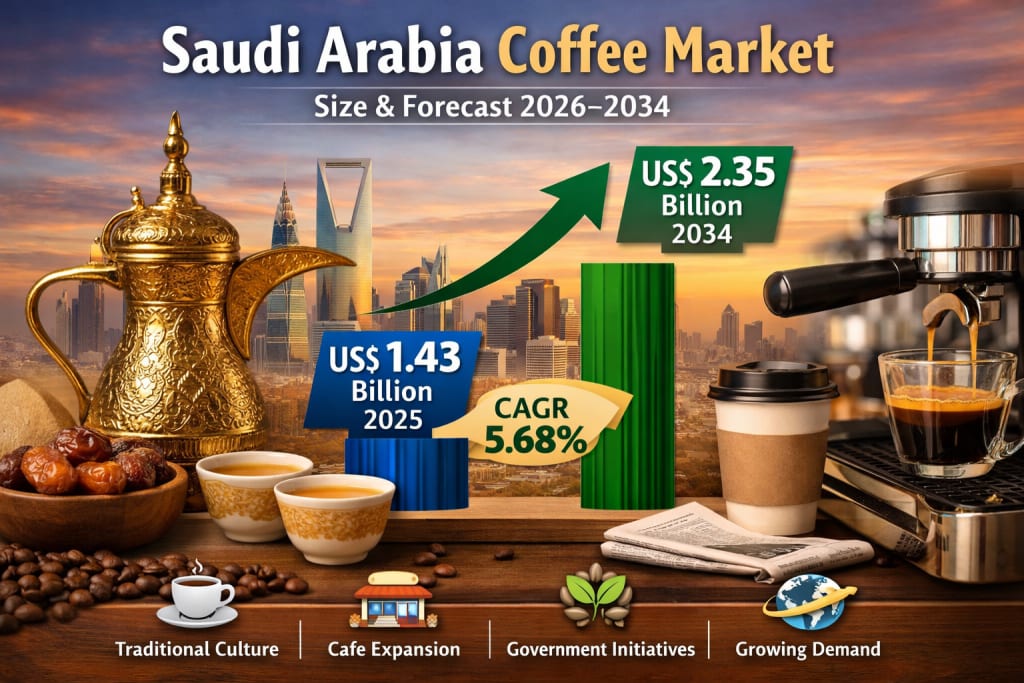
According to Renub Research, the Saudi Arabia Coffee Market is expected to grow from US$ 1.43 billion in 2025 to US$ 2.35 billion by 2034, expanding at a compound annual growth rate (CAGR) of 5.68% during 2026–2034. This growth reflects both the country’s long-standing coffee traditions and the evolving consumer demand for premium coffee experiences.
As Saudi Arabia continues to urbanize and diversify its economy under Vision 2030, coffee has emerged as a dynamic sector within the food and beverage industry. The rapid expansion of coffee chains, increasing online retail sales, and strong youth-driven café culture are all contributing to the steady growth of the market.
Saudi Arabia Coffee Market Outlook
Coffee is a globally consumed beverage made from roasted beans of the Coffea plant. Known for its distinctive aroma, flavor, and stimulating effects due to caffeine, coffee is enjoyed in various forms such as espresso, cappuccino, latte, cold brew, and instant coffee.
In Saudi Arabia, coffee carries far more meaning than just being a beverage. Traditional Arabic coffee, commonly known as “Gahwa,” represents hospitality, generosity, and respect. It is typically lightly roasted and flavored with spices such as cardamom, saffron, or cloves, and served in small cups to guests during social gatherings, family visits, and cultural ceremonies.
While these traditions remain strong, modern coffee consumption habits are evolving rapidly. The rise of international coffee chains, independent specialty cafés, and coffee festivals has significantly expanded the scope of the Saudi coffee industry. Younger consumers are increasingly interested in premium coffee experiences, including single-origin beans, artisanal roasting techniques, and unique brewing methods.
This blend of heritage and innovation is shaping the future of Saudi Arabia’s coffee market.
Growth Drivers of the Saudi Arabia Coffee Market
Strong Cultural Significance and Daily Consumption
Coffee is deeply embedded in Saudi culture, and daily consumption remains exceptionally high. According to the Saudi Restaurants and Cafés Association, Saudis consume around 36 million cups of coffee every day.
Unlike many countries where coffee consumption is driven primarily by trends, Saudi Arabia benefits from a strong cultural foundation. Arabic coffee remains a staple in households, workplaces, and social gatherings, ensuring consistent demand across all age groups.
Coffee plays a vital role in hospitality traditions. Serving coffee to guests symbolizes respect and generosity, making it an indispensable part of Saudi social etiquette. This cultural connection ensures stable long-term demand and supports the growth of both traditional and commercial coffee markets.
Additionally, Saudi Arabia has a very young population, with nearly 70% of citizens under the age of 35. This demographic group is highly engaged with modern café culture, social media trends, and premium coffee experiences, further accelerating the expansion of the coffee industry.
The combination of strong cultural traditions and youthful consumer enthusiasm creates a powerful foundation for sustained market growth.
Rapid Expansion of Café and Specialty Coffee Culture
One of the most significant drivers of Saudi Arabia’s coffee market is the rapid growth of café culture. Major cities such as Riyadh, Jeddah, and Dammam have witnessed a surge in coffee shops ranging from international brands to locally owned specialty cafés.
Coffee shops in Saudi Arabia have evolved beyond simple beverage outlets. They now function as social hubs, meeting places, and lifestyle destinations where people gather to work, socialize, and relax.
The increasing popularity of espresso-based drinks, cold brew beverages, and specialty coffee has contributed significantly to market expansion. Consumers are becoming more knowledgeable about coffee origins, roasting methods, and brewing techniques.
Social media platforms have also played an important role in promoting café culture. Visually appealing coffee presentations, unique café interiors, and innovative beverage creations attract younger consumers and encourage repeat visits.
An example of industry development occurred in September 2023, when the Saudi Coffee Company, backed by the Public Investment Fund (PIF), launched its brand JAZEAN. The brand focuses on sustainably sourced Coffea Arabica beans grown in Saudi Arabia’s southern coffee region and sourced globally. This initiative highlights Saudi Arabia’s ambition to establish itself as a recognized player in the international coffee industry.
Government Initiatives Supporting Coffee Industry Development
Government support has become another key driver of the Saudi coffee market. As part of the Kingdom’s economic diversification strategy under Vision 2030, authorities are actively promoting the development of the domestic coffee sector.
Saudi Arabia is investing in coffee farming, particularly in the Jazan region, which has a long history of cultivating coffee. Programs supporting farmers, entrepreneurs, and coffee professionals are helping expand local production and enhance industry expertise.
One notable initiative is led by the Sustainable Agricultural Rural Development Program (Saudi Reef) in collaboration with the National Centre for Research and Development of Sustainable Agriculture (Estidamah). The program aims to boost the country’s coffee production capacity through modern agricultural techniques.
The initiative plans to plant 50,000 coffee seedlings and increase the productivity of coffee trees by 30% by 2025 using advanced tissue culture technology. These efforts are designed to improve the quality of Saudi-grown coffee and reduce dependence on imports.
Government support also includes training programs for baristas, coffee roasting workshops, and coffee festivals that promote Saudi coffee culture both domestically and internationally.
Key Challenges of the Saudi Arabia Coffee Market
Dependence on Coffee Imports and Supply Chain Volatility
Despite government initiatives to expand local coffee cultivation, Saudi Arabia still relies heavily on imported coffee beans. Most coffee consumed in the country originates from major producing regions such as Africa, Latin America, and Southeast Asia.
This dependence exposes the Saudi coffee market to global supply chain disruptions, fluctuating commodity prices, and currency exchange risks. Climate change has also affected coffee production in many growing regions, leading to unpredictable harvest yields and quality variations.
While domestic coffee production is gradually increasing, it currently meets only a small fraction of the total national demand. Until local cultivation expands significantly, import dependency will remain a major challenge for the industry.
Intense Market Competition and Price Sensitivity
Another challenge facing the Saudi coffee market is the growing level of competition. The rapid expansion of international coffee chains, local specialty cafés, and independent roasters has created a highly competitive landscape.
Although this competition benefits consumers through greater variety and innovation, it also places pressure on profit margins for coffee retailers. Operational costs—including rent, labor, and supply chain logistics—are increasing, particularly in major cities.
In addition, price sensitivity remains a concern in smaller cities and rural areas. Premium specialty coffee products often carry higher prices, which may limit their accessibility for certain consumer segments.
Smaller coffee businesses may struggle to compete with established global brands that possess stronger marketing capabilities and supply chain advantages.
Saudi Arabia Instant Coffee Market
Instant coffee remains an important segment of the Saudi coffee market due to its convenience and ease of preparation. Busy lifestyles, particularly among working professionals and students, have increased the demand for quick and simple beverage solutions.
Manufacturers are introducing high-quality instant coffee products, including flavored variants and premium blends, which are expanding consumer interest in this segment. Instant coffee is also widely consumed by tourists and travelers seeking convenient beverage options.
Urbanization and rising disposable incomes continue to support the steady growth of the instant coffee market.
Saudi Arabia Ground Coffee Market
Ground coffee is highly popular among Saudi consumers who prefer freshly brewed beverages at home or in cafés. The growth of specialty coffee culture has significantly increased demand for premium ground coffee and artisanal blends.
Hotels, restaurants, and coffee shops frequently use high-quality ground coffee to deliver consistent flavor and aroma. As consumers become more knowledgeable about coffee origins and roasting profiles, demand for specialty ground coffee is expected to rise further.
Saudi Arabia Coffee Distribution Channels
Convenience Stores
Convenience stores play an important role in distributing ready-to-drink coffee and packaged coffee products. With busy urban lifestyles becoming more common, consumers increasingly rely on quick purchasing options.
Single-serve coffee packs, canned coffee beverages, and ready-to-drink coffee products are particularly popular in convenience stores.
Online Retail
The rapid growth of e-commerce is transforming coffee sales in Saudi Arabia. Online platforms provide access to specialty coffee brands, international products, and subscription-based coffee services.
Tech-savvy younger consumers are increasingly purchasing coffee products online, attracted by home delivery services and a wide selection of premium beans and brewing equipment.
Regional Insights: Coffee Markets in Key Saudi Cities
Riyadh
Riyadh represents the largest coffee market in Saudi Arabia due to its population size, urban development, and strong purchasing power. The city has become a major hub for specialty coffee shops, international café chains, and innovative coffee concepts.
Jeddah
Jeddah’s coffee culture reflects its coastal lifestyle and vibrant tourism industry. Cafés located along waterfront districts and entertainment areas attract both residents and visitors seeking premium coffee experiences.
Dhahran
Dhahran’s coffee market is smaller but highly premium-oriented due to the presence of professionals and expatriates. Specialty cafés and boutique coffee roasters dominate the market.
Dammam
Dammam features a balanced coffee market that combines traditional Arabic coffee culture with modern café trends. Drive-through coffee outlets and takeaway coffee services are particularly popular among younger consumers.
Market Segmentation
By Type
Instant Coffee
Ground Coffee
Whole Grain
Others
By Distribution Channel
Supermarkets and Hypermarkets
Convenience Stores
Online Retail
Others
By Cities
Riyadh
Jeddah
Dammam
Dhahran
Jubail
Khobar
Tabuk
Mecca
Medina
Rest of Cities
Key Companies in the Saudi Arabia Coffee Market
Several international and regional companies operate within the Saudi coffee industry, contributing to product innovation and market expansion. Major players include:
The J. M. Smucker Company
The Kraft Heinz Company
Nestlé SA
Starbucks Coffee Company
Luigi Lavazza S.p.A
Tata Global Beverages
The Coca-Cola Company
These companies compete through product diversification, specialty coffee offerings, café expansion strategies, and strong retail distribution networks.
Final Thoughts
The Saudi Arabia coffee market is entering a dynamic phase of growth, shaped by a unique blend of tradition and modern consumer trends. While Arabic coffee continues to represent cultural heritage and hospitality, the rise of specialty cafés and premium coffee products is transforming the industry.
With government support, increasing urbanization, and a youthful consumer base, the market is expected to maintain steady expansion in the coming years. By 2034, Saudi Arabia could emerge as one of the most influential coffee markets in the Middle East.
As consumer preferences evolve and the café culture continues to flourish, the Saudi coffee industry offers significant opportunities for coffee brands, café operators, and investors looking to tap into this rapidly growing market.
About the Creator
United States Processed Meat Market Size and Forecast 2025–2033
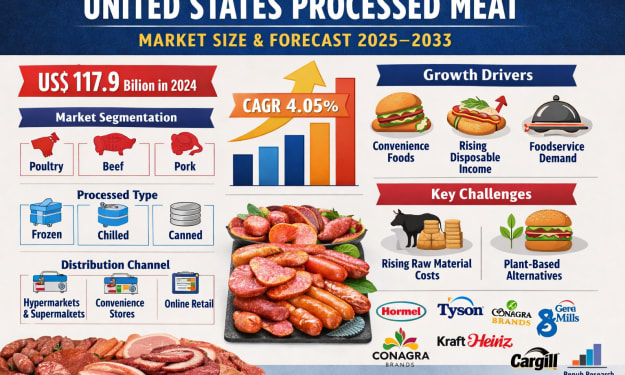
United States Processed Meat Market Size and Forecast 2025–2033 The United States processed meat market is projected to reach US$ 168.5 billion by 2033, rising from US$ 117.9 billion in 2024, expanding at a CAGR of 4.05% during 2025–2033. The market continues to grow steadily as consumers increasingly seek convenient, flavorful, and protein-rich food options that fit modern lifestyles.
By shibansh kumarabout 13 hours ago in Trader


Comments
There are no comments for this story
Be the first to respond and start the conversation.