
United States Chocolate Market Size & Forecast 2026–2034
Premiumization, Seasonal Gifting, and Health-Focused Innovations Shape the Future of America’s Chocolate Industry

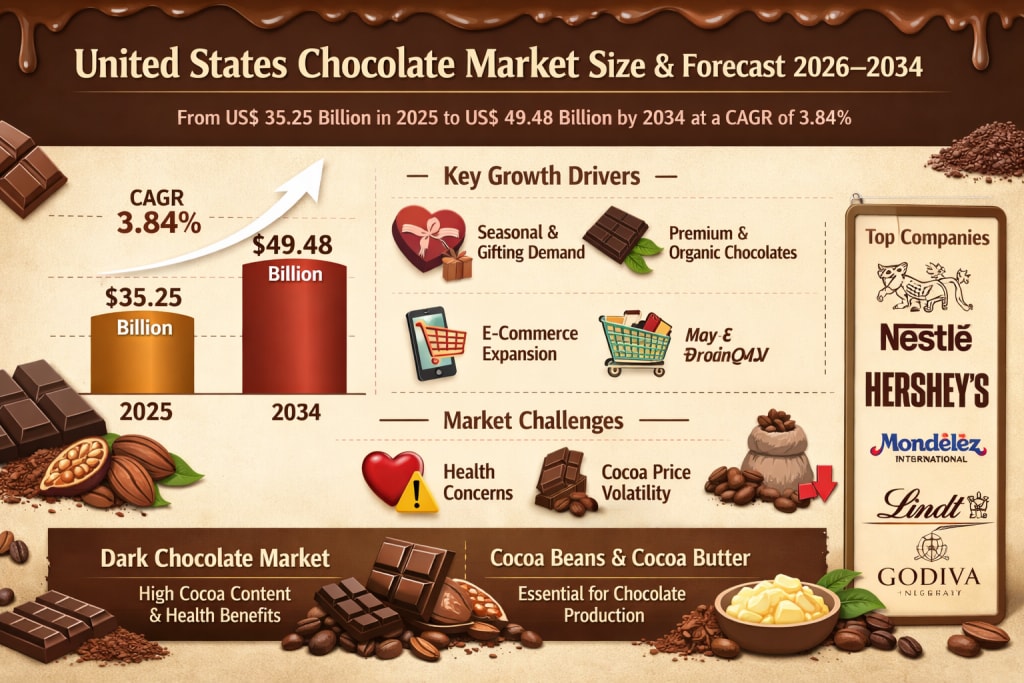
The United States Chocolate Market is projected to experience steady expansion over the coming years, reflecting the enduring popularity of chocolate among American consumers. According to Renub Research, the market is expected to grow from US$ 35.25 Billion in 2025 to US$ 49.48 Billion by 2034, registering a compound annual growth rate (CAGR) of 3.84% during the forecast period from 2026 to 2034.
This growth is fueled by several key trends shaping the modern confectionery landscape. Consumers are increasingly seeking premium, organic, and artisanal chocolate products, while dark chocolate continues to gain traction because of its perceived health benefits. In addition, seasonal consumption patterns—particularly during major holidays—play a crucial role in driving chocolate sales across the United States.
Innovation in flavors, along with the introduction of plant-based, sugar-free, and ethically sourced chocolate products, is further accelerating market development. With changing consumer preferences and a growing focus on quality ingredients and sustainability, the U.S. chocolate industry is entering a new era of premiumization and product differentiation.
United States Chocolate Market Outlook
Chocolate is one of the most beloved food products in the world. It is produced from cocoa beans, which are processed into cocoa solids and cocoa butter and then blended with ingredients such as sugar, milk, and flavorings. Depending on the cocoa content and ingredients used, chocolate is commonly categorized into milk chocolate, dark chocolate, and white chocolate.
Beyond its taste, chocolate holds cultural and emotional significance. It is widely associated with celebrations, comfort, and gifting. Chocolate is consumed both as a stand-alone snack and as a key ingredient in baked goods such as cookies, cakes, brownies, pastries, and desserts.
In the United States, chocolate consumption spans all age groups and demographics. It is enjoyed as a daily snack, used in bakery and confectionery products, and frequently purchased during festivals and celebrations. Holidays such as Halloween, Christmas, Valentine’s Day, and Easter represent peak demand periods for chocolate manufacturers and retailers.
Changing consumer preferences are also shaping the industry. American consumers are increasingly exploring premium chocolates, organic products, and high-cocoa dark chocolate varieties. Moreover, the accessibility of chocolate products through supermarkets, convenience stores, specialty shops, and e-commerce platforms ensures widespread availability across the country.
Growth Drivers of the United States Chocolate Market
Strong Seasonal Demand and Gifting Culture
Seasonal celebrations play a significant role in driving chocolate consumption in the United States. Chocolate has become a traditional gift item for major holidays, particularly Valentine’s Day, Easter, Halloween, and Christmas. During these occasions, consumers purchase chocolates both for personal consumption and for gifting purposes.
Chocolate manufacturers capitalize on these seasonal trends by launching limited-edition flavors, themed packaging, and premium gift boxes. Attractive packaging designs and curated chocolate assortments make chocolates a preferred choice for expressing appreciation and affection.
Corporate gifting has also emerged as a growing trend. Many companies distribute chocolate gift hampers to employees, clients, and partners during the holiday season.
According to the National Confectioners Association (NCA), seasonal confectionery sales represent a major share of the industry’s annual revenue. The winter holiday season alone accounts for over 18% of seasonal confectionery sales, while the four major candy seasons—Valentine’s Day, Easter, Halloween, and the winter holidays—collectively represent approximately 62% of the $54 billion confectionery industry’s yearly sales.
In 2024, the winter holiday season generated $7.5 billion in confectionery sales, highlighting the strong influence of cultural traditions and festive celebrations on chocolate consumption.
Rising Demand for Premium, Organic, and Specialty Chocolates
The U.S. chocolate market is witnessing a shift toward premium and specialty products, reflecting evolving consumer expectations. Modern consumers are increasingly willing to pay higher prices for chocolates made with high-quality ingredients, ethical sourcing, and unique flavor combinations.
Dark chocolate has become one of the fastest-growing segments in the industry. With higher cocoa content and lower sugar levels than traditional milk chocolate, dark chocolate is often associated with health benefits such as antioxidant properties and cardiovascular support.
Another emerging trend is the rising popularity of organic, vegan, and sugar-free chocolate products. Health-conscious consumers are actively seeking alternatives that align with their dietary preferences and lifestyle choices.
Artisanal chocolate brands are also gaining momentum in the United States. Handcrafted chocolates with single-origin cocoa, innovative flavor pairings, and premium packaging appeal to consumers looking for luxury confectionery experiences.
Research conducted by Barry Callebaut in 2024 revealed a 34% surge in demand for clean-label products in North America. Consumers increasingly prefer chocolates with fewer ingredients and greater transparency regarding sourcing. Products that highlight single-origin cocoa beans or traceable supply chains often command a price premium of up to 30%, demonstrating the growing importance of sustainability and authenticity in the chocolate market.
Wide Retail Availability and Expansion of E-Commerce
One of the major strengths of the U.S. chocolate industry is its extensive retail infrastructure. Chocolate products are widely available through supermarkets, hypermarkets, convenience stores, specialty confectionery outlets, and vending machines.
Retailers strategically position chocolate products near checkout counters to encourage impulse purchases. This retail strategy significantly contributes to overall sales volume.
The rapid growth of e-commerce platforms has further expanded the reach of chocolate manufacturers. Online stores allow consumers to access a wide range of products, including imported chocolates, luxury brands, and specialty varieties that may not be available in local stores.
E-commerce has become particularly important during holiday seasons, when consumers prefer convenient online shopping and doorstep delivery.
For example, in July 2025, Lindt & Sprüngli USA introduced its “Dubai Style” chocolate bars across major retail chains such as Walmart and Target. These innovative bars combine milk chocolate with 45% pistachio paste, crunchy kadayif, almonds, and hazelnuts, reflecting the industry’s emphasis on creative flavor innovation.
Challenges in the United States Chocolate Market
Rising Health Concerns and Demand for Healthier Snacks
Despite its popularity, chocolate faces challenges due to increasing health awareness among consumers. Traditional chocolate products often contain high levels of sugar, calories, and fat, which may contribute to health conditions such as obesity, diabetes, and cardiovascular diseases.
As a result, many consumers are shifting toward healthier snack alternatives, including protein bars, nuts, and natural foods.
To address these concerns, chocolate manufacturers are reformulating their products by introducing low-sugar, reduced-calorie, and functional chocolate variants. Products enriched with superfoods, probiotics, and plant-based ingredients are becoming more common.
However, balancing indulgence with health considerations remains a significant challenge for the industry.
Fluctuating Cocoa Prices and Supply Chain Uncertainty
The United States relies heavily on imported cocoa beans to support its chocolate manufacturing industry. Global cocoa production is concentrated in a few countries, particularly in West Africa, making the supply chain vulnerable to disruptions.
Factors such as climate change, political instability, labor issues, and crop diseases can affect cocoa production and lead to price fluctuations. Rising cocoa prices increase production costs for manufacturers, which may ultimately raise retail prices for consumers.
In addition, logistics disruptions, currency volatility, and transportation challenges can further complicate supply chains.
To mitigate these risks, chocolate manufacturers are increasingly focusing on sustainable sourcing practices, long-term supplier partnerships, and diversified supply chains.
United States Dark Chocolate Market
Dark chocolate is gaining popularity among American consumers due to its association with health and wellness benefits. Compared to milk chocolate, dark chocolate typically contains a higher percentage of cocoa and less sugar.
Studies have suggested that dark chocolate may provide benefits such as antioxidant protection, improved heart health, and reduced stress levels. As a result, it is particularly popular among adult consumers and health-conscious individuals.
Manufacturers are introducing a variety of premium dark chocolate products featuring high cocoa percentages, exotic ingredients, and organic certifications. Vegan and sustainably sourced dark chocolate varieties are also expanding in availability.
Dark chocolate is widely used in premium confectionery products and is frequently chosen for luxury gift boxes and specialty desserts, contributing significantly to the growth of this segment.
United States Cocoa Beans Market
Cocoa beans form the foundation of the chocolate industry, serving as the raw material for producing chocolate, cocoa powder, and cocoa butter.
Although the United States has limited domestic cocoa production, it imports large quantities of cocoa beans to support its thriving confectionery industry. The presence of major chocolate manufacturers and growing demand for premium chocolate products continue to drive cocoa bean imports.
The rising popularity of organic and single-origin chocolates has also increased demand for high-quality cocoa beans. Manufacturers are investing in traceable and sustainable cocoa sourcing to meet consumer expectations and regulatory requirements.
United States Chocolate Cocoa Butter Market
Cocoa butter plays a crucial role in chocolate production, providing the smooth texture and glossy appearance that consumers expect from high-quality chocolate products.
As chocolate consumption increases, the demand for cocoa butter continues to grow. In addition to its use in food products, cocoa butter is widely used in cosmetics and personal care items, including lotions, lip balms, and skincare creams due to its moisturizing properties.
The expanding personal care industry and growing consumer preference for natural ingredients are further supporting the growth of the cocoa butter market in the United States.
Chocolate Distribution Channels in the United States
Convenience Stores
Convenience stores play a vital role in chocolate distribution. Located near residential areas, highways, and fuel stations, these stores provide easy access to chocolate products for consumers seeking quick snacks.
Strategically placed displays near checkout counters often encourage impulse purchases, contributing to higher sales volumes.
Online Retail Stores
Online retailing is one of the fastest-growing distribution channels for chocolate products in the United States. Consumers appreciate the convenience of browsing a wide variety of chocolate brands, comparing prices, and receiving products through home delivery.
E-commerce platforms also enable consumers to purchase premium chocolates, imported brands, and customized gift assortments, which are particularly popular during festive seasons.
Regional Chocolate Markets in the United States
California
California represents one of the largest chocolate markets in the country. The state’s high population, strong purchasing power, and diverse consumer preferences support the growth of premium chocolate products.
Consumers in California show strong interest in organic, vegan, and artisanal chocolates, and the region is home to several specialty chocolate manufacturers.
New York
New York’s dense urban population and vibrant food culture contribute to high chocolate consumption. Luxury chocolate boutiques, cafés, and bakeries drive demand for premium confectionery products.
Busy lifestyles also encourage the consumption of chocolate as a convenient snack option.
Washington
Consumers in Washington demonstrate strong awareness of sustainability and ethical sourcing, leading to growing demand for fair-trade and organic chocolate products.
The state’s strong coffee culture also complements chocolate consumption, particularly in cafés and specialty dessert shops.
Arizona
Arizona’s growing population and expanding tourism sector contribute to increasing chocolate sales. Premium gift boxes and specialty chocolates are particularly popular during festive seasons and among tourists.
Competitive Landscape
The United States chocolate market is highly competitive, with both multinational corporations and artisanal brands competing for market share. Major industry participants focus on product innovation, sustainability initiatives, and strategic partnerships to strengthen their market presence.
Key companies operating in the U.S. chocolate market include:
Nestlé S.A.
The Hershey Company
Mondelez International, Inc.
General Mills Inc.
Cargill Inc.
Saputo Inc.
Chocoladefabriken Lindt & Sprüngli AG
Godiva Chocolates
These companies continue to expand their product portfolios through premium offerings, innovative flavors, and sustainable sourcing strategies.
Final Thoughts
The United States Chocolate Market is set for steady growth through 2034, supported by evolving consumer preferences and strong seasonal demand. While traditional chocolate products remain popular, the industry is undergoing a transformation driven by premiumization, health awareness, and sustainability initiatives.
Innovations such as plant-based chocolates, reduced-sugar formulations, and ethically sourced cocoa are redefining the chocolate experience for modern consumers. At the same time, expanding e-commerce channels and creative product launches are helping manufacturers reach wider audiences.
Although challenges such as fluctuating cocoa prices and health concerns persist, the long-term outlook for the U.S. chocolate market remains positive. With continuous innovation and a focus on quality, the industry is well positioned to satisfy America’s enduring love for chocolate.
About the Creator
Sakshi Sharma
Content Writer with 7+ years of experience crafting SEO-driven blogs, web copy & research reports. Skilled in creating engaging, audience-focused content across diverse industries.
Keep reading
More stories from Sakshi Sharma and writers in Trader and other communities.
Saudi Arabia Contact Lenses Market Size & Forecast 2026–2034
The Saudi Arabia Contact Lenses Market is expected to grow steadily in the coming years as increasing awareness of vision health, lifestyle changes, and cosmetic trends drive consumer demand. Contact lenses have become a popular alternative to eyeglasses for both vision correction and aesthetic purposes, particularly among younger populations.
By Sakshi Sharmaabout 16 hours ago in Trader
Female Infertility Market: Advancements, Trends, and Future Growth Opportunities
Female Infertility Market The female infertility market has experienced steady growth in recent years as infertility becomes a growing health concern across many regions of the world. Infertility affects millions of women globally and is defined as the inability to conceive after a year of regular unprotected intercourse. A combination of biological, lifestyle, and environmental factors contributes to this condition, creating a strong demand for advanced diagnostic methods and effective treatment solutions.
By James Smithabout 14 hours ago in Trader
Japan Coffee Market Size & Forecast 2026–2034
Introduction Japan has long been recognized as one of the most sophisticated coffee markets in the world. From traditional pour-over brewing techniques to the globally admired canned coffee culture, the country has built a unique ecosystem that blends convenience, innovation, and premium beverage experiences. Today, coffee consumption in Japan continues to evolve alongside urban lifestyles, changing consumer preferences, and advancements in beverage manufacturing.
By shibansh kumarabout 12 hours ago in Trader




Comments
There are no comments for this story
Be the first to respond and start the conversation.