Science
Relativistic Colour and the Physics Behind Gold's Golden Glow. AI-Generated.
Pick up a piece of gold jewellery and hold it near a window. That warm, unmistakable yellow glow catches the light in a way that feels almost alive. It is not simply pretty. It is, as it turns out, physically extraordinary.
By CurlsAndCommas3 days ago in Earth
The Ghost Metal of Cyprus . AI-Generated.
She almost put it back. A geologist crouching in the dry scrubland outside Lakia, Cyprus, turned a small rock over in her hand and nearly dismissed it. The colour was wrong. Gold is not supposed to look like that. It was not yellow. It was not even close.
By CurlsAndCommas3 days ago in Earth
Heavy Snow Warning: When Winter Turns Dangerous Overnight
A quiet winter evening can quickly turn into something far more serious. The sky grows darker, the wind sharpens, and snow begins falling faster than anyone expected. What starts as a peaceful snowfall can suddenly lead to closed roads, power outages, and difficult travel conditions. This is when a heavy snow warning becomes more than just a weather alert. It becomes a signal that daily life may soon slow down or even stop. For many communities, these warnings bring both beauty and concern. Snow can cover the world in silence, but it can also create dangerous conditions if people are not prepared. Understanding what a heavy snow warning means and how it affects daily life can help individuals and families stay safe when winter becomes unpredictable.
By Muqadas khan4 days ago in Earth
Life at the Top of the World: Glimpses of the North Pole
The North Pole is one of the most remote and mysterious places on Earth. Located at the northernmost point of the planet, it lies in the middle of the Arctic Ocean, surrounded by thick sheets of drifting sea ice. Temperatures here can fall far below freezing for most of the year, and for months at a time the region is plunged into darkness during the long polar night. Despite these harsh conditions, the North Pole and the surrounding Arctic region are home to a surprising variety of life. These glimpses of life in one of the world’s most extreme environments reveal the resilience of nature and the delicate balance of Arctic ecosystems.
By Irshad Abbasi 4 days ago in Earth
Global Agreement to Limit Greenhouse Gases Enters into Force
A major step in the global fight against climate change has begun as countries around the world start implementing a landmark agreement designed to limit greenhouse gas emissions. The agreement represents years of negotiations, scientific warnings, and increasing public concern about the growing impacts of global warming on ecosystems, economies, and human life.
By Irshad Abbasi 4 days ago in Earth
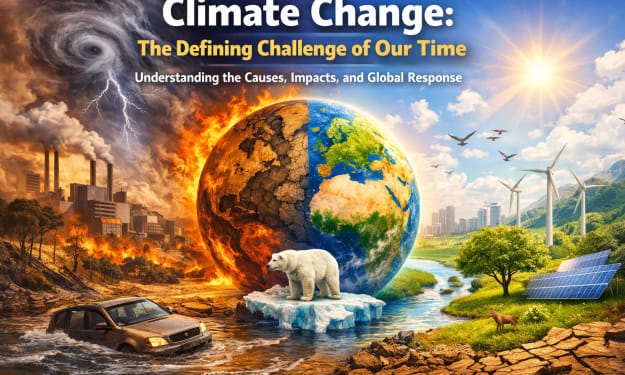
Climate Change: The Defining Challenge of Our Time
Climate change is one of the most pressing issues facing humanity in the 21st century. It refers to long-term changes in Earth’s temperature, weather patterns, and climate systems. While the planet’s climate has naturally changed throughout history, the changes observed today are occurring much faster and are largely caused by human activities. Scientists around the world warn that if these changes continue unchecked, they could have severe consequences for ecosystems, economies, and societies.
By Irshad Abbasi 5 days ago in Earth
The Sky Adorned with Stars: Nature’s Most Beautiful Crown
On a clear night, when the lights of cities fade and the air grows still, the sky reveals one of nature’s most breathtaking sights — a vast canvas filled with shining stars. The phrase “the sky adorned with stars” perfectly captures the beauty of this moment, as if the heavens themselves are wearing a glittering crown. For thousands of years, humans have gazed upward in awe, wondering about the countless lights scattered across the darkness.
By Irshad Abbasi 5 days ago in Earth
When Two Young Stars Collided: A Cosmic Catastrophe from 500 Years Ago
About 500 years ago, a dramatic event unfolded in our galaxy when two young stars violently collided and destroyed each other. Although it happened centuries ago, astronomers have only recently been able to piece together the evidence of this cosmic catastrophe. The discovery has provided scientists with rare insights into how stars interact, evolve, and sometimes meet explosive ends.
By Irshad Abbasi 5 days ago in Earth
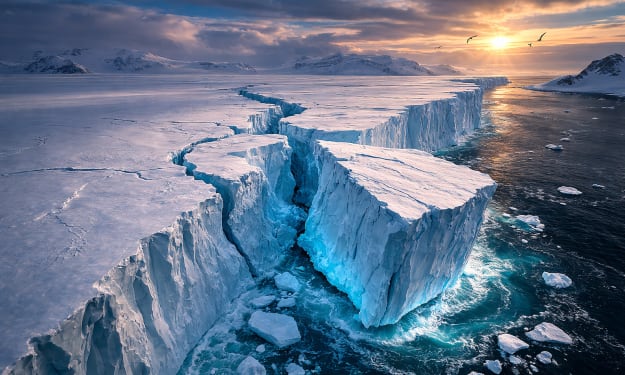
One of the World’s Ten Largest Ice Shelves on the Brink of Breaking Away
A massive ice formation in Antarctica—one of the ten largest ice shelves in the world—is reportedly close to breaking away from the continent, according to recent observations by climate scientists and satellite monitoring agencies. The development has drawn global attention, as experts warn that the detachment of such a huge ice mass could have significant implications for sea levels, ocean currents, and the stability of surrounding glaciers.
By Irshad Abbasi 5 days ago in Earth
Major Scientific Milestones of 2017
The year 2017 was an extraordinary period for scientific progress. Researchers across the world achieved remarkable breakthroughs in space exploration, medicine, technology, and environmental science. These discoveries not only expanded human knowledge but also opened new possibilities for the future. From observing gravitational waves to advances in gene editing and artificial intelligence, 2017 demonstrated the powerful role science plays in shaping modern society.
By Irshad Abbasi 5 days ago in Earth
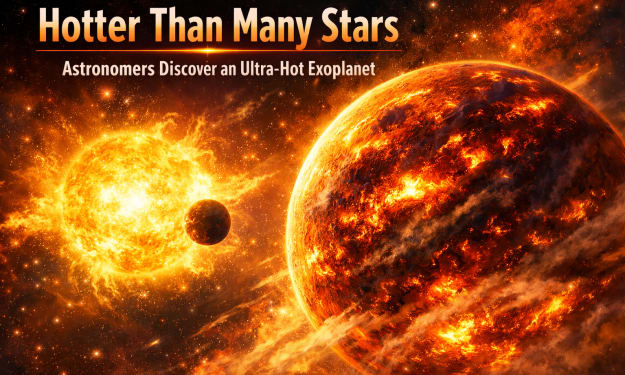
Hotter Than Many Stars: Astronomers Discover an Ultra-Hot Exoplanet
Astronomers have discovered an extraordinary new exoplanet that is hotter than many stars, offering a rare glimpse into some of the most extreme conditions in the universe. The planet, located hundreds of light-years away from Earth, has stunned scientists with surface temperatures so intense that they rival those found on small stars. The discovery is providing new insights into how planets form, evolve, and survive in hostile cosmic environments.
By Irshad Abbasi 5 days ago in Earth
Seven Earth-Sized Planets Discovered Beyond Our Solar System
In one of the most exciting breakthroughs in modern astronomy, scientists have discovered a system of seven Earth-sized planets orbiting a distant star. This extraordinary finding has captured global attention because several of these planets exist in the “habitable zone,” where conditions may allow liquid water to exist. The discovery not only expands our understanding of planetary systems but also strengthens the possibility that life might exist beyond our solar system.
By Irshad Abbasi 5 days ago in Earth