humanity
Facts and discussions about humanity, its current state, and where its heading.
Ramadan 2026: Meaning, Traditions, and How Millions Prepare for the Holy Month
Every year, millions of Muslims across the globe pause their normal routines to enter a deeply spiritual period of reflection, discipline, and compassion. This special time is known as Ramadan, the ninth month of the Islamic lunar calendar and one of the most sacred periods in Islam. Ramadan is far more than a time of fasting. It is a month that encourages self-control, spiritual growth, and empathy for those less fortunate. During this time, Muslims focus on prayer, charity, and strengthening their connection with God while also reconnecting with family and community. In 2026, Ramadan will once again bring together millions of people worldwide who share a common goal: spiritual renewal and personal reflection. Understanding the traditions, meaning, and preparation behind Ramadan helps explain why this month holds such deep significance for Muslims everywhere. When Will Ramadan 2026 Begin? Unlike the Gregorian calendar used in most parts of the world, the Islamic calendar follows the lunar cycle. This means that the dates of Ramadan shift slightly earlier each year. Astronomical predictions suggest that Ramadan 2026 is expected to begin around late February or early March, depending on the sighting of the new moon. The exact start date is traditionally confirmed by moon sighting committees in various countries. The month lasts either 29 or 30 days and concludes with a major celebration called Eid al-Fitr, which marks the end of fasting and the beginning of a festive period of gratitude and celebration. Because of the lunar calendar, Ramadan travels through all seasons over a 33-year cycle, meaning that some years fasting occurs during long summer days and other years during shorter winter days. The Spiritual Meaning of Ramadan The heart of Ramadan lies in its spiritual purpose. According to Islamic belief, Ramadan is the month during which the Quran was first revealed to the Prophet Muhammad. Because of this historical and spiritual importance, Muslims treat Ramadan as a time to reconnect with their faith and strengthen their relationship with God. Fasting during Ramadan—known as Sawm—is one of the Five Pillars of Islam, the core acts of worship that guide a Muslim’s religious life. From sunrise to sunset, adult Muslims abstain from: food drink smoking other physical needs However, fasting is not only about avoiding food and drink. It is also about avoiding negative behaviors such as anger, gossip, and dishonesty. The deeper purpose is to cultivate patience, humility, and gratitude. When someone voluntarily experiences hunger and thirst, it can build empathy for people who struggle with poverty and food insecurity. Daily Life During Ramadan Life during Ramadan follows a unique rhythm that revolves around fasting and prayer. Before sunrise, Muslims wake up for a pre-dawn meal known as Suhoor. This meal provides energy for the long day of fasting ahead. After sunrise, fasting begins and continues throughout the day. At sunset, the fast is broken with a meal called Iftar. Traditionally, Muslims begin Iftar by eating dates and drinking water, following the example of the Prophet Muhammad. After the evening meal, many Muslims attend special nightly prayers called Taraweeh, which are held in mosques throughout the month. These prayers often include the recitation of long passages from the Quran. The nights of Ramadan are often lively and social. Families gather, communities organize shared meals, and mosques become centers of activity and worship. Charity and Generosity in Ramadan Another key aspect of Ramadan is generosity. Islam strongly encourages acts of charity, and during Ramadan these acts take on even greater significance. Many Muslims give Zakat, an obligatory form of charity that supports people in need. Others give voluntary charity known as Sadaqah. Across the world, Ramadan inspires large-scale community initiatives such as: food distribution programs community Iftar gatherings donations to humanitarian organizations In many cities, volunteers prepare thousands of meals each night to help those who cannot afford food. This emphasis on compassion and generosity helps strengthen social bonds and reminds communities of their shared responsibility to care for one another. Health and Fasting Fasting has been practiced for centuries in many cultures and religions. In recent years, scientists have also studied the potential health effects of controlled fasting. Some research suggests that fasting may help regulate metabolism and encourage better eating habits when practiced responsibly. However, maintaining health during Ramadan requires careful planning. Nutrition experts often recommend: balanced meals during Suhoor and Iftar adequate hydration during non-fasting hours avoiding excessive sugary foods including fruits, vegetables, and protein in meals Proper nutrition ensures that the body remains energized while observing the fast. Preparing for Ramadan As Ramadan approaches, many Muslim families begin preparing both spiritually and practically. Spiritual preparation often includes increasing prayer, reading the Quran more frequently, and reflecting on personal goals for the month. Practical preparation may involve meal planning, grocery shopping, and organizing family gatherings. In many countries, markets and streets become decorated with lights and lanterns as the month approaches. Special Ramadan foods appear in stores, and communities begin planning charity events and social gatherings. This preparation builds anticipation and helps people enter the month with the right mindset. Ramadan Around the World Although Ramadan follows the same spiritual principles everywhere, its cultural expressions vary widely across different regions. In Middle Eastern countries, nights are filled with bustling markets and lively social gatherings. In South Asian countries, families prepare traditional dishes and host large community Iftars. In Western countries with Muslim minorities, mosques and community centers often organize events that bring people together to celebrate and share meals. Despite these differences, the spirit of Ramadan remains universal: faith, generosity, and unity. The Last Ten Nights and the Search for Laylat al-Qadr The final ten nights of Ramadan are considered especially sacred. During these nights, Muslims increase their prayers and spiritual devotion because one of these nights is believed to be Laylat al-Qadr, or the “Night of Power.” According to Islamic tradition, this is the night when the first verses of the Quran were revealed. Worship performed on this night is believed to carry immense spiritual reward, which is why many Muslims spend these nights in deep prayer and reflection. The Celebration of Eid al-Fitr After a month of fasting, Ramadan concludes with the celebration of Eid al-Fitr. Eid begins with a special prayer performed in large congregations, often in mosques or open fields. Families wear new clothes, share festive meals, exchange gifts, and visit relatives and friends. Children especially enjoy Eid because it is a joyful celebration filled with sweets, gifts, and gatherings. Eid is not only a celebration of the end of fasting but also a moment of gratitude for the strength and patience developed during Ramadan. Why Ramadan Continues to Inspire Millions In a fast-paced modern world, Ramadan offers something rare: a time to slow down, reflect, and reconnect with values that often get lost in daily life. For millions of Muslims, Ramadan is an opportunity to improve themselves spiritually, strengthen relationships, and contribute to their communities. It is a reminder that discipline, compassion, and gratitude can transform both individuals and societies. As Ramadan 2026 approaches, Muslims around the world will once again welcome this sacred month with hope, devotion, and a renewed commitment to personal growth. And for those observing it, Ramadan is not just a tradition—it is a powerful journey of faith, reflection, and unity that continues to shape lives across generations.
By The Insight Ledger 4 days ago in Filthy
The Fortress of Forgotten Women: Afghanistan’s Mysterious Castle of the “Unclaimed”
Across Afghanistan’s rugged landscape, ancient ruins and forgotten structures stand as silent witnesses to centuries of history. Among them is a mysterious fortress often referred to by locals as the “Fortress of Forgotten Women.” Though little documented in formal historical records, stories surrounding this secluded structure have been passed down through oral traditions for generations. According to local accounts, the fortress once served as a refuge—or perhaps a place of exile—for women who had been abandoned by their families or communities.
By Irshad Abbasi 6 days ago in Filthy
British Soldiers in Kenya: Allegations of Misconduct Persist Despite Strict Bans
For decades, the presence of the British Army Training Unit Kenya (BATUK) in Nanyuki has been a cornerstone of UK-Kenyan military relations. However, beneath the strategic partnership lies a troubling and persistent shadow. Despite explicit prohibitions from the Ministry of Defence (MoD) and local military commanders, a recent investigative report reveals that British soldiers are continuing to frequent sex workers, fueling a cycle of exploitation, health risks, and legal controversy.
By Irshad Abbasi 7 days ago in Filthy
The Shadow Over the Coast: Addressing Child Exploitation in Kenya’s Sex Tourism Industry
Kenya is often celebrated as the jewel of East Africa, boasting breathtaking savannas, the majestic Maasai Mara, and pristine white-sand beaches along the Indian Ocean. However, beneath the glossy veneer of the tourism brochures lies a harrowing reality that the Kenyan government and international human rights organizations are struggling to contain: the widespread sexual exploitation of children.
By Irshad Abbasi 7 days ago in Filthy
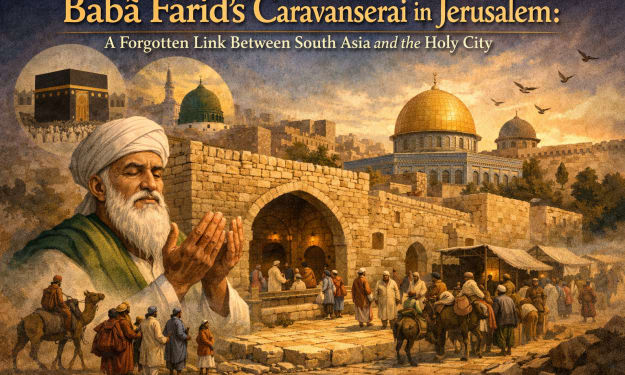
Babā Farīd’s Caravanserai in Jerusalem: A Forgotten Link Between South Asia and the Holy City
Throughout history, the sacred city of Jerusalem has attracted pilgrims, scholars, and travelers from every corner of the Muslim world. Among the many fascinating stories tied to this ancient city is the existence of Babā Farīd’s Sarai, a historical lodging place associated with the famous South Asian Sufi saint Fariduddin Ganjshakar, commonly known as Babā Farīd. This remarkable connection highlights how spiritual networks once connected distant regions like the Indian subcontinent with the heart of the Middle East.
By Irshad Abbasi 7 days ago in Filthy
A Bond Time Couldn’t Break
The first time Amina met Zayd, the air was thick with dust and the sound of hammers. It was the last week of summer vacation, and the neighborhood was alive with the loud, clumsy rhythm of people building a new community center. Amina had come to help her uncle with the painting. Zayd was there because his mother worked as the architect for the project.
By NAIB REHMANabout a month ago in Filthy
Queen's Knight
What I noticed most was the way his fingers held the microphone before he spoke. It was a firm grip, and he placed it into the position that he wanted without hesitation. After that, when his hands moved, I was captivated by his caressing of the notebook pages when he recited his poetry. Then his fingertips stroked the paper, and I caught my breath. No, no, he wasn't caressing them, I imagined it, wanted to think of him gently touching...me. Now, all four fingers on the mic stand, slightly splayed, his entire hand visible. Strong hands, and I knew he was speaking, pouring words over the audience, yet all I could see and feel was his hands. My own hand had been barely resting against my throat, and dropped to the front of my blouse, my thumb grazing my erect nipple. I bit back the moan, and held my breath, and his gaze rested on me as he ended the second poem. His face lit up, and he strode towards me, never breaking eye contact. My heart hammered, and I felt a rush of arousal when I saw the way he looked at me. The vibe washed over me like a tidal wave, but I told myself I must be projecting. I must. “You came,” he said, “just as you said you would.”
By LP Steinbeck3 months ago in Filthy
When Satan Claimed His Wife. Content Warning.
Life felt meaningless to me. I experienced an overwhelming sense of solitude, and my mind seemed constantly on the verge of falling apart. I wish I could understand exactly what was happening to me. But I never know. I find myself bouncing from one relationship to the next, and I still cannot seem to find fulfillment or content with any of these relationships or flings, no matter how many I seem to enter. It feels like there are only two types of people in this world. Some people are great at relationships, while others are only good at sex. I struggle daily to remain faithful in a relationship when the love and care are on point because, in some sense, the sexual aspect of it all lacks. Whenever I attempt to be open to polyamorous relationships, I find myself struggling with overwhelming feelings of jealousy and possessiveness towards my partner, and I find that it also makes it more challenging to nurture meaningful and satisfying relationships with those I am close to. However, this consistent feeling of absolute emptiness continually drives me further into a void that makes me never want to experience physical feelings toward others.
By Jaded | Pleasured4 months ago in Filthy
Naked Attraction. Content Warning.
Introduction A few years ago, a friend of mine appeared on the dating program "Naked Attraction", the concept of which is you see the naked body, no faces and choose your date. There are men and women on both sides of the equation.
By Mike Singleton 💜 Mikeydred 4 months ago in Filthy
The Exodus of the Daughters of Light
The currents pull at the souls of the world, carrying a mass exodus of those who have slept too long in the machine of mirrors, in the underworld of illusions. They awaken and see: we were living in hell, and it was sold to us as paradise. A paradise of neon pleasure, empty validation, and hollow promises — a kingdom made of smoke and programmed desire. And now the smoke is clearing.
By THE HONED CRONE4 months ago in Filthy