blockchain
First came Bitcoin, then came the blockchain; all about the myriad applications of blockchain technology and how decentralization is changing the world.
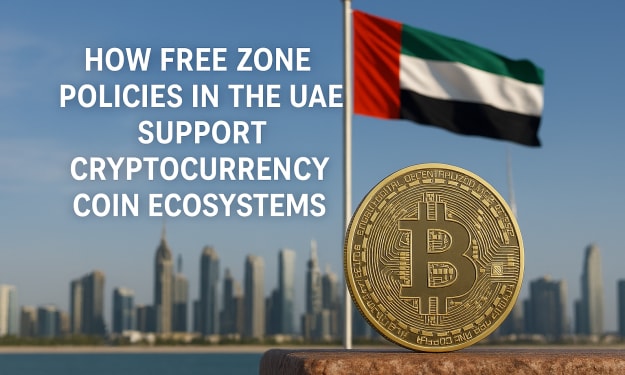
How Free Zone Policies in the UAE Support Cryptocurrency Coin Ecosystems
The United Arab Emirates has emerged as a regulatory laboratory for digital asset innovation, particularly within designated economic free zones. Unlike traditional offshore centers that rely on regulatory arbitrage, UAE free zones are structured jurisdictions with codified governance frameworks, sector-specific licensing, and compliance mandates. This institutional architecture has played a significant role in shaping sustainable cryptocurrency coin ecosystems rather than speculative token environments.
By Siddarth D25 days ago in The Chain
Who Wins Between Cryptocurrency and Traditional Banking?
Who Wins Between Cryptocurrency and Traditional Banking? Money has changed over time. Financial systems constantly adapt to new technology, whether it's by bartering goods or using gold coins, paper currency, or digital banking apps. One of the most important financial debates of the modern era is taking place right now: Cryptocurrency vs. Traditional Banking: Who actually wins?
By Farida Kabir29 days ago in The Chain
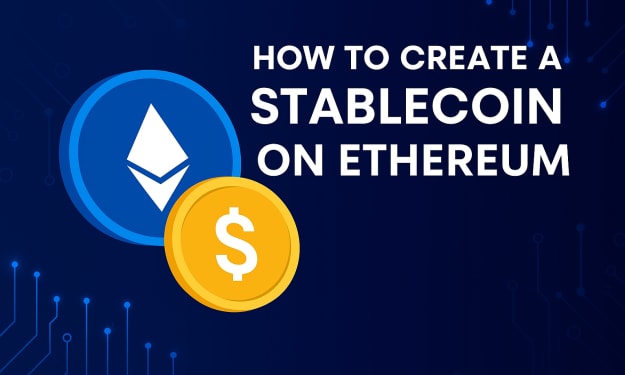
How to Create a Stablecoin on Ethereum
The rise of decentralized finance (DeFi) and digital assets has led to a significant surge in demand for stablecoins. These blockchain-native currencies maintain a fixed value, often pegged to fiat currencies like the US dollar, offering stability in an otherwise volatile crypto market. Ethereum, with its robust ecosystem and smart contract capabilities, is a preferred platform for launching stablecoins. In this article, we explore how to create a stablecoin on Ethereum and the technical steps involved in ensuring its functionality, security, and scalability.
By Siddarth D29 days ago in The Chain
Should Your Business Launch a Crypto Token in 2026? Complete Beginner Guide
In 2026, crypto tokens are no longer experimental toys for tech-native startups. They have matured into real business tools used for fundraising, customer engagement, loyalty programs, digital ownership, and even revenue sharing.
By Jennifer Atkinson30 days ago in The Chain
Utility Token Development: How to Add Staking, Governance, Rewards, and Access to Your Token?
A token without utility rarely maintains relevance beyond early interest. When users hold a token but cannot actively use it, motivation fades and trust weakens. Utility gives a token purpose by embedding it into the everyday functioning of an ecosystem. Instead of being just another asset to trade, the token becomes something users depend on for participation, benefits, and influence.
By Jennifer Atkinsonabout a month ago in The Chain
The Role of Cryptocurrency Coins in Digital Business Ecosystems
Digital business ecosystems are increasingly built on decentralized infrastructure, where trust minimization, programmability, and transparency are essential. Within this environment, the cryptocurrency coin functions as more than a speculative asset. It operates as an economic primitive that enables value exchange, incentivizes participation, and aligns network behavior. As enterprises experiment with blockchain-based models, understanding how cryptocurrency coins integrate into digital ecosystems has become strategically important.
By Siddarth Dabout a month ago in The Chain
Why Startups Are Still Launching New Cryptocurrency Coins in 2026
In 2026, startups across fintech, gaming, AI, logistics, and decentralized infrastructure are still launching a cryptocurrency coin despite regulatory scrutiny and market maturity. The motivation is no longer speculative hype but structural utility. Founders increasingly view a cryptocurrency coin as programmable financial infrastructure rather than a fundraising gimmick. Tokens now encode governance, automate incentives, and orchestrate multi-party ecosystems where traditional equity models fall short.
By Siddarth Dabout a month ago in The Chain