politics
Politics does not dictate our collective cultural mindset as much as it simply reflects it; We've got to look in the mirror sometimes, and we've got one.
Stranded travellers charter private jets to return to Europe . AI-Generated.
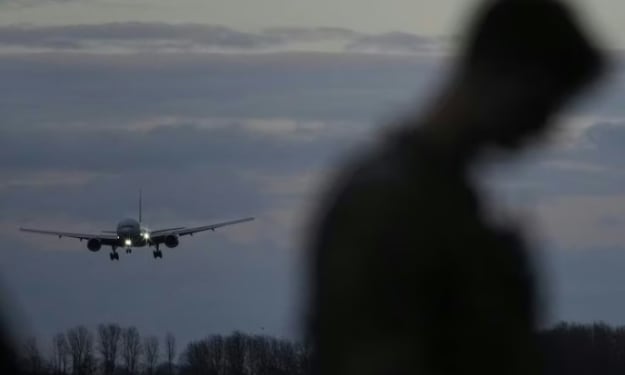
In the wake of widespread flight cancellations and airspace closures triggered by the 2026 war involving Iran, a growing number of travellers stranded across the Middle East and Asia have resorted to chartering private jets in a desperate bid to return to Europe. As conventional commercial services remain disrupted, wealthy tourists and expatriates are spending tens of thousands of dollars on private evacuation flights to reach home. The conflict that erupted in late February after coordinated U.S. and Israeli strikes on Iranian facilities has reverberated through global aviation, closing airspace over key hubs such as the United Arab Emirates, Qatar and other Gulf states. With missiles and drones continuing to fly across the region, commercial airlines have suspended or delayed most flights, leaving travellers stuck far from home for days — in some cases more than two weeks. Against this backdrop of flight chaos, some travellers with the financial means to do so have turned to private jets as the only viable option to escape. Reports indicate that private flights out of the Gulf region have commanded prices of up to $200,000 or more, depending on the distance and aircraft involved. From Muscat and Dubai to Istanbul and other regional airports, charter operators have been booked solid as foreign nationals seek alternatives to congested and largely non‑operational commercial terminals. In some cases, travellers flying privately have described complex routing and urgent departures, often with short notice, as they scramble to secure seats on available jets. This trend reflects both the severity of the current travel disruption and the limited options available to many. Major carriers such as Emirates, Qatar Airways and Etihad have largely pulled back services amid safety concerns and government restrictions, while repatriation and rescue flights organized by national authorities are either limited or prioritized for citizens by existing bookings. For those without access to private jets, the situation remains frustrating and uncertain. Tens of thousands of travellers, including families, students and holidaymakers, are still waiting for available commercial flights or governmental evacuation options. Some countries have reported hundreds of thousands of nationals stranded across the region, prompting diplomatic efforts and government‑organized repatriations to assist. The rush towards private jets highlights stark inequalities in how travellers are able to cope with the disruption. While affluent individuals can effectively “buy” their way out of the crisis, others remain stuck in congested airports or facing long delays on the ground. Social media posts from stranded passengers have detailed long queues, lack of available seats on repatriation flights, and mounting hotel bills as they wait for a way home. Muscat International Airport in Oman has seen particularly high demand for private flights, with charter operations accounting for a significant share of departures in recent days. To manage congestion, Muscat authorities have reportedly restricted private jet operations to prioritize scheduled commercial and government repatriation flights, a sign of how intense the demand has become. Private jet companies and brokers have been inundated with requests since the onset of the travel disruption. Operators reported that many clients expressed urgency and uncertainty about securing passage, sometimes booking multiple charter options simultaneously in hopes of finding a viable route home. For some passengers, these flights involve additional technical stops or routing to secondary hubs before eventually reaching Europe. Beyond individual travellers, the rise in private charters has also placed logistical pressure on smaller regional airports that are acting as alternative departure points. Flight planning becomes increasingly complex when coordinating clearances in contested or partially closed airspace, and pilots have had to navigate amid shifting safety advisories and military activity alerts. Governments and airline authorities have continued to work on reopening certain air corridors and resuming more commercial services where safe, but progress has been uneven. Limited repatriation routes, such as flights from Muscat to London operated by British Airways for ticket holders, offer a lifeline for some, but demand far outstrips supply. Morningstar, Inc. For now, the private jet phenomenon underscores the depth of disruption affecting global travel. With geopolitical tensions showing no immediate signs of abating, those with wealth are choosing to invest heavily in their return journeys, highlighting how global crises can quickly reshape travel norms — but also how access to rapid alternatives remains sharply divided by economic means.
By Fiaz Ahmed about an hour ago in The Swamp
U.S. Refueling Plane Crashes in Iraq, Military Says. AI-Generated.
A U.S. military KC‑135 Stratotanker refueling aircraft crashed in western Iraq on March 12, 2026, the U.S. Central Command (CENTCOM) confirmed, prompting urgent rescue operations as the fate of the crew remains unknown. The incident occurred amid ongoing U.S. military operations linked to the conflict with Iran, with officials stressing that the crash was not the result of hostile fire or friendly fire. The KC‑135, a mainstay of the U.S. Air Force’s aerial refueling fleet for more than six decades, was operating in “friendly airspace” over western Iraq when the mishap occurred. CENTCOM’s initial statement confirmed that two aircraft were involved in the incident — one that went down and a second that was able to land safely despite sustaining damage. Rescue teams, including U.S. military personnel and coalition partners in the region, were deployed quickly to locate the site of the crash and extract any survivors. Officials have not yet provided details on the number of personnel aboard or their condition, citing the developing nature of the situation. The Stratotanker plays a critical support role in extended air operations by refueling combat aircraft mid‑air, enabling missions to cover great distances without returning to base for fuel. Given the operational tempo of U.S. forces during the current Middle East conflict, KC‑135 tankers have been in heavy use supporting fighter jets, bombers, reconnaissance aircraft, and other assets. CENTCOM emphasized that the aircraft’s loss was not caused by hostile action, clarifying that no hostile fire or friendly fire was involved. The circumstances point toward an accident or operational mishap while two tankers were flying in close proximity, though investigators will need time to reconstruct the events leading up to the crash. The identity of the downed tanker, as well as its mission specifics, have not been publicly disclosed. However, multiple U.S. officials familiar with the matter told reporters that the flight was part of a refueling mission supporting American and allied aircraft conducting operations under the banner of Operation Epic Fury, a campaign linked to the broader hostilities involving Iran. Officials noted that the second aircraft involved issued an emergency declaration and later landed safely at an airfield outside Iraq after the mid‑air incident. The relationship between the two tankers during the crash has not been fully explained, and CENTCOM said it would release more information as it becomes available. The current incident marks one of several aviation losses the U.S. military has acknowledged in recent weeks connected to the conflict. Earlier episodes included aircraft damaged during friendly fire incidents or other unforeseen circumstances, though in many cases crew members survived or were successfully recovered. Officials in Washington stressed that the KC‑135’s age and the inherent risks of aerial refueling, a complex and tightly coordinated maneuver, can contribute to accidents even in the absence of enemy engagement. With more than 300 tankers still in service across active duty units and the Air National Guard, the aircraft remains vital to sustained air operations but also faces maintenance and operational challenges given its decades‑old design. As of the latest updates, military search and rescue teams are focusing on locating the crash site in the remote desert region of western Iraq. U.S. officials have said they are coordinating with Iraqi authorities to facilitate access and ensure safety for recovery teams. Family members of the crew were being notified privately as part of standard military protocol prior to any public details regarding casualties. The Pentagon has not released a formal count of personnel aboard the aircraft, but typical KC‑135 missions involve at least five to six crew members, including pilots, navigators, flight engineers, and boom operators tasked with conducting the refueling. President Donald Trump and other senior U.S. defense officials have acknowledged that the conflict involving Iran and allied militias will likely continue to strain American and coalition forces in the region. They have also warned that air and ground operations in hostile environments inherently carry risks to both personnel and equipment. At this stage, no timeline has been provided for when investigators expect to release a preliminary report on the cause of the crash. Military aviation incidents, especially involving mid‑air events, typically involve detailed analysis of flight data recorders, radar tracks, communications logs, and eyewitness accounts. The loss of a tanker aircraft and its potential human toll underscores the broader challenges faced by U.S. forces operating in a high‑tempo conflict environment. As rescue and recovery efforts continue in Iraq, U.S. Central Command pledged to keep the public informed with verified facts and to support the affected families throughout this difficult process.
By Fiaz Ahmed about an hour ago in The Swamp
US Military Announces Rescue Effort After Refueling Aircraft Crashes in Iraq. AI-Generated.
The United States military has launched an urgent search and rescue operation after a refueling aircraft crashed in western Iraq during a military mission. The incident occurred amid escalating tensions in the Middle East and ongoing U.S. operations connected to regional conflicts. According to officials from U.S. Central Command (CENTCOM), the aircraft went down in what was described as “friendly airspace,” prompting immediate rescue efforts for the crew members aboard. � Reuters +1 The aircraft involved in the incident was a Boeing KC-135 Stratotanker, one of the most important aerial refueling platforms used by the U.S. Air Force. These tankers allow fighter jets and other military aircraft to remain airborne for longer periods by providing fuel during flight. Such aircraft play a crucial role in sustaining long-distance combat missions, surveillance operations, and rapid response deployments across conflict zones. � Wikipedia The Incident in Western Iraq The crash took place on March 12, 2026, while two refueling aircraft were operating in the same mission area. According to CENTCOM officials, both aircraft were involved in an incident, but only one went down in western Iraq. The second aircraft was able to land safely despite sustaining damage. � The Washington Post +1 Initial reports from the U.S. military indicate that the crash was not caused by hostile fire or friendly fire. This clarification was significant because the region has experienced frequent attacks from armed militias and other hostile groups targeting U.S. forces. By ruling out enemy involvement in the crash, officials suggested that the accident may have been related to technical issues or an operational mishap during flight. � Reuters Despite this confirmation, some regional groups have claimed responsibility for shooting down the aircraft. However, these claims have not been verified by U.S. authorities, and the official investigation remains ongoing. � Al Jazeera Search and Rescue Operation Immediately after the aircraft went down, U.S. forces initiated a search and rescue mission to locate and recover the crew members. Military search and rescue teams are trained for such emergencies and often deploy helicopters, surveillance aircraft, and ground units to locate survivors in difficult terrain. At the time of the announcement, it was not immediately clear whether there were casualties among the crew. The aircraft reportedly carried multiple personnel responsible for flight operations and refueling management. Authorities stated that more information would be released once rescue teams were able to reach the crash site and assess the situation. � New York Post Search and rescue missions in combat zones are particularly complex. Teams must operate carefully due to potential threats, difficult geography, and the possibility of unexploded ordnance or hostile activity nearby. The priority in such operations is to quickly locate survivors while ensuring the safety of rescue personnel. Role of the KC-135 Stratotanker The KC-135 Stratotanker has served as the backbone of U.S. aerial refueling operations for more than six decades. Designed to transfer fuel to other aircraft mid-flight, it enables fighter jets, bombers, and reconnaissance aircraft to extend their missions without landing. � Wikipedia In modern warfare, aerial refueling has become essential for maintaining air superiority and rapid deployment capabilities. Aircraft like the KC-135 allow military forces to operate across vast distances and sustain continuous operations over contested areas. Because of its strategic importance, any loss of a tanker aircraft is considered a significant operational event. Beyond the value of the aircraft itself, the safety of the crew and the potential impact on ongoing missions make such incidents highly sensitive. Rising Tensions in the Region The crash occurred during a period of heightened conflict in the Middle East. U.S. forces have been involved in operations linked to tensions with Iran and regional militia groups. In recent weeks, missile strikes, drone attacks, and military confrontations have intensified across several countries in the region. � Business Standard These developments have increased the operational tempo for U.S. military aircraft, which are conducting surveillance, combat support, and defensive missions. With more aircraft flying missions in complex environments, the risk of accidents and mechanical issues also increases. Military aviation experts note that aerial refueling operations themselves can be technically challenging. They require precise coordination between aircraft flying at high speed and close proximity, making them one of the more demanding tasks in military aviation. Investigation and Future Updates U.S. military authorities have stated that an investigation is underway to determine the exact cause of the crash. Investigators will examine flight data, communication records, maintenance logs, and other evidence to reconstruct what happened in the moments leading up to the incident. Such investigations are standard procedure after any military aviation accident. Their goal is not only to determine responsibility but also to identify safety improvements that can prevent similar incidents in the future. Officials emphasized that the priority remains the safety of the crew and the success of the ongoing rescue mission. Families of the service members involved are being notified and updated as more information becomes available. Conclusion The crash of a U.S. refueling aircraft in Iraq highlights the risks faced by military personnel operating in active conflict zones. While aerial refueling aircraft rarely make headlines, they are vital to the success of modern air operations and often operate in demanding environments. As rescue teams continue their efforts and investigators search for answers, the incident serves as a reminder of the challenges and dangers associated with military aviation. The outcome of the rescue mission and the findings of the investigation will likely shape future safety procedures and operational strategies for U.S. forces in the region.
By Jameel Jamaliabout 3 hours ago in The Swamp
WHY ARAB STATES BEING TARGETED?
It is absolutely clear that they will go after every country that threatens Israel or is considered an existential or security threat to it. The agenda of Washington, D.C. is very clear: they will target every country that threatens Israel, and either destroy it through carpet bombing or erase it, just as they did with Atomic bombings of Hiroshima and Nagasaki.
By Ibrahim Shah about 4 hours ago in The Swamp
Emirati minister tells BBC Iran must end strikes on Gulf". AI-Generated.
An Emirati minister has issued a stark warning that Iran must immediately stop launching strikes against Gulf states, telling the BBC that continued attacks risk pushing the region toward a broader and more dangerous conflict. The comments come amid escalating tensions following missile and drone strikes linked to the ongoing confrontation between Iran and its adversaries. The warning was delivered during an interview discussing the recent wave of Iranian attacks targeting countries across the Gulf. According to regional officials, several nations—including the United Arab Emirates—have experienced missile and drone threats since the conflict intensified in late February. Authorities say the strikes have affected civilian infrastructure, energy facilities, and transport routes in multiple countries. Emirati officials stressed that the Gulf states have repeatedly attempted to avoid becoming direct participants in the conflict. However, they argue that Iran’s decision to target neighbouring countries has created a dangerous escalation that threatens regional stability. “We have been very clear that attacks on our region must stop,” the minister said during the interview. “The Gulf states are not seeking confrontation, but we cannot ignore actions that endanger our citizens, infrastructure, and economic stability.” The recent tensions stem from a rapidly expanding regional crisis that began after coordinated military strikes by the United States and Israel against Iranian targets earlier this year. In response, Iran launched a large number of missiles and drones aimed at various locations in the Middle East. Some of these strikes have reached Gulf states that host U.S. military bases or maintain close security partnerships with Washington. Officials in the UAE say their air defence systems have intercepted many incoming projectiles, preventing larger-scale damage. Nevertheless, the attacks have resulted in casualties and property destruction in several locations. Iranian missile and drone attacks have reportedly killed civilians and injured more than a hundred people in the UAE during the ongoing conflict. The Emirati minister emphasized that the Gulf region has invested heavily in economic growth, global trade, and innovation over the past two decades. Continued military escalation, he said, threatens to undermine that progress by creating uncertainty for international investors, shipping routes, and energy markets. The Gulf remains one of the world’s most important energy hubs, producing a significant share of global oil and gas supplies. Any prolonged instability could therefore have consequences far beyond the Middle East. Analysts warn that continued attacks near shipping lanes such as the Strait of Hormuz could disrupt global energy markets and raise fuel prices worldwide. Despite the tensions, Emirati leaders have signalled that they still favour diplomatic solutions. Officials say dialogue and negotiations remain the only sustainable path toward reducing the risk of a wider war. At the same time, the UAE has reinforced its message that it will defend its territory if attacks continue. In recent remarks, Mohamed bin Zayed Al Nahyan declared that the country is strong and capable of confronting threats, assuring citizens and residents that the government will protect them during the crisis. Other Gulf leaders have expressed similar concerns. Officials in several countries have warned that Iran’s actions risk destabilizing the entire region and drawing additional states into the conflict. In separate comments, the prime minister of Qatar described Iran’s strikes on neighbouring states as a dangerous miscalculation that could have severe economic consequences if the violence continues. Diplomats across the region are now working to prevent further escalation. Emergency meetings among members of the Gulf Cooperation Council have focused on coordinating defensive measures while also exploring potential diplomatic channels that could reduce tensions. The Emirati minister stressed that Gulf nations do not wish to see the conflict widen. However, he warned that patience among regional governments is wearing thin as attacks continue. “We have always supported stability and cooperation in the region,” he said. “But stability cannot exist if countries are launching missiles and drones at their neighbours.” For many observers, the situation highlights the fragile balance of power in the Middle East. While diplomatic efforts continue behind the scenes, the next steps taken by Iran and its regional rivals will likely determine whether the crisis moves toward negotiation—or further confrontation. As the conflict continues, Gulf leaders say their message remains simple: stop the strikes, return to diplomacy, and prevent the region from sliding into a wider war that could have consequences for the entire world.
By Fiaz Ahmed about 4 hours ago in The Swamp
Trump names new head for VOA parent after court rebukes Kari Lake. AI-Generated.
A major leadership shift has taken place at the U.S. government agency that oversees international broadcasting after a federal court ruling invalidated the authority of a previous appointee. Donald Trump has nominated a new head to lead the organization that supervises Voice of America and several other global media outlets, marking a new chapter for American public diplomacy and international broadcasting. The new nominee, Sarah B. Rogers, currently serves as the U.S. undersecretary of state for public diplomacy and public affairs. She has been selected to lead the United States Agency for Global Media (USAGM), the independent federal agency responsible for overseeing international broadcasters funded by the U.S. government. Her nomination comes shortly after a federal judge ruled that the previous acting head, Kari Lake, had exercised authority without proper legal appointment. The decision follows weeks of controversy surrounding Lake’s tenure at the agency. A federal court concluded that she had not been legally authorized to serve as chief executive because she had not been formally nominated and confirmed for the role as required by federal law. As a result, actions taken during her time in charge—including sweeping layoffs and operational changes—were declared invalid by the court. The ruling was delivered by U.S. District Judge Royce Lamberth, who found that Lake’s leadership violated the Federal Vacancies Reform Act and constitutional rules governing senior federal appointments. The judge’s decision effectively nullified major policy changes made under her direction, including staff reductions at several media outlets operated by USAGM. The court case was brought by a group of journalists and employees connected to Voice of America who challenged Lake’s authority to restructure the agency. Many of the plaintiffs argued that the changes threatened the editorial independence and operational stability of U.S.-funded international broadcasters. Following the ruling, several journalists described the decision as a victory for press freedom and institutional integrity. The United States Agency for Global Media plays a significant role in American foreign policy communication. Created in 1999, the agency supervises multiple broadcasters that deliver news and information to audiences worldwide, especially in countries where independent journalism is restricted. These outlets include Radio Free Europe/Radio Liberty, Radio Free Asia, and the Middle East Broadcasting Networks. Among them, Voice of America is the most widely recognized. Founded during World War II, the broadcaster delivers news programming in multiple languages to global audiences and has long been considered a key tool of U.S. “soft power.” Its mission is to provide accurate, balanced journalism while promoting democratic values and open information. Rogers’ nomination is expected to bring a period of stabilization after months of uncertainty inside the agency. However, her appointment must still be confirmed by the U.S. Senate before she can formally assume the position. Until then, another Trump administration official, Michael Rigas, is expected to serve as acting chief executive. Supporters of Rogers describe her as a strong advocate of free speech and international communication, with experience in public diplomacy and government media strategy. Critics, however, have raised concerns about some of her past political positions and associations, suggesting that her leadership could shape the future direction of the agency’s editorial mission. Meanwhile, Lake has strongly criticized the court ruling and signaled her intention to challenge the decision. She has argued that the reforms introduced during her tenure were necessary to restructure the agency and reduce bureaucracy. Her supporters also claim that the changes were aimed at improving efficiency and strengthening U.S. messaging abroad. The controversy surrounding the leadership of USAGM reflects a broader debate over the role of government-funded international media in the modern geopolitical environment. As global information battles intensify and authoritarian governments expand their propaganda efforts, institutions like Voice of America remain central to the United States’ strategy for promoting independent journalism and democratic values worldwide. With Rogers’ nomination now before the Senate, the future direction of America’s global broadcasting system may soon become clearer. For now, the agency faces the challenge of restoring stability, rebuilding trust within its newsroom operations, and continuing its mission to deliver credible news to audiences around the world.
By Fiaz Ahmed about 6 hours ago in The Swamp
Tater Tots and Transgender Penguins:
I have my first cup of coffee for the day in hand, and my laptop on the coffee-table in front of me, opened to my favorite government tracking site: https://www.govtrack.us/. I’m settled into my favorite spot on the couch, with Kai my 2-year old Golden Retriever and trusty research partner next to me, just a couple of political junkies, who are cruising the internet, and looking for a political good-time. Ok... I'm the political-wonk... Kai's just there for the treats and belly-rubs... and then we find what we're looking for.
By Meko James about 10 hours ago in The Swamp