
U.S. Refueling Plane Crashes in Iraq, Military Says
KC‑135 tanker goes down during ongoing Iran‑linked operations as rescue efforts continue

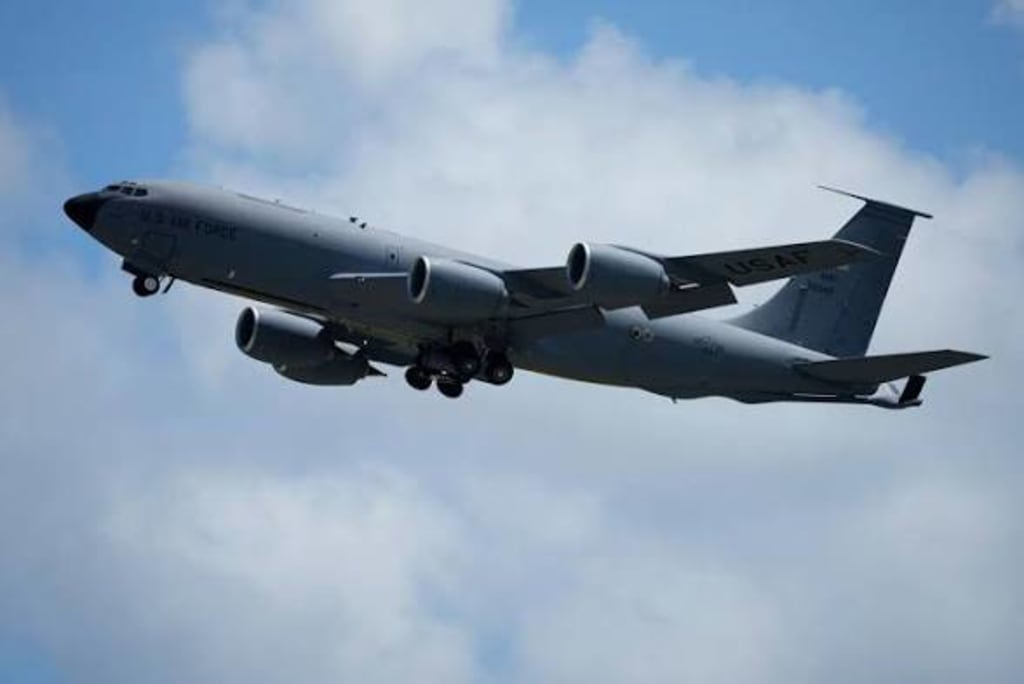
A U.S. military KC‑135 Stratotanker refueling aircraft crashed in western Iraq on March 12, 2026, the U.S. Central Command (CENTCOM) confirmed, prompting urgent rescue operations as the fate of the crew remains unknown. The incident occurred amid ongoing U.S. military operations linked to the conflict with Iran, with officials stressing that the crash was not the result of hostile fire or friendly fire.
The KC‑135, a mainstay of the U.S. Air Force’s aerial refueling fleet for more than six decades, was operating in “friendly airspace” over western Iraq when the mishap occurred. CENTCOM’s initial statement confirmed that two aircraft were involved in the incident — one that went down and a second that was able to land safely despite sustaining damage.
Rescue teams, including U.S. military personnel and coalition partners in the region, were deployed quickly to locate the site of the crash and extract any survivors. Officials have not yet provided details on the number of personnel aboard or their condition, citing the developing nature of the situation.
The Stratotanker plays a critical support role in extended air operations by refueling combat aircraft mid‑air, enabling missions to cover great distances without returning to base for fuel. Given the operational tempo of U.S. forces during the current Middle East conflict, KC‑135 tankers have been in heavy use supporting fighter jets, bombers, reconnaissance aircraft, and other assets.
CENTCOM emphasized that the aircraft’s loss was not caused by hostile action, clarifying that no hostile fire or friendly fire was involved. The circumstances point toward an accident or operational mishap while two tankers were flying in close proximity, though investigators will need time to reconstruct the events leading up to the crash.
The identity of the downed tanker, as well as its mission specifics, have not been publicly disclosed. However, multiple U.S. officials familiar with the matter told reporters that the flight was part of a refueling mission supporting American and allied aircraft conducting operations under the banner of Operation Epic Fury, a campaign linked to the broader hostilities involving Iran.
Officials noted that the second aircraft involved issued an emergency declaration and later landed safely at an airfield outside Iraq after the mid‑air incident. The relationship between the two tankers during the crash has not been fully explained, and CENTCOM said it would release more information as it becomes available.
The current incident marks one of several aviation losses the U.S. military has acknowledged in recent weeks connected to the conflict. Earlier episodes included aircraft damaged during friendly fire incidents or other unforeseen circumstances, though in many cases crew members survived or were successfully recovered.
Officials in Washington stressed that the KC‑135’s age and the inherent risks of aerial refueling, a complex and tightly coordinated maneuver, can contribute to accidents even in the absence of enemy engagement. With more than 300 tankers still in service across active duty units and the Air National Guard, the aircraft remains vital to sustained air operations but also faces maintenance and operational challenges given its decades‑old design.
As of the latest updates, military search and rescue teams are focusing on locating the crash site in the remote desert region of western Iraq. U.S. officials have said they are coordinating with Iraqi authorities to facilitate access and ensure safety for recovery teams. Family members of the crew were being notified privately as part of standard military protocol prior to any public details regarding casualties.
The Pentagon has not released a formal count of personnel aboard the aircraft, but typical KC‑135 missions involve at least five to six crew members, including pilots, navigators, flight engineers, and boom operators tasked with conducting the refueling.
President Donald Trump and other senior U.S. defense officials have acknowledged that the conflict involving Iran and allied militias will likely continue to strain American and coalition forces in the region. They have also warned that air and ground operations in hostile environments inherently carry risks to both personnel and equipment.
At this stage, no timeline has been provided for when investigators expect to release a preliminary report on the cause of the crash. Military aviation incidents, especially involving mid‑air events, typically involve detailed analysis of flight data recorders, radar tracks, communications logs, and eyewitness accounts.
The loss of a tanker aircraft and its potential human toll underscores the broader challenges faced by U.S. forces operating in a high‑tempo conflict environment. As rescue and recovery efforts continue in Iraq, U.S. Central Command pledged to keep the public informed with verified facts and to support the affected families throughout this difficult process.
About the Creator
Fiaz Ahmed
I am Fiaz Ahmed. I am a passionate writer. I love covering trending topics and breaking news. With a sharp eye for what’s happening around the world, and crafts timely and engaging stories that keep readers informed and updated.
Keep reading
More stories from Fiaz Ahmed and writers in The Swamp and other communities.
I missed my chemo and have a £12,000 hotel bill': British holidaymakers stranded by Iran war
British holidaymakers have found themselves caught in a growing international travel disaster after their flights were cancelled amid escalating conflict triggered by strikes involving Iran, leaving some stranded abroad with mounting costs, missed commitments and disrupted medical care. The situation has left travellers grappling with uncertainty as regional airspace closures and widespread flight cancellations make it difficult to return home. One striking account shared with UK media describes a British couple who had to extend their stay far beyond their intended dates, racking up more than £12,000 in hotel bills, and forcing one of them to miss a scheduled chemotherapy treatment back in the United Kingdom. Travel disruption amid regional conflict The unprecedented strain on commercial aviation is the result of a broader military escalation following retaliatory missile and drone strikes across the Middle East. Airspace over crucial travel hubs such as the United Arab Emirates and neighbouring Gulf states has been temporarily closed or heavily restricted, prompting airlines to cancel or suspend many flights leaving the region. British nationals have been among the tens of thousands affected by the disruption. The UK Foreign Office has reported that hundreds of thousands of British citizens are in the region for holiday, business, transit or work, and many have had their travel plans thrown into disarray due to grounded aircraft and limited alternative options. With so few flights operating, some travellers have resorted to booking hotel rooms night after night while they wait for airspace to reopen or seats to become available on international flights. For some this has meant steep unexpected bills that may not be covered by insurance, particularly when combing high‑season hotel rates with extended stays. Personal stakes: missed treatment and mounting bills For the couple featured in the initial BBC report, the disruption has had serious personal consequences. The woman was due to begin a course of chemotherapy shortly after returning home, but the extended situation abroad meant she missed a critical appointment, adding both emotional and medical strain to an already stressful scenario. Meanwhile, the pair faced bills for accommodation and meals that far exceeded their original travel budget. Many travellers in similar circumstances have expressed frustration at their inability to leave despite having made advance plans. Hotels in major transit hubs continue to be in high demand, with prices rising as supply tightens and demand continues. Some have posted pleas on social media and online forums seeking advice on alternative routes or even accommodation assistance. Government response and contingency planning The British government has acknowledged the scale of the problem and outlined efforts to assist its citizens. Officials have urged British travellers in the region to register with the Foreign, Commonwealth & Development Office (FCDO) so that authorities can estimate where UK nationals are located and send tailored advice or alerts. Authorities have also explored possible evacuation plans or coordination with airlines to establish special flights that could allow stranded passengers to return home, but limitations remain due to the ongoing airspace closures and safety assessments by carriers. In some cases, the government has assisted with the organisation of repatriation flights from neighbouring countries, though demand continues to outstrip available seats. One official noted that commercial airline routes remain the most efficient and rapid means of transport when they are operational, but the rapidly evolving situation means many travellers are still waiting for reliable connections. Insurance and legal challenges Travel insurance policies vary widely in terms of what they cover during episodes of geopolitical instability. Many plans include provisions for trip interruption or evacuation assistance, but there are often exclusions when airspace closures or conflict is deemed foreseeable or if specific types of war risk are involved. Those facing high hotel bills often find themselves unsuccessful in securing full reimbursements. Some travel experts suggest that independent travellers may need to absorb these costs themselves, especially if airlines or governments explicitly state that flights cannot operate due to safety concerns. They warn of a complex landscape of claims and payouts as more people attempt to seek compensation for unexpected expenses incurred while stranded. Human impact beyond finance Beyond the financial toll, the human impact of being stranded in a conflict‑affected region has resonated widely. Social media posts from British travellers describe not only the inconvenience but also anxiety about navigating safety in areas where geopolitical tensions are high. The inability to return home as planned, combined with concerns about access to medical care, has amplified stress for many individuals and families. One commenter described the situation as surreal — not a typical holiday postponement but a situation where everyday life was upended by events far beyond their control. For those facing medical issues, work commitments or family responsibilities, the ripple effects of these travel delays are likely to be felt long after they return home. Looking ahead As the conflict continues to influence travel logistics, British travellers in the region remain in a state of limbo. While some flights are gradually resuming from select airports, others remain grounded as airlines and local authorities assess safety conditions and airspace clearance. For now, the narrative of stranded holidaymakers like the couple who missed chemotherapy appointments serves as a striking reminder of how global geopolitical upheavals can ripple into deeply personal crises — turning once‑routine travel plans into complicated, expensive and emotionally fraught ordeals.
By Fiaz Ahmed about 12 hours ago in The Swamp
Parallel Protests
I haven't written for quite some time, but I have A LOT of thoughts about yesterday's protest rally against our government's involvement and complicity in America's war on Iran, on the harbourside of my home city Bristol, and I need to put them somewhere. My gorgeous girlfriend is always a loving and listening ear and sharing it all with her will always be a healthy and happy way of processing the mental and emotional weight, but getting it straight in my brain to share means writing it all down in straight lines, so, here we are and thanks for being here.
By Steph Cole10 days ago in The Swamp
Top tipple tricks
Been thinking a lot about drinking, lately. Not least because of a recent episode of over-indulgence and the inevitable after effects. Some readers may recall the earlier articles I wrote about beating the booze. Here I set out an experiment in techniques for cutting down on my alcohol intake. The experiment was successful, the techniques worked, and I have armed myself with an arsenal of weapons in the war against the demon drink. I have yet to fire the first round however. It's all a question of timing (perhaps procrastination).
By Raymond G. Taylor4 days ago in Psyche



Comments
There are no comments for this story
Be the first to respond and start the conversation.