
Trump Accuses Starmer of Seeking to “Join Wars After We’ve Already Won” and Dismisses UK Aircraft Carriers
Trump lashes out at UK Prime Minister Sir Keir Starmer over delayed support for U.S. operations, dismissing British aircraft carriers as unnecessary in the Iran conflict.

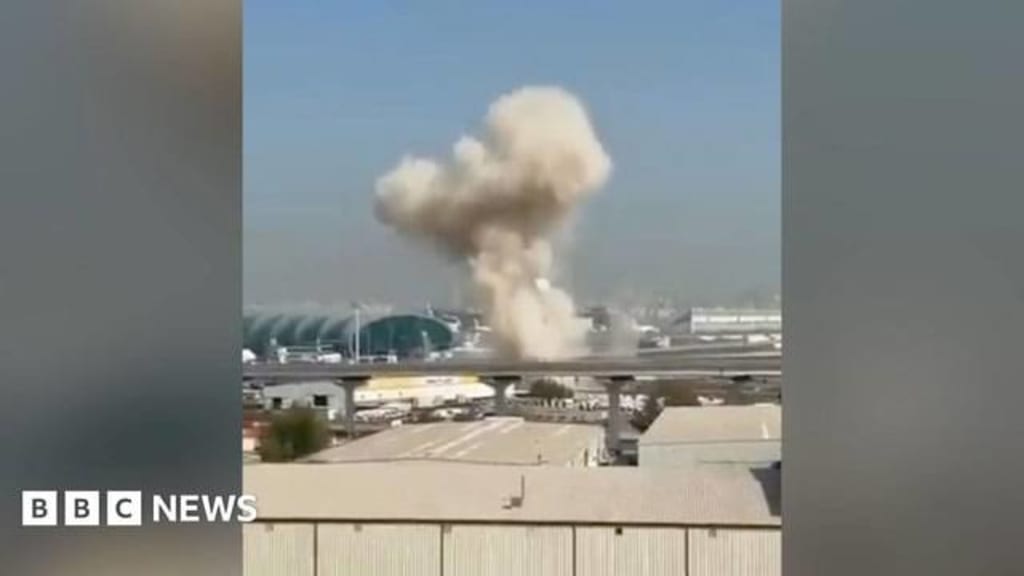
U.S.-U.K. relations strain as former President Donald Trump sharply criticises British Prime Minister over military support amid the Iran conflict.
In a striking public rebuke, U.S. President Donald Trump accused British Prime Minister Keir Starmer of wanting to “join wars after we’ve already won” and declared that the United States does not need British aircraft carriers in its ongoing conflict with Iran. The comments, delivered via Trump’s Truth Social platform, have deepened friction between two traditional allies over how best to respond to escalating tensions in the Middle East.
Trump’s Accusations and Message to Starmer
Trump’s remarks targeted what he portrayed as a belated British willingness to support U.S. military efforts in the region — specifically, discussions in London about potentially deploying Royal Navy aircraft carriers to the Middle East theatre. In his post, Trump stated:
“The United Kingdom, our once Great Ally, maybe the Greatest of them all, is finally giving serious thought to sending two aircraft carriers to the Middle East… That’s OK, Prime Minister Starmer, we don’t need them any longer — But we will remember. We don’t need people that join Wars after we’ve already won!”
Trump’s message was framed as both a rejection of British military aid and a personal critique of Starmer’s leadership — suggesting the UK had been too slow in offering tangible support for U.S. and allied operations against Iran.
The former U.S. president went further in interviews aboard Air Force One, emphasizing that British assistance “wasn’t needed now” and arguing it would have been more welcome earlier in the campaign. Trump’s comments reflect a broader frustration with what he views as inconsistent support from London.
Aircraft Carriers and Strategic Disagreement
The comments build on recent reports that the HMS Prince of Wales — the United Kingdom’s flagship carrier — had been placed on advanced readiness for a possible Middle East deployment, part of London’s effort to bolster regional security amid the expanding conflict. The British Ministry of Defence clarified that while the carrier’s readiness status was increased, no formal decision to send it to the Middle East had been taken.
Trump’s dismissal of the carriers’ utility stands in contrast to British officials who argue that the presence of UK naval assets would support regional deterrence and strengthen allied capabilities. The debate occurs against the backdrop of broader allied coordination, where American forces have also begun using UK military bases for “defensive operations” related to strikes against Iranian missile capabilities.
Starmer’s Position and UK Response
In response to Trump’s criticism, Downing Street has stressed that decisions about military involvement must be made in Britain’s national interest. Starmer has defended his initial reluctance to permit the use of British bases for offensive action, citing the need to ensure any military engagement is legal, planned and necessary. Later, Starmer authorized limited U.S. use of UK bases for defensive missions, indicating a nuanced approach rather than full military alignment.
British officials have underscored that the placement of HMS Prince of Wales on high readiness does not equate to a deployment order. Rather, it is part of contingency planning to ensure that whatever course of action the UK takes, it can act swiftly if needed.
Rift in the “Special Relationship”?
The exchange highlights growing tensions between Washington and London at a time when Western alliances are under strain. Trump’s critique not only questioned the timing of British support but also implied that hesitation weakened the historic “special relationship” between the United States and the United Kingdom — a bond long seen as a cornerstone of transatlantic cooperation.
While some British commentators frame Trump’s remarks as political posturing, others see them as emblematic of broader disagreements over military strategy, national sovereignty, and the role of European powers in global conflicts. The dispute over support for U.S. and Israeli strikes on Iran reflects deeper debates within NATO and allied circles about how best to balance defensive commitments with diplomatic caution.
Impact on International Relations
Trump’s public criticism has reverberated beyond bilateral U.S.-UK relations. European and Middle Eastern governments are closely watching how Western allies coordinate their responses to regional instability. Diplomats stress that unity among democracies is crucial amid rising tensions, but divergent national priorities can complicate joint action.
The sharp exchange between Trump and Starmer also comes at a moment when the United States is pressing forward with its campaign against Iran while insisting that many key objectives have already been achieved — a claim not universally shared by external observers or even within American strategic circles.
Conclusion
President Trump’s accusation that the United Kingdom is attempting to “join wars after we’ve already won” encapsulates a rare public rebuke of a close ally during a period of active conflict. Amid disagreements over the deployment of aircraft carriers and the pace of military support, both Washington and London face the challenge of balancing national interests with long-standing strategic partnerships.
As the Iran conflict continues to unfold, how the two nations navigate their differences may have lasting implications for the future of Western military cooperation and diplomatic coordination in one of the world’s most volatile regions.
About the Creator
Fiaz Ahmed
I am Fiaz Ahmed. I am a passionate writer. I love covering trending topics and breaking news. With a sharp eye for what’s happening around the world, and crafts timely and engaging stories that keep readers informed and updated.
Keep reading
More stories from Fiaz Ahmed and writers in The Swamp and other communities.
Turkey Considering Deployment of F-16s to Cyprus, Ministry Source Says
Ankara signals potential military escalation as tensions rise in the Eastern Mediterranean. Turkey is reportedly considering the deployment of F-16 fighter jets to Cyprus, according to a source within the Turkish Ministry of Defence. The potential move comes amid heightened regional tensions and ongoing disputes over airspace and territorial waters in the Eastern Mediterranean. The source, who requested anonymity due to the sensitivity of the issue, stated that Ankara is evaluating options to strengthen its military presence on the island in response to what it perceives as growing threats and provocative actions by neighboring states. While no final decision has been made, Turkish defence officials are reportedly assessing the logistics, operational readiness, and strategic implications of such a deployment. Strategic Context in the Eastern Mediterranean Cyprus has long been at the center of geopolitical disputes, particularly involving Turkey, Greece, and other regional powers. Turkey maintains a military presence in the northern part of the island, which it recognizes as the self-declared Turkish Republic of Northern Cyprus. Greece and the internationally recognized Republic of Cyprus consider such actions a violation of sovereignty. The consideration of deploying F-16s reflects Ankara’s intent to assert air superiority in contested areas and strengthen deterrence against perceived encroachments by neighboring forces. Turkish military analysts suggest that stationing fighter jets on the island could provide rapid response capabilities and enhanced surveillance of maritime zones in the Eastern Mediterranean, where energy exploration and military activity have created ongoing disputes. Potential Regional Reactions The announcement has already sparked concern among Greece, Cyprus, and other European states with interests in regional stability. Analysts warn that any increase in Turkish military assets on the island could exacerbate tensions and risk accidental clashes in congested airspace. Greek officials have historically expressed strong opposition to military expansions by Turkey in Cyprus, emphasizing that such deployments could violate international agreements and heighten the risk of confrontation. Similarly, the Republic of Cyprus has warned that any escalation could undermine ongoing diplomatic efforts to manage territorial disputes. European Union diplomats have also noted the importance of de-escalating military posturing in the region. In recent months, Brussels has called on all parties to exercise restraint, warning that heightened tensions in the Eastern Mediterranean could disrupt regional trade, energy exploration, and broader security cooperation. F-16 Capabilities and Operational Impact The Turkish Air Force operates a fleet of F-16 fighter jets capable of air defense, ground attack, and surveillance operations. Deploying these jets to Cyprus would enhance Turkey’s ability to respond rapidly to regional incidents, including aerial incursions, maritime disputes, or potential conflicts over energy exploration zones. Military analysts highlight that F-16s, when combined with advanced radar and command systems, provide significant operational reach and flexibility. They can conduct patrols, intercept aircraft, and support naval operations in contested areas. Such capabilities would reinforce Turkey’s position and demonstrate its readiness to protect strategic interests. Diplomatic Considerations While Turkey’s defence ministry has not officially confirmed the deployment, international observers are closely monitoring the situation. Analysts emphasize that a unilateral military build-up could provoke a response from neighboring states, potentially triggering a cycle of escalation. Diplomats from Greece, Cyprus, and the EU have reportedly begun consultations to coordinate messaging and assess contingency plans. Regional security experts note that ongoing military exercises, coupled with potential deployments, require careful management to avoid accidental clashes or miscalculations. Broader Implications The Eastern Mediterranean has emerged as a flashpoint for regional power competition, with multiple countries asserting claims over territorial waters and airspace. Energy exploration, maritime boundaries, and longstanding historical disputes contribute to the complexity of the situation. Turkey’s consideration of deploying F-16s to Cyprus underscores the delicate balance between deterrence and provocation. While Ankara frames the move as defensive, neighboring states view it as a potential escalation that could destabilize the region further. The international community is urging all parties to pursue diplomatic channels and confidence-building measures to prevent unintended incidents. Observers warn that missteps in the coming weeks could have far-reaching consequences, not only for Cyprus and Turkey but for broader regional security in the Eastern Mediterranean.
By Fiaz Ahmed 5 days ago in The Swamp
Parallel Protests
I haven't written for quite some time, but I have A LOT of thoughts about yesterday's protest rally against our government's involvement and complicity in America's war on Iran, on the harbourside of my home city Bristol, and I need to put them somewhere. My gorgeous girlfriend is always a loving and listening ear and sharing it all with her will always be a healthy and happy way of processing the mental and emotional weight, but getting it straight in my brain to share means writing it all down in straight lines, so, here we are and thanks for being here.
By Steph Cole9 days ago in The Swamp



Comments
There are no comments for this story
Be the first to respond and start the conversation.