
Who Is Mojtaba Khamenei, Iran’s New Supreme Leader?
The son of Iran’s longtime leader emerges as a powerful and controversial figure at the center of the country’s political future.
A New Chapter in Iran’s Leadership
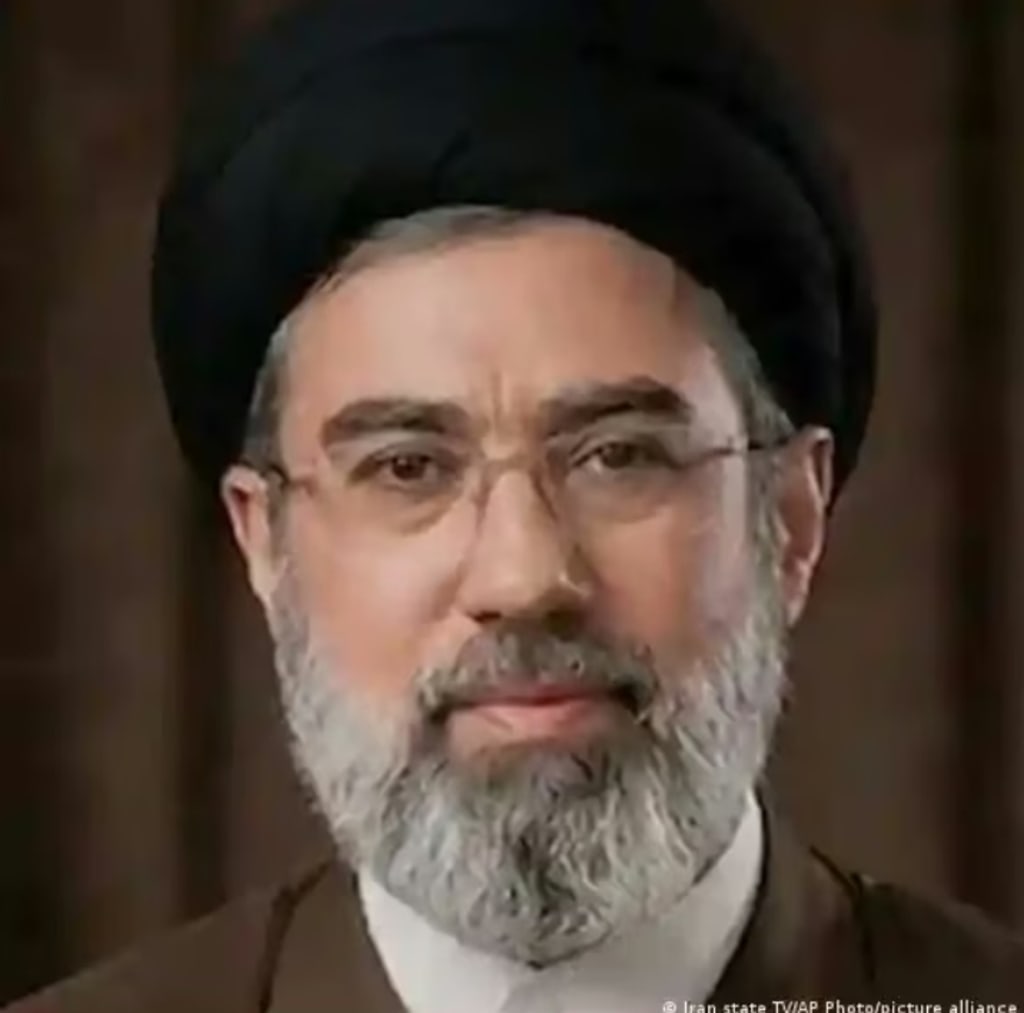
Following a period of political upheaval and uncertainty, Mojtaba Khamenei has emerged as Iran’s new supreme leader, succeeding his father Ali Khamenei.
The leadership transition has drawn global attention because it represents one of the most significant shifts in Iranian politics in decades. Mojtaba Khamenei has long been viewed as an influential but largely behind-the-scenes figure within the power structure of the Iran.
Now, with the supreme leadership officially in his hands, many analysts are trying to understand who he is, how he rose to power, and what his leadership might mean for Iran’s future.
Early Life and Education
Mojtaba Khamenei was born in 1969 in Mashhad, one of Iran’s most important religious centers. As the son of Ali Khamenei, he grew up in an environment deeply connected to the country’s clerical and political elite.
Like many members of Iran’s religious establishment, Mojtaba pursued Islamic studies in the seminaries of Qom. Qom is widely regarded as the intellectual and spiritual heart of Shia Islam in Iran, where clerics receive advanced theological education.
While he maintained a relatively low public profile during his early years, his connections and education placed him within Iran’s influential religious networks.
Rise Behind the Scenes
Unlike many Iranian political figures who build careers through visible government roles, Mojtaba Khamenei became known for operating behind the scenes.
Over the years, he developed strong relationships with members of the Islamic Revolutionary Guard Corps (IRGC), one of the most powerful institutions in Iran.
The IRGC plays a crucial role not only in national defense but also in economic activities and regional military operations. Analysts believe Mojtaba’s close ties to this organization helped him build political influence long before he assumed any official leadership position.
Some observers have described him as a key adviser to his father, particularly during moments of political crisis.
Influence During Domestic Political Turmoil
Mojtaba Khamenei’s name first became widely discussed during Iran’s political unrest following the 2009 Iranian presidential election protests.
During those demonstrations, millions of Iranians protested the disputed presidential election results. Critics of the government accused Mojtaba of playing an influential role in coordinating responses from security institutions.
Although these allegations were never officially confirmed, the events contributed to his reputation as a powerful figure working within Iran’s political system.
Supporters argue that he helped maintain stability during a period of national tension.
The Role of the Supreme Leader
To understand Mojtaba Khamenei’s significance, it is important to understand the position he now holds.
In Iran’s political system, the Supreme Leader is the highest authority in the country. The role includes control over the armed forces, influence over foreign policy, and oversight of key institutions within the government.
The position was originally established after the Iranian Revolution, which replaced the monarchy with the Islamic Republic.
Since then, only two individuals had held the position before Mojtaba: Ruhollah Khomeini and his successor Ali Khamenei.
Because the role carries enormous authority, the selection of a new supreme leader is a pivotal moment in Iranian politics.
Controversy Around the Succession
Mojtaba Khamenei’s rise to power has sparked intense debate both inside and outside Iran.
Critics argue that the transition resembles a dynastic succession, something that the Islamic Republic originally claimed to oppose after overthrowing Iran’s monarchy in 1979.
They point out that the idea of leadership passing from father to son contradicts the revolutionary principles that established the current political system.
Supporters, however, argue that Mojtaba’s experience, religious training, and political connections make him a logical choice during a period of regional instability.
Regional and International Implications
The appointment of a new supreme leader always carries major implications for Iran’s foreign policy.
Iran plays a significant role in Middle Eastern politics, maintaining relationships with regional groups and governments while also navigating tensions with Western countries.
Observers are closely watching to see whether Mojtaba Khamenei will maintain the strategic approach developed under his father or introduce new policies.
Relations with countries such as Israel, the United States, and neighboring Gulf states remain particularly sensitive.
The new leader’s decisions could influence regional security, energy markets, and diplomatic negotiations for years to come.
Domestic Challenges
Inside Iran, Mojtaba Khamenei faces several major challenges.
The country has struggled with economic difficulties, international sanctions, and rising public frustration over living standards.
Many young Iranians are calling for political reforms, greater freedoms, and improved economic opportunities.
Balancing these domestic pressures while maintaining political stability will be one of the most important tests of his leadership.
A Leader Shaped by Power Networks
What distinguishes Mojtaba Khamenei from previous leaders is the path he took to power.
Rather than rising through elected offices or widely visible clerical leadership roles, he built influence through networks of religious scholars, military figures, and political allies.
This background could shape how he governs. Some analysts believe his leadership may rely heavily on alliances with powerful institutions such as the Revolutionary Guard.
Others suggest he may gradually step into a more public role as he consolidates authority.
What the Future May Hold
The appointment of Mojtaba Khamenei marks a turning point in Iran’s modern history.
Leadership transitions in Iran are rare and often occur during moments of political uncertainty. As the new supreme leader, Mojtaba now faces the challenge of maintaining stability while addressing both domestic expectations and international pressures.
Whether he chooses to continue his father’s policies or pursue new strategies will shape the direction of Iran’s political and economic future.
Final Thoughts
Mojtaba Khamenei has spent much of his life in the shadows of Iran’s power structure. Now, as the country’s new supreme leader, he has stepped into the spotlight at one of the most consequential moments in the nation’s history.
His leadership will likely influence not only Iran’s domestic politics but also the broader dynamics of the Middle East.
For observers around the world, understanding who Mojtaba Khamenei is—and how he plans to lead—will be crucial in anticipating the next chapter of Iran’s political journey.
About the Creator
Parallel Protests
I haven't written for quite some time, but I have A LOT of thoughts about yesterday's protest rally against our government's involvement and complicity in America's war on Iran, on the harbourside of my home city Bristol, and I need to put them somewhere. My gorgeous girlfriend is always a loving and listening ear and sharing it all with her will always be a healthy and happy way of processing the mental and emotional weight, but getting it straight in my brain to share means writing it all down in straight lines, so, here we are and thanks for being here.
By Steph Cole10 days ago in The Swamp
King Praises Commonwealth at Biggest Royal Gathering Since Andrew Arrest
King Charles III addressed thousands of delegates and dignitaries from across the Commonwealth at what has been described as the largest royal gathering since the legal and public controversies surrounding Prince Andrew, Duke of York. The event, held at Buckingham Palace and broadcast across multiple member nations, was framed as a celebration of shared history, collaboration, and the ongoing relevance of the Commonwealth in a rapidly changing global landscape. The gathering brought together leaders, diplomats, and representatives from all 56 member states, including nations from Africa, the Caribbean, Asia, and the Pacific. In his speech, King Charles emphasized that the Commonwealth’s enduring value lies in the promotion of human rights, economic cooperation, and environmental stewardship. “Our strength is not in the power of any one nation, but in our shared commitment to service, mutual respect, and collaboration,” he said. The timing of the event carried symbolic weight. It comes nearly a year after Prince Andrew faced intense public scrutiny following allegations and legal challenges tied to his conduct. Though King Charles’s speech did not explicitly reference his brother’s controversies, observers noted that the tone of unity and moral responsibility implicitly acknowledged the need for integrity within the royal family. King Charles also highlighted the Commonwealth’s role in addressing global crises. He praised efforts to combat climate change, particularly initiatives led by island nations and developing countries that are most vulnerable to rising sea levels and environmental degradation. “The Commonwealth can lead by example, showing that sustainable practices and economic growth are not mutually exclusive,” he stated, adding that innovation and collaboration across member nations are critical to the success of these efforts. Several heads of government were present, including the prime ministers of Australia, Canada, and Jamaica, as well as key representatives from India, South Africa, and Nigeria. Delegates emphasized that the Commonwealth continues to provide a forum for dialogue on economic development, public health, and education. During bilateral meetings before and after the main ceremony, leaders discussed partnerships on technology transfer, trade, and health infrastructure, particularly in the context of the ongoing recovery from global pandemic challenges. The event also highlighted the monarchy’s cultural and ceremonial role. A ceremonial procession included representatives of various Commonwealth armed forces, traditional dancers from the Caribbean, and musicians from Africa and the Pacific. King Charles personally greeted attendees and took part in the traditional flag ceremony, during which the flags of all member states were displayed across the palace grounds. The spectacle was widely covered by international media, emphasizing both the ceremonial grandeur of the monarchy and the diversity of the Commonwealth community. Public reaction to the gathering has been mixed. Supporters praised the King for focusing on shared values and global cooperation, noting that the speech reinforced the relevance of the Commonwealth as an institution. Critics, however, questioned the monarchy’s continued prominence in international affairs, especially in light of Prince Andrew’s controversies and ongoing debates over the monarchy’s role in modern Britain. Some commentators suggested that the King used the occasion to reassert the moral authority of the royal family and redirect attention toward positive initiatives. During the Q&A session that followed the formal address, King Charles emphasized education and youth engagement as priorities for the Commonwealth. He announced plans to expand scholarship programs and mentorship opportunities, aiming to give young people across member states greater access to leadership development and international cooperation platforms. “The future of the Commonwealth depends on empowering the next generation to act with courage, integrity, and compassion,” he said. Experts on royal affairs noted that the gathering represents both a symbolic and practical effort by King Charles to strengthen the monarchy’s soft power. By emphasizing diplomacy, shared values, and service, the King aims to reinforce public confidence in the institution while navigating the challenges posed by internal controversies and shifting political attitudes across the Commonwealth. As the event concluded, the King and other senior royals hosted a formal dinner attended by heads of state, ministers, and ambassadors. The evening featured speeches, performances, and ceremonial toasts, all underscoring the Commonwealth’s unity and resilience. Many attendees described the gathering as a reaffirmation of the monarchy’s role in global diplomacy, even as discussions about transparency, accountability, and modernization continue to shape public perception. In his closing remarks, King Charles reiterated a central theme of the gathering: the importance of shared responsibility. “The Commonwealth is more than a collection of nations; it is a community bound by values, by history, and by the promise of a better future for all its citizens,” he said. With this message, the King sought to position the monarchy as a guiding force for cooperation, service, and moral leadership, demonstrating that the institution can continue to play a meaningful role in the 21st century despite the challenges it faces. The event will likely be remembered as a defining moment in King Charles’s reign, showcasing both the ceremonial grandeur of the monarchy and its commitment to the Commonwealth’s evolving role in a complex global environment.
By Fiaz Ahmed 4 days ago in The Swamp


Comments
There are no comments for this story
Be the first to respond and start the conversation.