Irshad Abbasi
Bio
Ali ibn Abi Talib (RA) said 📚
“Knowledge is better than wealth, because knowledge protects you, while you have to protect wealth.
Stories (395)
Filter by community
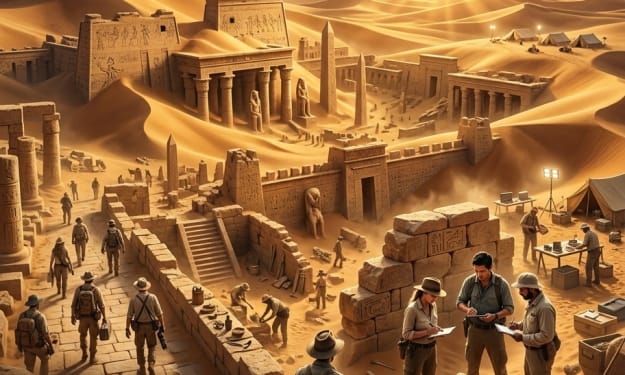
The Hidden City Beneath the Desert: A Discovery That Shocked the World
For centuries, vast deserts around the world have been seen as empty and lifeless landscapes. Endless waves of sand stretch for miles, hiding whatever once existed beneath them. But sometimes, the desert keeps secrets—secrets so extraordinary that when they are finally discovered, they can change history itself.
By Irshad Abbasi about 4 hours ago in History
The Day Everything Changed
Most days in life pass quietly, almost unnoticed. People wake up, follow their routines, go to work or school, meet friends, and return home. Nothing unusual happens, and by the next week many of those days are forgotten. But sometimes, without warning, one single day appears that changes everything. It becomes a dividing line in life — the moment when the past and the future suddenly look different.
By Irshad Abbasi about 4 hours ago in Lifehack
The ‘Lone Warrior’ of Freedom Who Declared an Independent Pashtun State
The history of the subcontinent’s struggle against colonial rule is filled with famous leaders, mass movements, and political negotiations. Yet hidden within these narratives are figures whose stories remain lesser known but deeply fascinating. One such personality was Fakir of Ipi, a tribal leader from the rugged mountains of Waziristan who spent decades resisting British authority and later opposed the creation of Pakistan. Known to many as the “lone warrior of freedom,” Fakir of Ipi became a symbol of tribal resistance and a controversial advocate for an independent Pashtun homeland.
By Irshad Abbasi about 5 hours ago in History
The “Rebel” Who Faced Karachi’s First Military Court in the 19th Century
In the early decades of the 19th century, Karachi was far from the bustling megacity it is today. It was a small but strategically important coastal town whose control became crucial after the British East India Company expanded its influence in Sindh. Amid this transformation emerged a dramatic and largely forgotten story—the trial and execution of Chakar Notak Kalmatī, a local tribal figure who became the first person to receive the death penalty from Karachi’s earliest military court.
By Irshad Abbasi about 5 hours ago in History
Mirza Ghalib: The First Modern Mind in Urdu Literature
In the long and rich history of Urdu literature, few names shine as brightly as Mirza Ghalib. Often celebrated as one of the greatest poets of the Urdu language, Ghalib is also widely regarded as the first modern mind in Urdu literature. His poetry did more than express emotions; it questioned existence, challenged traditions, and explored the complexities of the human mind. At a time when most poets followed conventional themes and forms, Ghalib introduced a new intellectual depth that reshaped Urdu poetry forever.
By Irshad Abbasi about 5 hours ago in Poets
The Munshi Whom Even Kings Admired
Throughout history, the power of knowledge has often stood quietly beside the power of the throne. While kings ruled with authority and armies, there were individuals whose influence came not from swords but from words. Among them were the Munshis—scholarly scribes, advisors, and masters of language—whose intellect and skill earned them admiration even from the most powerful rulers.
By Irshad Abbasi about 5 hours ago in History
The Economic Cost of Empire: How British Rule Drained India’s Wealth
For nearly two centuries, the Indian subcontinent remained under British colonial rule. From the mid-18th century until 1947, British policies reshaped India’s political, social, and economic systems. While the British administration introduced railways, legal systems, and modern institutions, historians and economists widely argue that colonial rule resulted in a massive transfer of wealth from India to Britain. This economic extraction has often been described as the “drain of wealth,” a concept that attempts to estimate how much financial loss India experienced during colonial rule.
By Irshad Abbasi about 7 hours ago in History
When the Portuguese Turned the Tide of Indian History
The arrival of the Portuguese in India at the end of the 15th century marked a turning point in the history of the Indian Ocean and the Indian subcontinent. What began as an ambitious maritime expedition soon transformed into a powerful political and economic presence that reshaped trade routes, introduced new cultural influences, and altered the balance of power in the region.
By Irshad Abbasi about 7 hours ago in History
Hasan-i Sabbah’s Garden of Paradise: Legend or Historical Reality?
Among the many legends of medieval history, few stories are as fascinating and controversial as the tale of the “Garden of Paradise” associated with Hasan-i Sabbah. He was the founder and spiritual leader of the Nizari Ismaili movement in Persia during the 11th and early 12th centuries. From his mountain stronghold at Alamut Castle, Hasan-i Sabbah built a powerful and mysterious network of followers who became known in Western literature as the “Assassins.” One of the most enduring legends about him is the claim that he created a secret garden designed to resemble paradise, where young recruits were tricked into believing they had experienced heaven.
By Irshad Abbasi about 7 hours ago in History
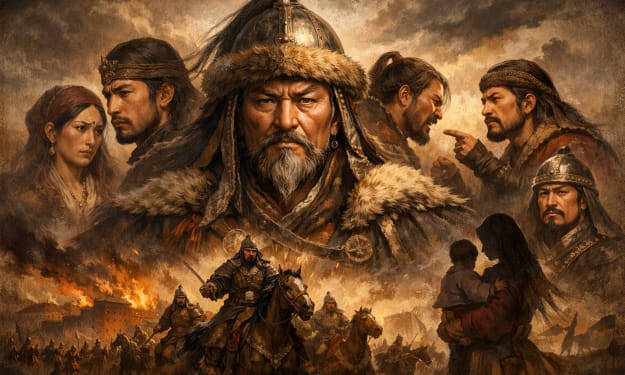
Father of Millions, Yet Not Always a Father to His Own Sons
Few figures in world history have left as profound a mark as Genghis Khan. Known for his extraordinary military genius and ruthless campaigns, he forged the largest contiguous empire the world had ever seen—the Mongol Empire. Yet beyond the battlefield and the politics of conquest lies a fascinating paradox: while Genghis Khan is believed to be the ancestor of millions of people today, his relationship with his own sons was complicated, strained, and sometimes filled with uncertainty.
By Irshad Abbasi about 7 hours ago in History
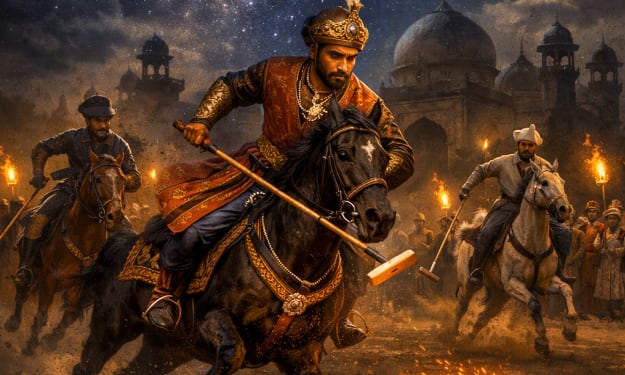
The Night Polo of Emperor Akbar: When a Glowing Ball Lit Up the Mughal Game
Among the many fascinating innovations associated with the Mughal Empire, one lesser-known yet remarkable story involves the love of sport displayed by the great emperor Akbar. Known for his administrative brilliance, military strength, and cultural openness, Akbar was also passionate about physical games—especially the ancient sport of polo, known in South Asia and Persia as chogan or chaugan. One of the most intriguing legends about him is that he introduced a glowing ball so the game could be played at night.
By Irshad Abbasi about 12 hours ago in History
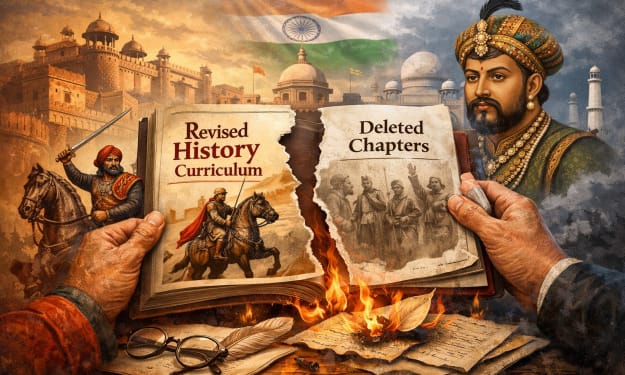
India: Rajasthan Government Accused of Trying to Rewrite History Curriculum
A fresh controversy has emerged in India after allegations that the government of the state of Rajasthan is attempting to alter school history curricula. Critics claim the proposed revisions could significantly change how historical events and figures are presented to students, raising concerns about political influence in education and the rewriting of history.
By Irshad Abbasi about 12 hours ago in History